



If you're reading this, there's a good chance you've been lying awake at night turning a big question over and over: could we actually do this?
Maybe school isn't working for your child. Maybe it never started. Maybe you've simply watched them light up while learning at home and wondered what would happen if you followed that light. Whatever brought you here — take a breath. Thousands of families start home educating in the UK every year, and the practical steps are genuinely straightforward. This guide walks through all of them, calmly and completely: the law, the letter, the differences between the four nations, what it costs, and what the first month really feels like.
Is it legal to home educate in the UK?
Yes — completely, and it always has been.
In England and Wales, the law is Section 7 of the Education Act 1996. It places the duty for a child's education on parents, not schools. You must ensure your child receives an efficient, full-time education suitable to their age, ability, aptitude and any special educational needs — "either by regular attendance at school or otherwise." Home education is the "otherwise", and it has equal standing in law. Scotland and Northern Ireland have their own legislation with the same effect.
A few things you do not need:
- You don't need to be a qualified teacher.
- You don't need to follow the National Curriculum.
- You don't need to keep school hours, terms or timetables.
- You don't need anyone's permission to educate your own child (with one Scottish exception, below).
You're in good company, too — well over 100,000 children are now home educated across the UK, a number that has roughly doubled in the last decade.
📅 Legal details correct as of August 2026. Registration rules are evolving — England is introducing local authority registers of children not in school, and Wales has consulted on similar measures — so do check the current position on gov.uk when you begin.
How to start home educating, step by step
Step 1 — Let the decision settle
Before any letters are written, give the decision room to breathe. Talk with your child, in a way that suits their age. Talk honestly with your partner or anyone sharing the load. You don't need a five-year plan or a perfectly researched philosophy — you only need enough peace to take the first step. Home education is not a one-way door; you can always try it for a season.
Step 2 — If your child has never been to school, simply begin
This surprises many parents: if your child has never been enrolled in a school, you don't have to tell anyone. In England there is no registration requirement (though new registers are being introduced — see the note above), no forms, no approval process. Compulsory education begins the term after your child turns five, and you simply... carry on learning together, as you already have been since they were born.
Step 3 — If your child is at school, write the deregistration letter
If your child is currently enrolled, you'll need to formally deregister them. This is a notification, not a request — in England, under the Education (Pupil Registration) Regulations 2006, the school must remove your child's name from the register when you notify them in writing. You can copy this:
Send it by email with a read receipt, or by recorded delivery, and keep a copy. You don't need to give reasons, attend an exit meeting or wait for permission.
Two important exceptions: if your child attends a special school arranged by the local authority, you'll need the local authority's consent first. And in Scotland, council consent is required before withdrawing a child from a state school (it must not be unreasonably withheld). If your child has an EHCP but attends a mainstream school in England, the normal process above applies.

Step 4 — Know the rules where you live
The UK's four nations handle things slightly differently:
| England | Wales | Scotland | Northern Ireland | |
|---|---|---|---|---|
| Permission needed to start? | No | No | Yes — council consent if leaving a state school | No |
| How to deregister | Letter to the head teacher | Letter to the head teacher | Letter + council consent (state schools) | Letter to the school |
| Register as home educating? | Registers being introduced — check gov.uk | No formal register currently; proposals under discussion | No | No |
| Follow a set curriculum? | No | No | No | No |
Step 5 — If the local authority gets in touch
At some point, your local authority may make informal enquiries about the education you're providing. This is normal, and it isn't a judgement on you. They may ask for a short written summary of your approach — a paragraph or two about how your child learns, examples of resources, the shape of your days.
You are not legally required to accept a home visit or follow their preferred format, and "suitable education" does not mean "school at home". Many families find that a warm, brief annual update keeps the relationship simple. Keeping a light record — a few photos, a reading list, a nature journal — makes this effortless, and it's a lovely keepsake anyway.
Step 6 — Allow a deschooling season
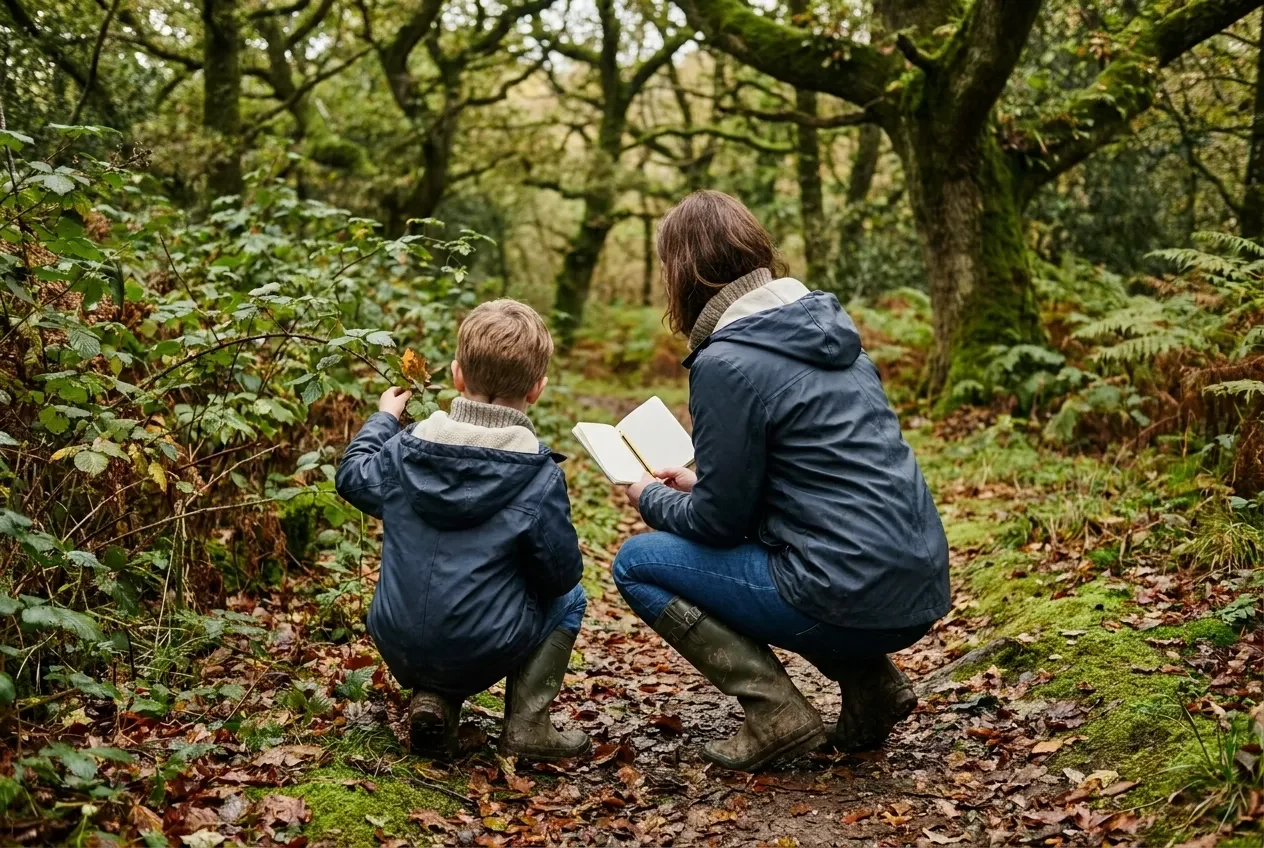
If your child is coming out of school — especially if school was hard — resist the urge to recreate it at the kitchen table on day one. Families often use the rule of thumb of roughly one month of decompression for every year spent in school. Read together, walk, bake, play, follow questions. This isn't lost time; it's the foundation. Curiosity returns when the pressure lifts, and the learning that follows is deeper for it.
Step 7 — Decide what to teach, gently
Once everyone can breathe, you can begin shaping what learning looks like — structured, child-led, or (most commonly) somewhere in between. There's no rush and no single right answer. We've written a full, calm guide to this decision: Home Education Curriculum (UK): How to Choose What to Teach.
Step 8 — Find your people
Home education in the UK comes with a warm, well-established community. Education Otherwise offers legal information and support; local Facebook and WhatsApp groups (search "[your county] home education") organise meet-ups, forest days, co-ops and trips. Your child will find friends of all ages — and so, honestly, will you.
What does "full-time" actually mean?
The law asks for "efficient, full-time" education, but it deliberately sets no hours. One-to-one learning is remarkably efficient — what takes a class of thirty a whole morning often takes one child twenty minutes. Most home educating families find two to four focused hours a day more than enough, woven around reading aloud, conversation, outdoor time and real life. Learning doesn't stop when the workbook closes; making dinner is maths, ratios and teamwork.
What might the first month actually look like?
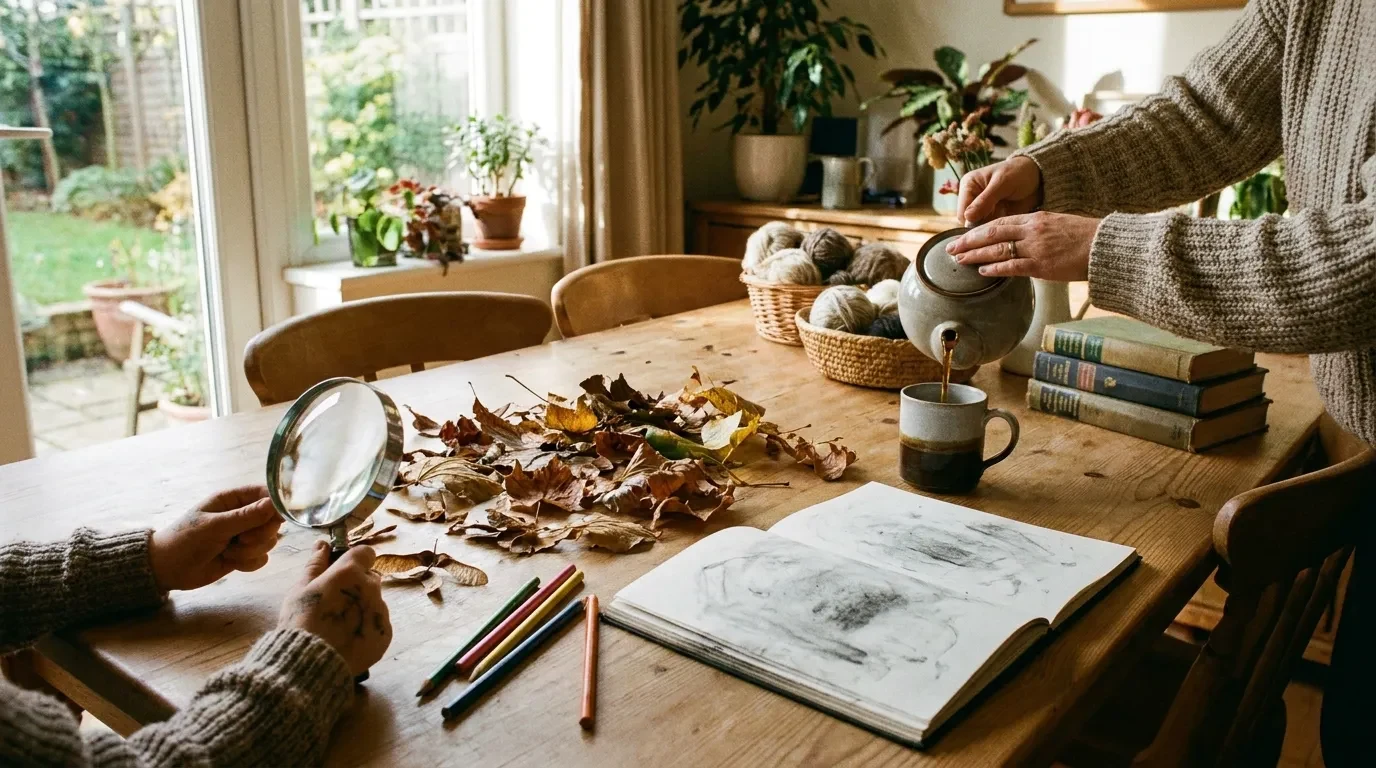
Looking back its hard to tell when we really started home schooling. We had always planned to home school our twins and then covid hit when they turned 3 and as we couldn't leave the house my wife started doing some lessons.
What does it cost to start?
Honestly: as little or as much as you choose. There is no government funding for home education in the UK — and no, you don't get paid to home educate — but starting need not be expensive. Deregistering is free. Libraries are free. The outdoors is free.
| Starting point | Rough annual cost |
|---|---|
| Mostly free — library, nature, printables, everyday life | £0–£300 |
| Mixed — a purchased curriculum, some clubs and trips | £300–£1,000 |
| Highly structured — full programmes, tutors, exam fees (later years) | £1,000–£3,000+ |
Exam fees only arrive if and when you choose them: GCSEs or IGCSEs as a private candidate typically cost £100–£350 per subject including centre fees.
Common worries, gently answered
"But I'm not a teacher." You don't need to be. Your role isn't to lecture from the front of the room — it's to read together, wonder together, and find good resources for the things you don't know. No qualification requirement exists in law, and the one-to-one attention you naturally give outweighs technique.
"What about friends?" Socialisation is the most-asked and least-founded worry. Home educated children socialise across ages — at groups, clubs, sports, co-ops and in their communities — rather than only with thirty same-aged classmates.
"What if it doesn't work?" Then you apply for a school place again, and that's okay. Trying home education for a season is not a failure in either direction — it's parenting attentively.
"What about GCSEs?" Home educated young people sit them as private candidates at approved centres, often choosing IGCSEs for their exam-only format. Many take them at the usual age; some take them later, or follow different routes entirely. All doors stay open.
Frequently asked questions
Is home education legal in the UK?
Yes, in all four nations. In England and Wales the legal basis is Section 7 of the Education Act 1996: education must be efficient, full-time and suitable — at school or otherwise.
Do you get paid to home educate in the UK?
No. There is no funding or payment for home educating families; parents bear the costs, though it can be done very affordably.
How many hours a day does home education take?
There is no legal minimum. Two to four focused hours daily is typical, because one-to-one learning is far more efficient than classroom learning.
Do I have to follow the National Curriculum?
No. You may borrow from it as a map if you find it helpful, but there is no requirement to follow it, keep school hours or observe terms.
Can home-educated children still take GCSEs?
Yes, as private candidates at approved exam centres. GCSEs aren't compulsory, and alternative routes to college, university and work exist.
Do home-educated children do better?
Here in the UK there is not enough data to claim either as better. US studies have found that home educated perform as well as, or out perform, their peers in most academic tests. ( add hyperlink to the study i message you pls x)
But, I am guessing it all depends on how you measure success. If you are looking for an education that nurtures the whole child and that is bespoke to their needs, that allows time to enjoy childhood and grasp concepts in a way that works for them, then maybe that’s the answer you’re looking for.
Where The Wonder Curriculum fits
A moment of honesty: we make a home education curriculum, so of course we'd love you to look at ours. But the truth in this guide stands on its own — you can start home educating tomorrow without buying anything from anyone.
When you reach Step 7 and want a gentle, story-rich structure that protects wonder rather than recreating school at home, that's what The Wonder Curriculum was made for — and our starter bundle exists precisely for families in their first, tender term. If a highly formal, exam-driven programme is what your family needs, we'll cheerfully point you elsewhere. The right fit matters more than the sale.
Sources and further reading
- Elective home education: guidance for parents — gov.uk
- Education Act 1996, Section 7 — legislation.gov.uk
- The Education (Pupil Registration) (England) Regulations 2006 — legislation.gov.uk
- Home education in England — House of Commons Library briefing
- Education Otherwise
Legal details checked August 2026 — always confirm the current position for your nation on gov.uk before deregistering.