
How to Make a Zoetrope
See a paper zoetrope in action and follow its construction; grown-ups should handle hot glue and help with cutting and making holes.
Explore how still pictures can become moving stories, from a spinning zoetrope to the small film your family might make together.
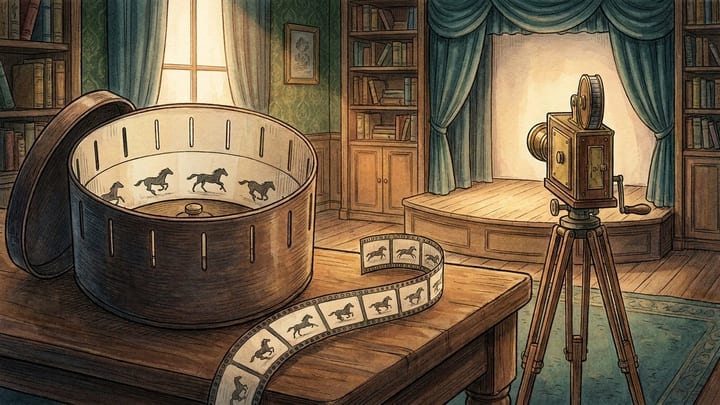
A horse caught between strides. A strip of drawings that seems to spring to life. A story told with a glance, a gesture and a little imagination. The early world of moving pictures offers plenty to notice together.
These resources accompany The First Movies lesson, with a zoetrope demonstration, a story about Alice Guy-Blaché and a museum making activity. Choose the path that catches your family's curiosity; there is no need to follow every one.
Look closely at how separate drawings can appear to move.
See a paper zoetrope in action and follow its construction; grown-ups should handle hot glue and help with cutting and making holes.
Share a story about one of cinema's pioneering storytellers.
Listen to Mr. Paul read Mara Rockliff's illustrated biography of Alice Guy-Blaché, with pictures by Simona Ciraolo, then talk about the stories you would like to tell.
Try a making activity that lets you explore moving pictures for yourself.
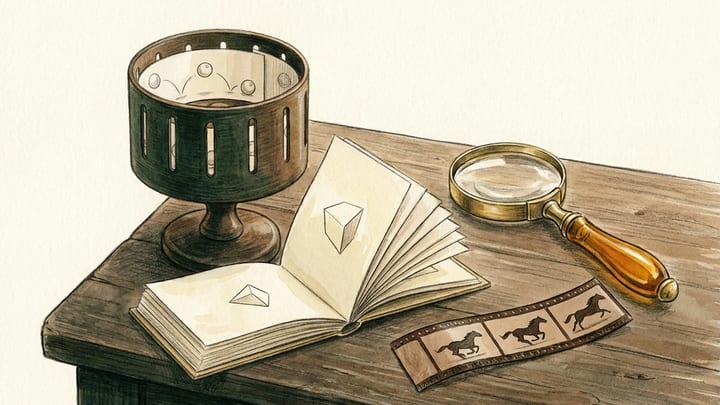
Use the museum's illustrated instructions and linked templates to build a paper zoetrope, then experiment with your own sequence of drawings.
Follow the pictures into a story of your own.
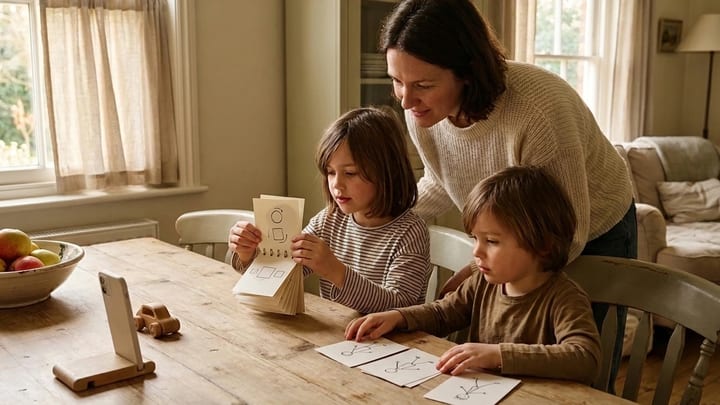
Choose an everyday event, such as finding a lost toy. Tell it through three drawings or silent actions, then ask someone what they think happened. Try a different ending. Which small change helps your audience understand the story? You can explore this without recording anyone; if you do film, ask permission and let a grown-up manage private sharing.
What would you choose to show someone who could see your world for only a few moments?