Imagine arriving at a concert and finding an enormous orchestra waiting on the stage.
There are violins, flutes, cellos and a splendidly large drum. But when the music begins, almost everyone puts down their instruments. Most of the musicians, someone whispers, will never play a single note.
That would be a rather strange orchestra.
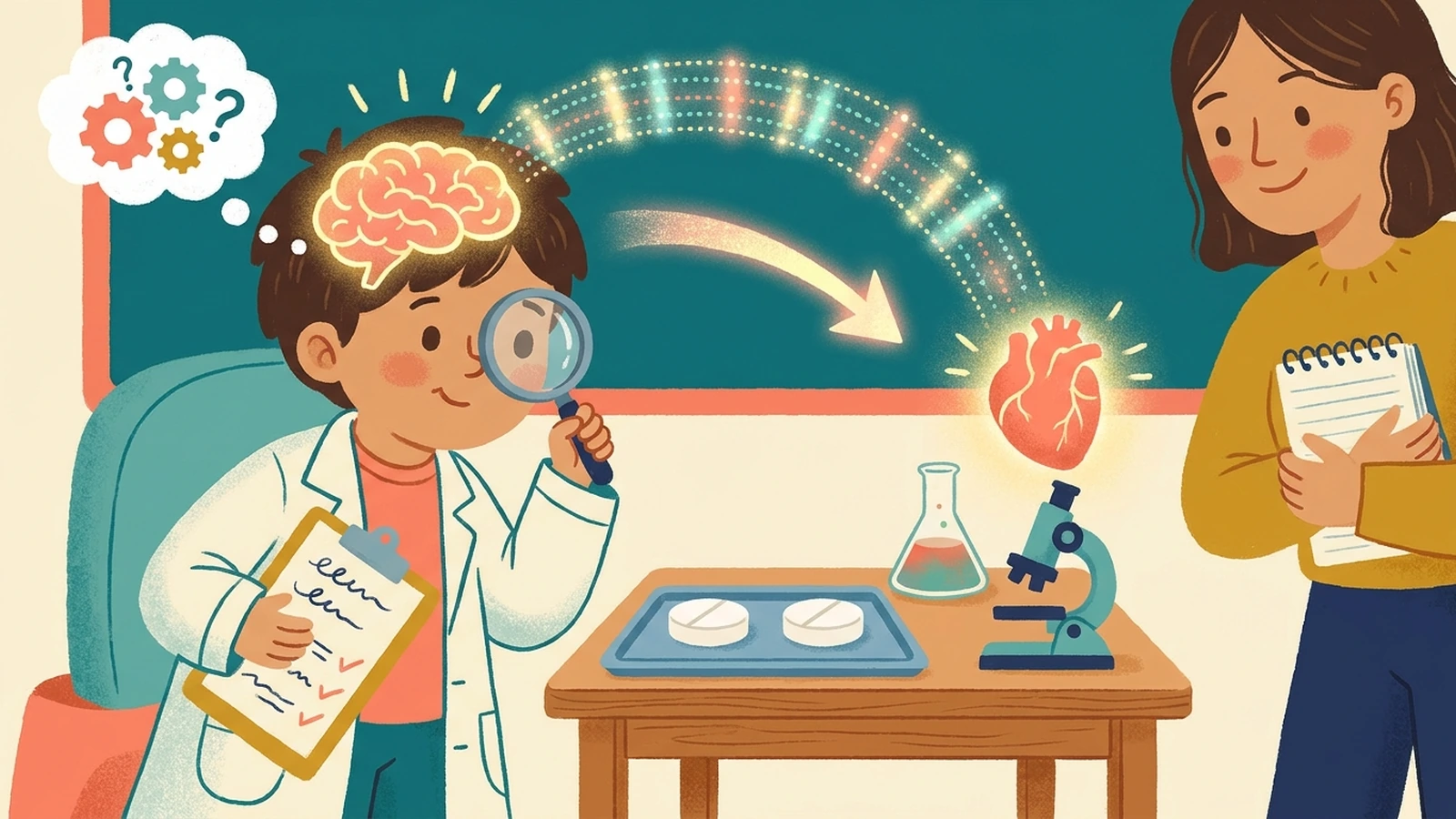
Yet something like this is hidden inside a story you may have heard: that we use only 10% of our brains, while the other 90% waits to be switched on.
It sounds exciting. Perhaps there is a secret door inside your head, with astonishing powers behind it.
The real story is different. And it is worth hearing.
How much of your brain do you really use?
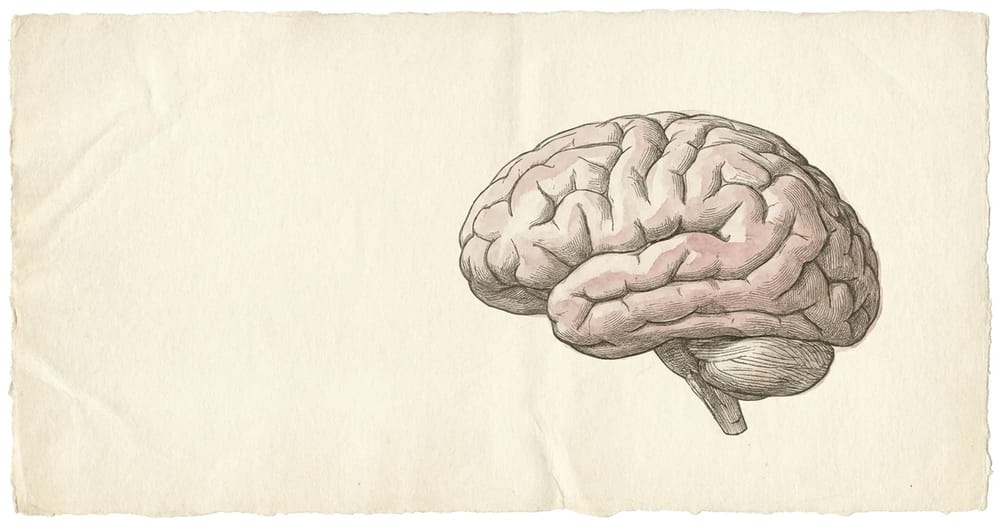
Your brain is not mostly empty space waiting for you to become clever enough to use it.
Scientists find activity across the brain as it carries out its many different jobs. There is no scientific evidence that we use only a tenth of it. As the University of Washington's Neuroscience for Kids explains, brain imaging shows that its different parts have functions, and activity continues even during sleep.
But there is an important little wrinkle here.
Using your brain does not mean using every part in exactly the same way, at exactly the same moment.
Think about a house. The kitchen is useful when someone makes lunch. A bedroom is useful when someone sleeps. You would not say most of the house was pointless just because every room was not being used for the same job.
So “What percentage do we use?” is not quite the right question. A more interesting one is: how do all those different parts work together?
Your brain is more like an orchestra than a light switch
Inside your brain are nerve cells called neurons. They send and receive information using electrical and chemical signals. Their connections form pathways through which information travels, linking different parts of the nervous system. The US National Institute of Neurological Disorders and Stroke describes these cells as information messengers.
Groups of connected cells work in networks. That word might sound complicated, but the important idea is simple: they communicate.
Imagine listening to a story about a fox following strange footprints through the snow.
You hear the storyteller's voice. You make sense of the words. You remember that the fox lost something earlier. Perhaps you picture the snowy wood, or wonder what is waiting behind the next tree.
What feels like one ordinary moment involves several different abilities.
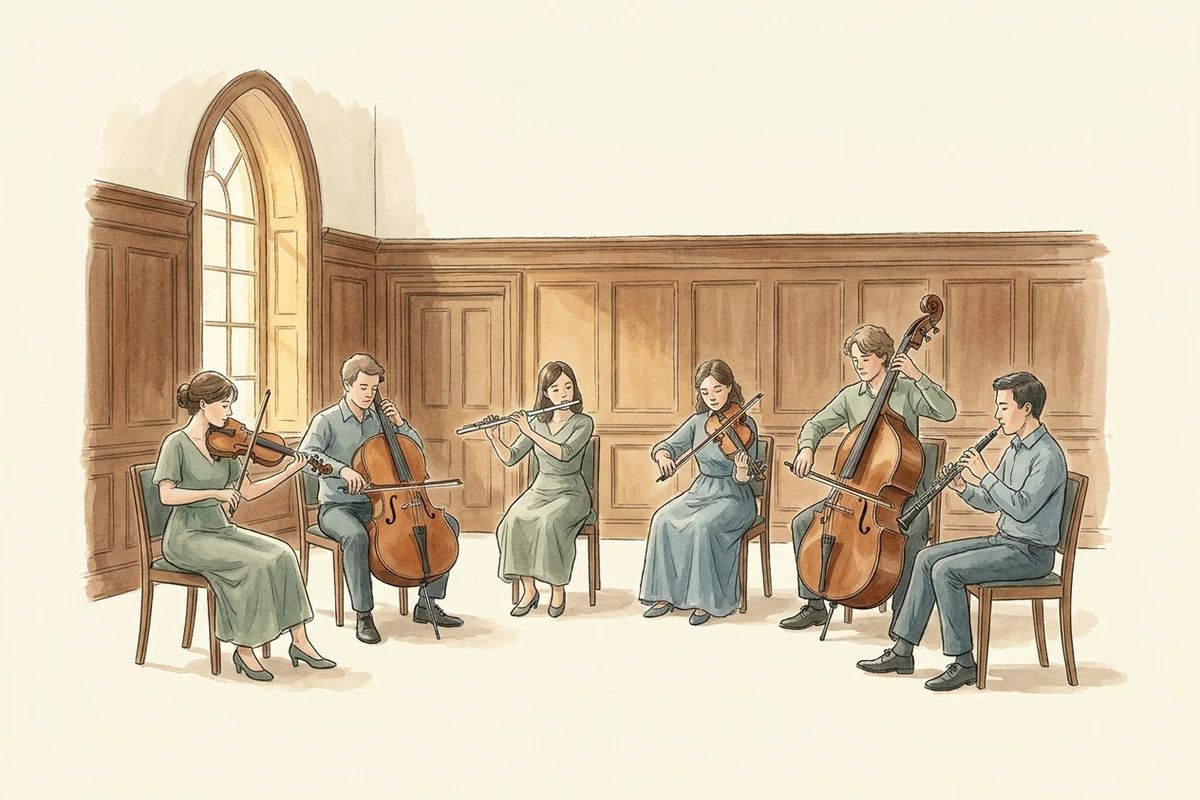
Back at our concert, a flute might carry the tune while the cellos play underneath. Later, the violins take over. The music depends on their timing and cooperation, not on every instrument playing its loudest note throughout.
Your brain is not literally full of tiny musicians, of course. The orchestra is a way of imagining teamwork. Real brain networks are more complicated, and a job such as remembering a story is not neatly tucked into one tiny box.
This also explains why “switch everything on!” is not a sensible goal. Different patterns of activity suit different jobs. Coordination matters more than imagining a single brainpower dial turned up to maximum.
If this makes you curious about thinking, feelings and memory, our Our Amazing Brain lesson offers another gentle place to explore them together.
How do scientists know the 10% story is a myth?
We cannot settle the question by thinking very hard and seeing whether a hidden corner suddenly wakes up.
Scientists need evidence.
One source comes from brain imaging: ways of studying what is happening inside the brain. These studies do not reveal a great unused wilderness taking up 90% of our heads. They show a brain whose different regions contribute to its work.
Another clue comes from what happens when particular areas are injured. Even damage to a relatively small area can affect important abilities. That would be difficult to explain if nearly all the brain had no job. Scientists also study how the brain can adapt after injury, so the picture is more complicated than a simple map of separate switches. Neuroscience for Kids explores both kinds of evidence.
And there is something else to remember: a neuron does not have to be sending a signal at a particular instant to be taking part in the brain’s work. It may be receiving information from other cells.
A pause in one kind of activity is not proof of a lifetime doing nothing.
Where did the 10% myth come from?
This is one mystery without a tidy answer.
Several explanations have been suggested. Perhaps remarks about our unused potential became confused with claims about unused brain tissue. Perhaps early discoveries about the brain were misunderstood. Stories and films have helped the idea travel further.
But the precise beginning is uncertain. Neuroscientist Eric Chudler, writing for Neuroscience for Kids, says he has not been able to trace its exact source.
The distinction between potential and tissue matters.
You may not yet know how to play a cello, speak Italian or draw a kingfisher. That does not mean the brain needed for learning those things is sitting unused behind a locked door.
Having more to learn is not the same as having most of your brain switched off.
Wonderfully Weird Facts About Your Busy Brain
Quiet does not always mean inactive
A neuron that is not firing a signal may still be receiving messages. It is a little like listening during a conversation: not speaking is different from not taking part. The comparison is an analogy, but the receiving-without-firing detail comes from Neuroscience for Kids.
Your brain has an impressive energy appetite
In adults, the brain makes up roughly 2% of body weight but uses about 20% of the body's energy, according to the MIT McGovern Institute. These are approximate adult figures, not an exact rule for every child.
A lot of work can happen in something you cannot hear humming.
Neurons are not the whole team
Your brain also contains cells called glia, which help support neurons and their work. The National Institute of Neurological Disorders and Stroke introduces both kinds of cells. Even our orchestra picture needs a backstage team.
Down the Rabbit Hole: What Is Your Brain Doing While You Sleep?
Here is a question that follows naturally: if your brain keeps working, what happens when you curl up under a blanket and drift off?
Does the orchestra finally go home?
No. Sleep is not the brain's off switch.
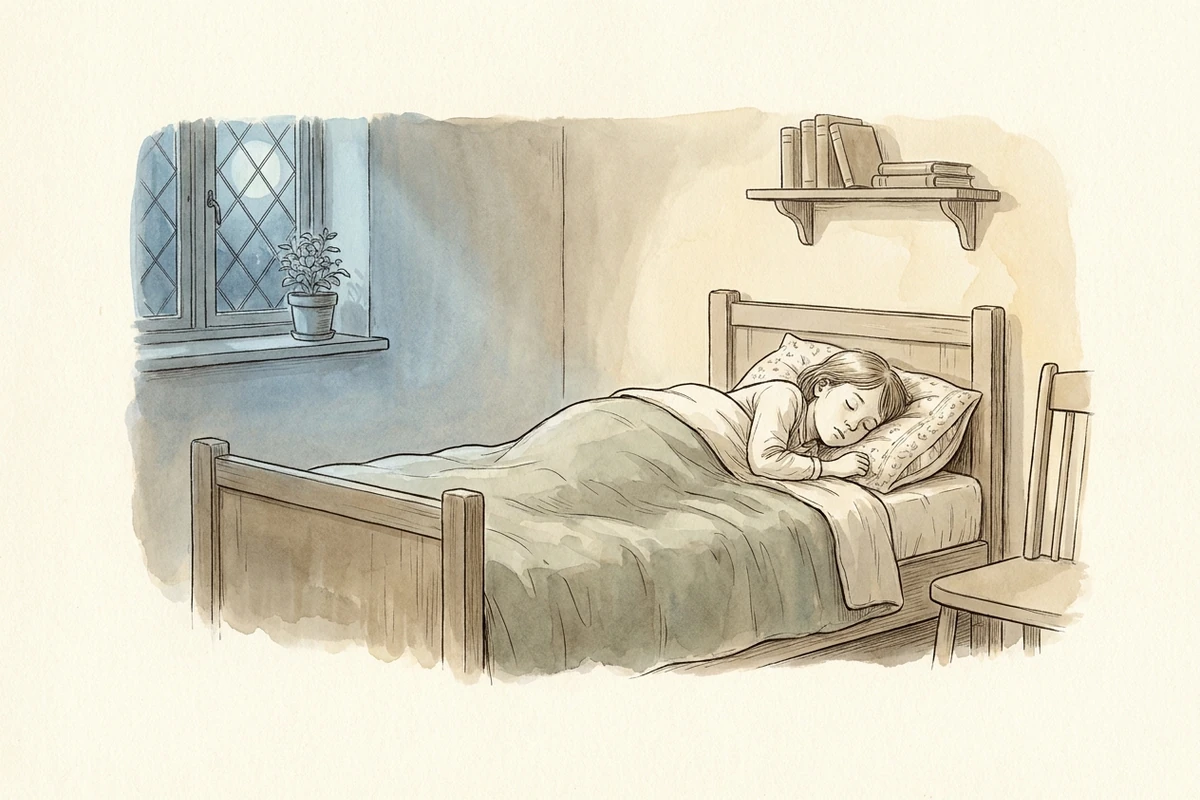
During a typical night, you move through different stages of sleep. Scientists call the two main types REM and non-REM sleep. REM stands for “rapid eye movement”: your eyes move beneath your closed eyelids during this stage.
Different stages have different patterns of brain activity. In REM sleep, some patterns become more like those seen when you are awake. Much of our dreaming happens then, although dreams can happen in other stages too. These details are explained in the National Institute of Neurological Disorders and Stroke's guide to sleep.
So a sleeping person may look wonderfully still while a great deal is happening inside.
Sleep also matters for learning and forming memories. It is not simply time stolen from the interesting business of being awake.
That does not mean scientists have solved every sleep mystery. The exact purpose of dreaming is still uncertain. Why your sleeping mind sometimes invents a flying bicycle or a talking sandwich remains a lovely question to wonder about, not a puzzle with one settled answer.
Try It Yourself: Notice Your Brain's Teamwork
You cannot measure brain activity with a storybook. But you can notice how many different abilities an ordinary moment brings together.
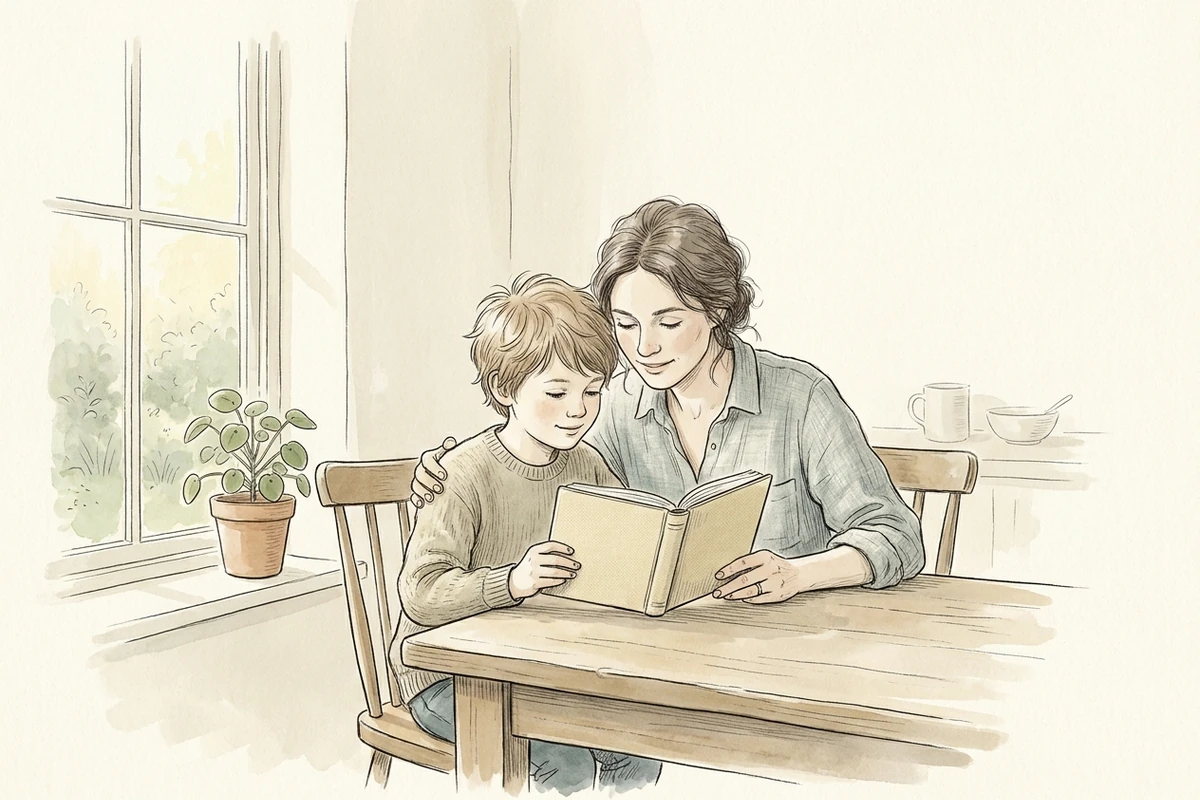
You will need a short story and someone to share it with. A grown-up, friend or sibling can read aloud; you can read together instead if that suits you better.
1. Settle somewhere comfortable
Choose a quiet place where you can sit and enjoy the story. There is no timer and nothing to win.
2. Listen to a short passage
A paragraph or two is enough. If you like, use this tiny invented beginning:
A fox found a small blue mitten beside the garden gate. Inside it was a folded leaf. On the leaf lay one bright red feather.
3. Pause and notice
Ask each other:
- Which detail do you remember?
- Did you imagine a picture, think of words, or notice something else?
- What do you think might happen next?
You do not need to remember everything. People experience stories differently, and there is no “best” answer.
4. Make a different ending
Perhaps the mitten belongs to a badger. Perhaps the feather is an invitation. Take turns adding a sentence, or draw what you imagine.
Then look back at what you have been doing: listening or reading, remembering, imagining and choosing how to share an idea.
This is a noticing activity, not a brain scan or a test of intelligence. It cannot tell you what percentage of your brain you used. Its purpose is simply to make an everyday bit of teamwork easier to appreciate.
The Big Takeaway
Return to that orchestra for a moment.
The wonder is not that almost all the musicians are waiting for someone to discover them. It is that so many different parts can contribute to the music.
Your brain is already doing remarkable work when you follow a story, recognise a voice, wonder about tomorrow or fall asleep.
There is no secret 90% you must unlock before you can begin learning something new.
There is simply you, a busy brain, and another question worth asking.
Sources and Further Reading
- MIT McGovern Institute — Do we only use 10 percent of our brain?: the myth, neural activity and the brain's energy use.
- University of Washington, Neuroscience for Kids — Do We Use Only 10% of Our Brains?: evidence, possible origins and why quiet neurons are not necessarily unused.
- National Institute of Neurological Disorders and Stroke — Brain Basics: The Life and Death of a Neuron: neurons, glia and communication. A grown-up can help choose which sections to explore.
- National Institute of Neurological Disorders and Stroke — Brain Basics: Understanding Sleep: sleep stages, brain activity, learning and dreaming.
Want to keep wondering together? Explore Our Amazing Brain, a printable lesson with a Parent Guide, Journal and invitations to investigate how we think, feel and learn.