



Part of our Wonder Series, where we look again at familiar things and discover the wild truth hiding behind the picture.
When you picture a flamingo, what is it doing?
Perhaps it is standing perfectly still on one leg. Perhaps its neck is folded into a graceful S, or its head is upside down in the water. Flamingos look so completely designed for wading that it can be surprising to discover the truth.
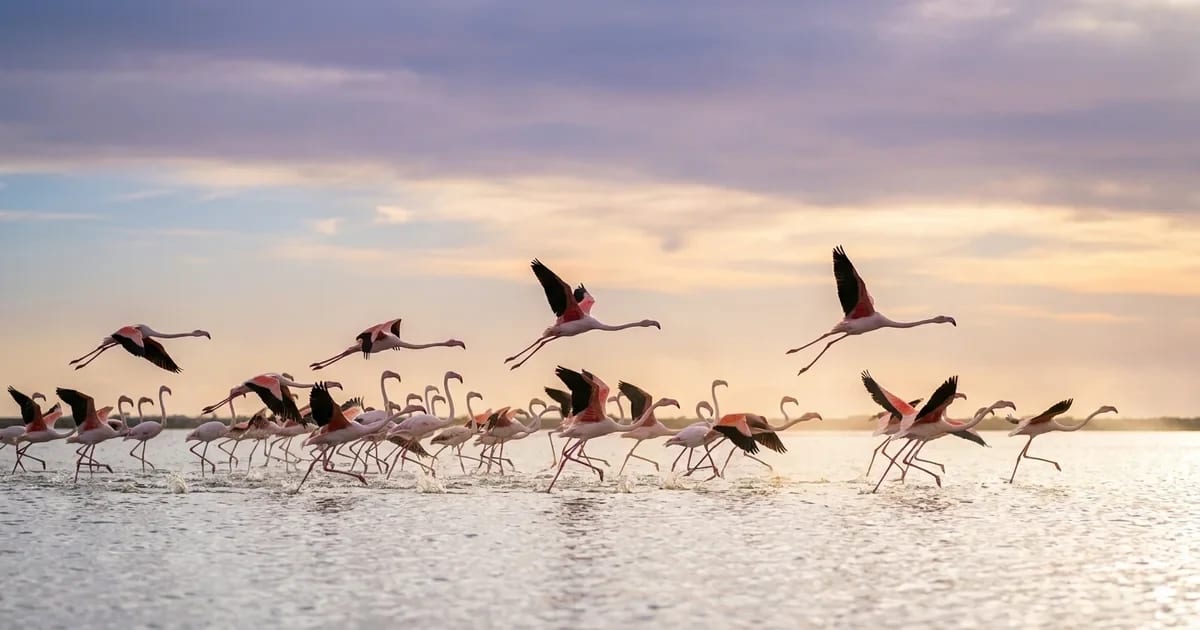
Those enormously long legs do leave the ground. Those curved necks straighten. And those soft pink bodies can become powerful shapes crossing the sky.
Flamingos do not merely fly. For many wild flamingos, flight is how they find the next safe lake, feeding place or breeding ground.
Why Do People Think Flamingos Cannot Fly?
Most people meet flamingos in photographs, ornaments or zoos, where the birds are usually standing. Wild flamingos also spend hours wading and feeding, so their heads appear underwater more often than their wings appear overhead.
Their long legs and heavy-looking bills may seem awkward, but the wings contain powerful muscles and long flight feathers. Zoo management has also sometimes restricted flight, which can make a naturally flying bird look flightless.
The Wings Hidden Inside a Pink Bird
A resting flamingo keeps an astonishing secret folded against its sides.
Most of the bird looks pink, but its main flight feathers are black. The Smithsonian describes black flight feathers along the wing edges, and reference material from SeaWorld lists 12 principal flight feathers on each wing. When the wings are closed, much of that darkness disappears beneath pink feathers. When the bird opens them, the contrast flashes into view.
Wingspan varies by species. A greater flamingo can span roughly 140 to 165 centimetres — wider than many adults are tall. To turn those wings into lift, the bird must first get air moving over them.
How Does a Flamingo Take Off?
A small bird can seem to spring straight from a branch. A flamingo usually needs a runway.
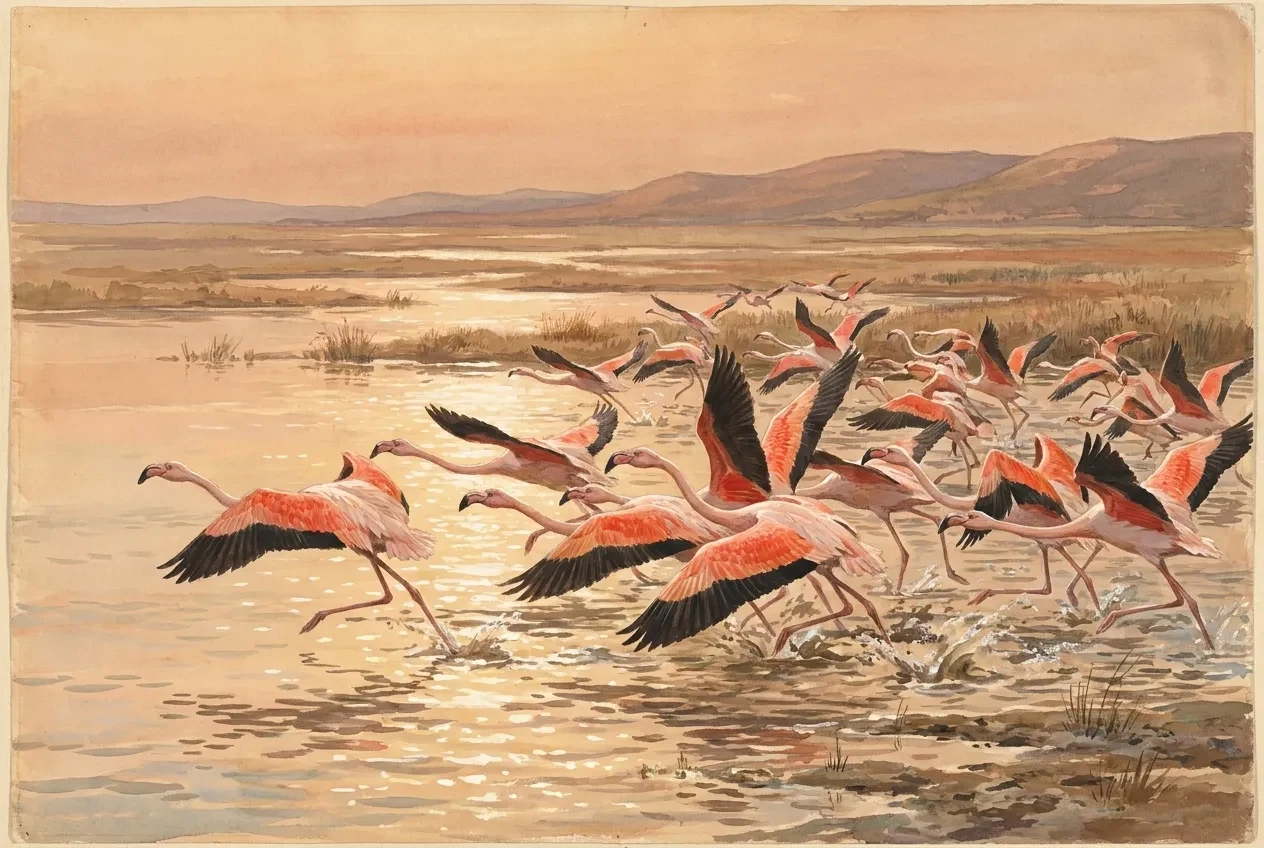
The bird leans forward, opens its wings and begins to run. If it starts on water, its webbed feet slap and splash across the surface. Each stride adds speed while the wings beat harder. Then the body lifts, the feet leave the water, and the running bird becomes a flying one.
Facing into the wind can help because the important thing is the speed of air passing over the wings. A headwind means the bird may gain useful airflow without travelling as quickly over the ground.
The take-off looks untidy for a few seconds — long legs, spray and enormous wings all moving at once. Then everything changes. The neck reaches forward. The legs stream behind. The bird becomes a long, balanced line.
This is one of the loveliest lessons in nature: an animal can look awkward in one place and perfectly made for another.
What Does a Flying Flamingo Look Like?
In the air, a flamingo does not keep the elegant S-shaped neck seen when it is resting. The neck is fully extended in front, and the legs point backwards beyond the tail.
That shape balances the body around the wings. Rapid wingbeats keep the bird moving, while the black flight feathers make each beat look stronger and more dramatic than you might expect from a mostly pink bird.
A distant flock can look like a string of dark and rosy dashes. Flamingos sometimes travel in lines or loose V-like formations. Formation flight can help large birds use rising air near a neighbour’s wingtips, although not every flock forms a perfect V. Contact calls may also help these social birds remain together.
How Fast and Far Can Flamingos Fly?
Flamingo flocks are commonly reported flying at about 50 to 60 kilometres per hour. Wind matters: a tailwind increases speed over the ground, while a headwind reduces it.
Some sources report journeys of 500 to 600 kilometres in one night between habitats. Not every bird travels that far, but the figure shows what flamingo wings make possible. Species, weather, food, water levels and safe resting places all shape the journey. For a flamingo, the map is made of wetlands.
Do Flamingos Fly at Night?
Yes. Long-distance flamingo journeys often happen at night. Cooler air may make demanding travel easier, although patterns differ between populations. While people sleep, a whole flock may be passing overhead unseen.
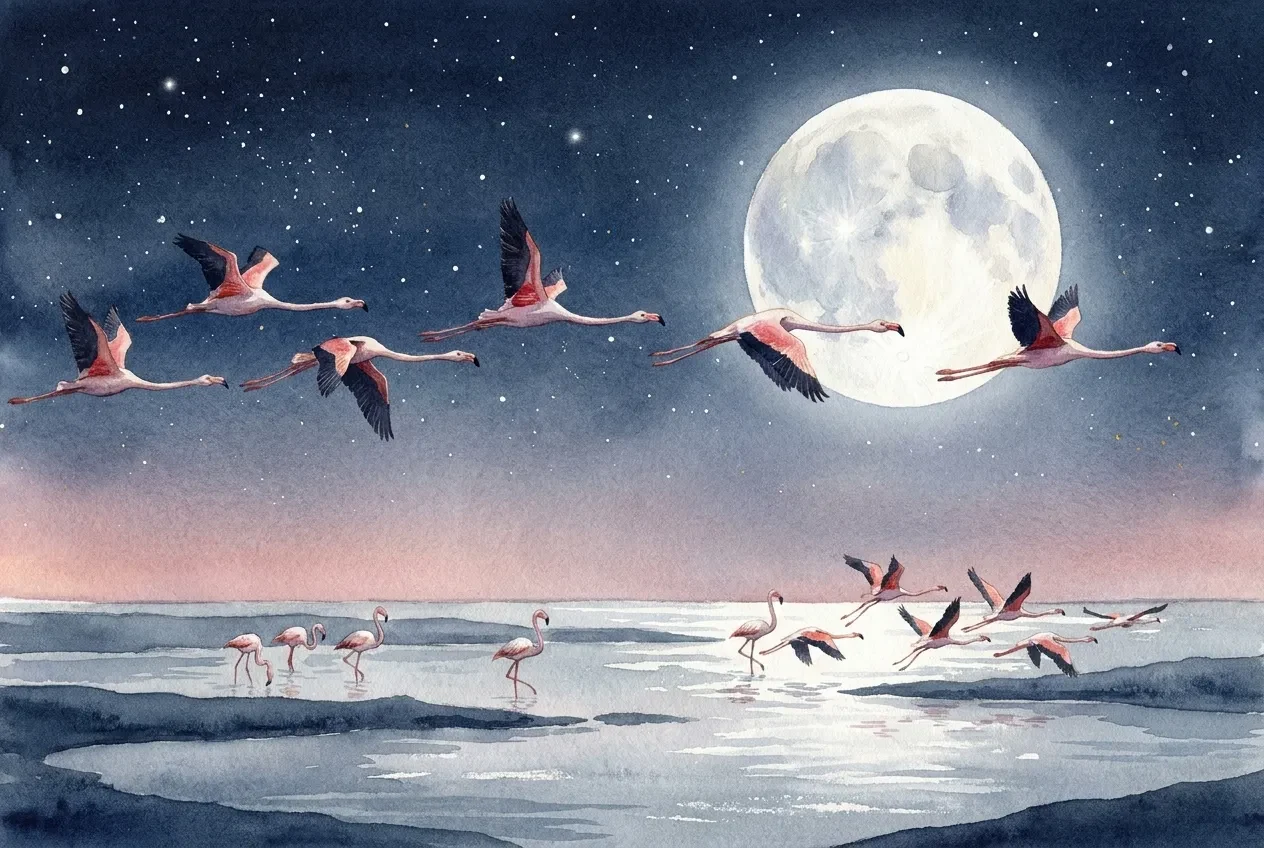
Imagine looking up and hearing faint calls without seeing their makers. Somewhere above, pink birds with black wing feathers may be travelling from one patch of water to another.
Flying at night is not the same as being nocturnal. Flamingos also feed, display and move during daylight. Night is simply an important part of some journeys.
Do All Flamingos Migrate?
Not in one neat, predictable way.
Some populations make seasonal movements, while others are more nomadic. They respond to water levels, food, weather and breeding conditions rather than following one universal timetable.
WWT describes many wild flamingos as irregular wanderers. A shallow lake can shrink, flood or lose food, so connected wetlands are essential: protecting one lake is not enough if the birds cannot safely reach the next.
How Do Flamingos Land?
Landing reverses the take-off story.
The bird lowers towards a clear stretch of water or ground, opens its wings to slow down and reaches its legs forward. Its feet touch first. Momentum carries it onwards, so it runs several paces while the wings continue to brake.
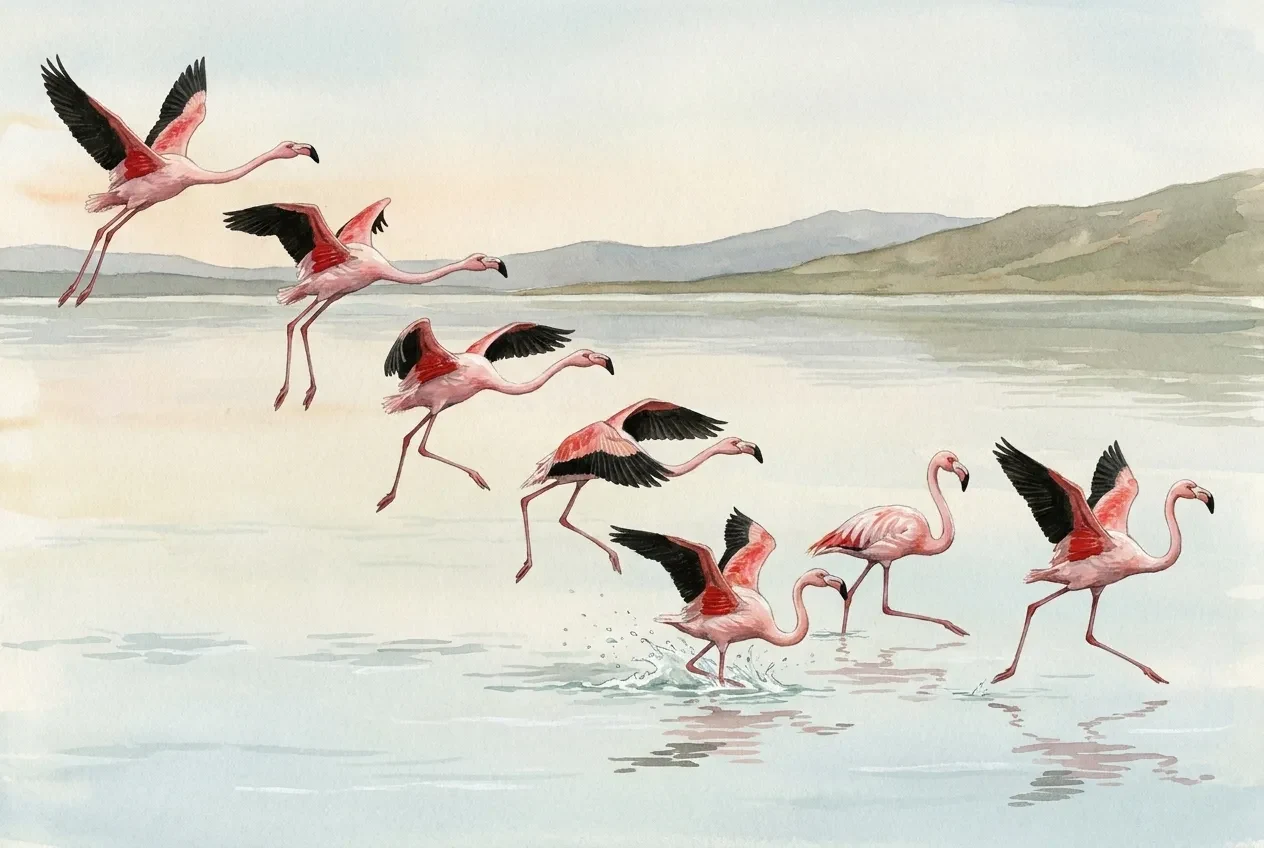
A graceful landing is not a sudden stop. It is a careful exchange: speed becomes drag, flight becomes running, and running becomes stillness.
Why Don’t Flamingos Fly Away from Zoos?
There is no single answer because animal collections manage birds differently.
Some collections use large netted aviaries that permit flight. Others have clipped flight feathers; clipping is temporary because feathers regrow after moulting.
Pinioning permanently alters a wing and has been criticised by animal-welfare organisations because flight is natural and the procedure is irreversible. Modern enclosure design can offer alternatives, although standards vary. Zoo flamingos have not simply “forgotten” how to fly; what you see depends on each enclosure and its management history.
Wonderfully Weird Flamingo Flight Facts
- Flamingos usually run before take-off and after landing.
- Their necks point forward in flight rather than curling into an S.
- Their legs stretch backwards beyond the tail.
- Black flight feathers are largely hidden while the wings are folded.
- Long journeys often happen at night.
- Some flamingos move regularly, while others wander in response to changing wetlands.
- Strong winds can carry birds far from an expected route. After Hurricane Idalia in 2023, American flamingos appeared across widely separated parts of the United States.
- Power lines and other infrastructure can become dangerous obstacles for large flocks.
Down the Rabbit Hole: Why Are Their Flight Feathers Black?
A flamingo’s pink colour comes from carotenoid pigments in its food, but the strongest visual surprise appears when the wings open: a dark edge of black feathers.
Black feathers contain melanin. In many birds, melanin is associated with increased resistance to wear, which is useful for feathers that must cope with repeated bending and the force of flight. The exact pattern is part of flamingo plumage, not evidence that the bird is losing its pink.
To follow the colour story from algae to feathers, visit Why Are Flamingos Pink?. Then discover why a whole flock can be called a flamboyance in Collective Nouns for Animals: Why so many?.
Try It Yourself: Make a Flamingo Flight Flipbook
Turn running into flight using paper and a pencil.
- Fold several small pages and ask a grown-up to secure one edge.
- Draw a standing flamingo on the first page.
- On each new page, open the wings farther and move the legs backwards.
- Add splashes, then lift the feet clear of the water in the final pictures.
- Flip the pages and watch your flamingo take off.
You can also watch a trusted wildlife video and count the running steps before lift-off. Compare two birds: wind and water depth may change the answer.
The Big Takeaway
Flamingos can fly because their strange-looking bodies are not mistakes. Long wings generate lift. Powerful muscles beat those wings. Running feet create take-off speed. A stretched neck and trailing legs balance the bird in the air.
Flight connects one wetland to another. It lets flamingos search for food, respond to changing water and gather where conditions are right for breeding.
The next time you see a flamingo standing like a pink question mark, imagine the other shape hidden inside it: wings open, black feathers flashing, neck straight, legs streaming behind — a living arrow crossing the night.
Sources and Further Reading
- Smithsonian National Zoo — American Flamingo
- Smithsonian National Zoo — Why Are Flamingos Pink? And Other Facts
- San Diego Zoo — Flamingo
- SeaWorld — Flamingo Adaptations
- WWT — Migratory Wildfowl and Flamingo Travellers
- Audubon — American Flamingo
- PLOS Biology — Flight Speeds Among Bird Species
- BirdLife International — Flamingo Flight and Collision Risks
Continue the flamingo trail with Why Are Flamingos Pink? and Collective Nouns for Animals: Why so many?. For a slower outdoor investigation, take your questions into Anna Comstock & Nature Journaling.