Look again at apples, bowls, cloth and mountains—and discover how careful seeing can transform an ordinary scene.
£6.99
Digital download · a printable Parent Guide and Wonder Companion Journal for your child
 Digital download
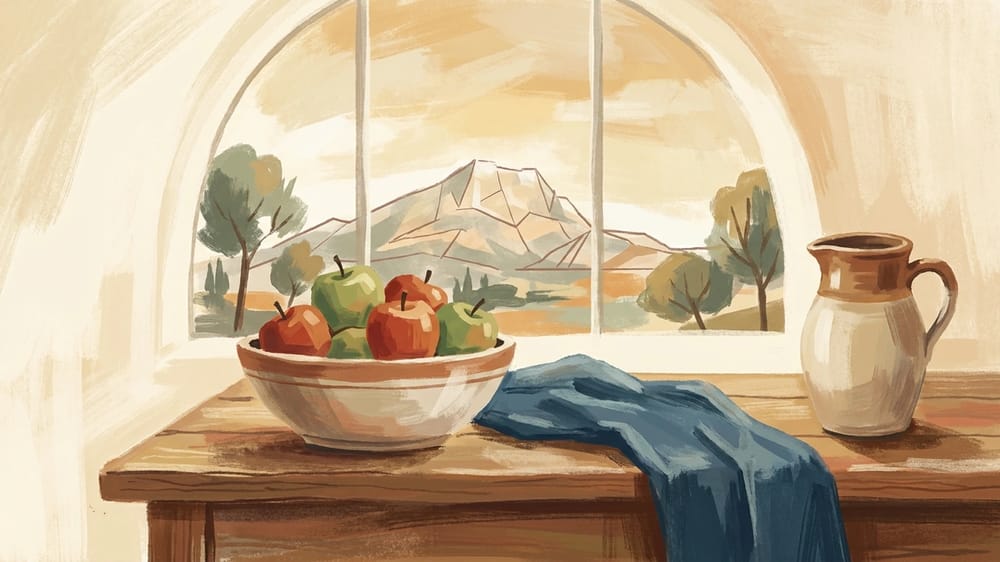
Paul Cézanne returned again and again to apples, landscapes and familiar objects. Rather than simply copying what he saw, he explored their underlying shapes, relationships, colours and changing light.
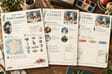
This printable Wonder Lesson invites children to look closely, explore tints and shades, study a still life and make a painting of their own. The Parent Guide and Wonder Companion Journal help families slow down and discover how much there is to notice in an ordinary bowl, apple or jug.
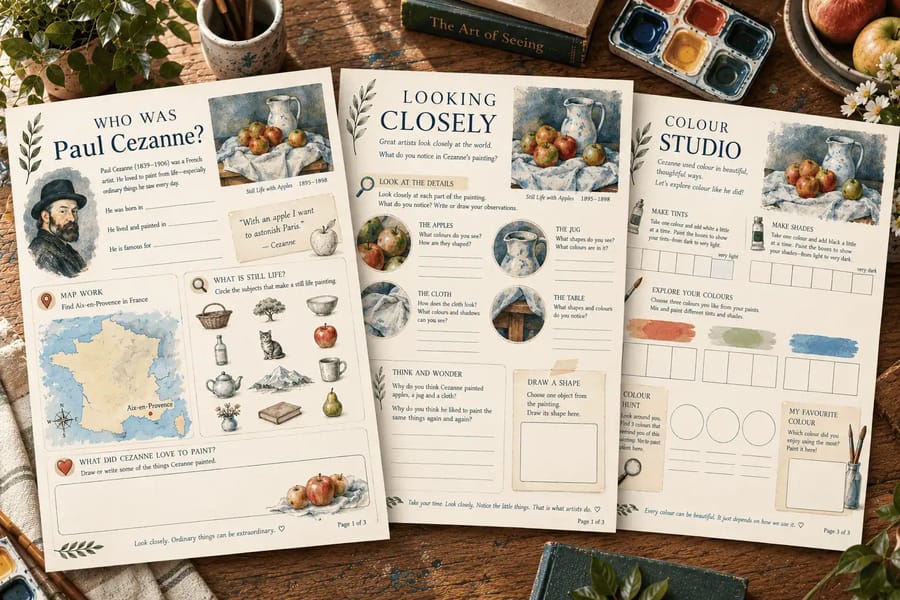
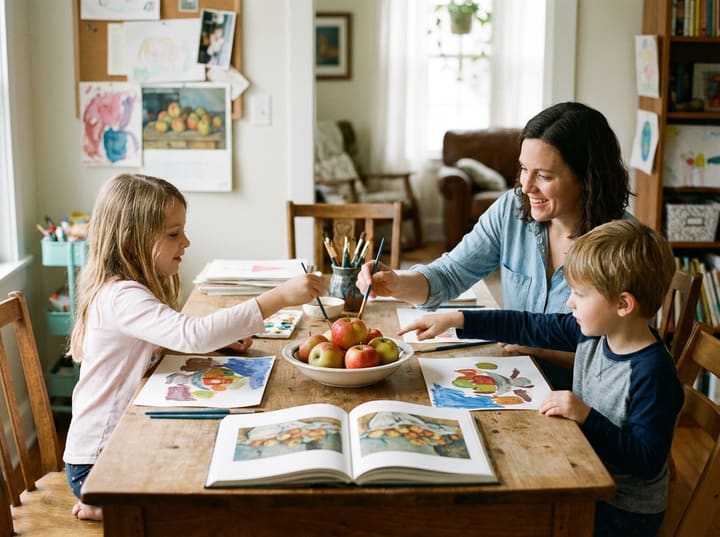
Set up a few familiar objects and take time to notice them together. The Parent Guide supplies the artist context and looking prompts while the journal helps children mix colours and create their own composition.
There is no need to rush towards a finished painting or copy Cézanne perfectly. Looking at one apple from a new angle, noticing a shadow or trying a lighter shade can be a small discovery to share.
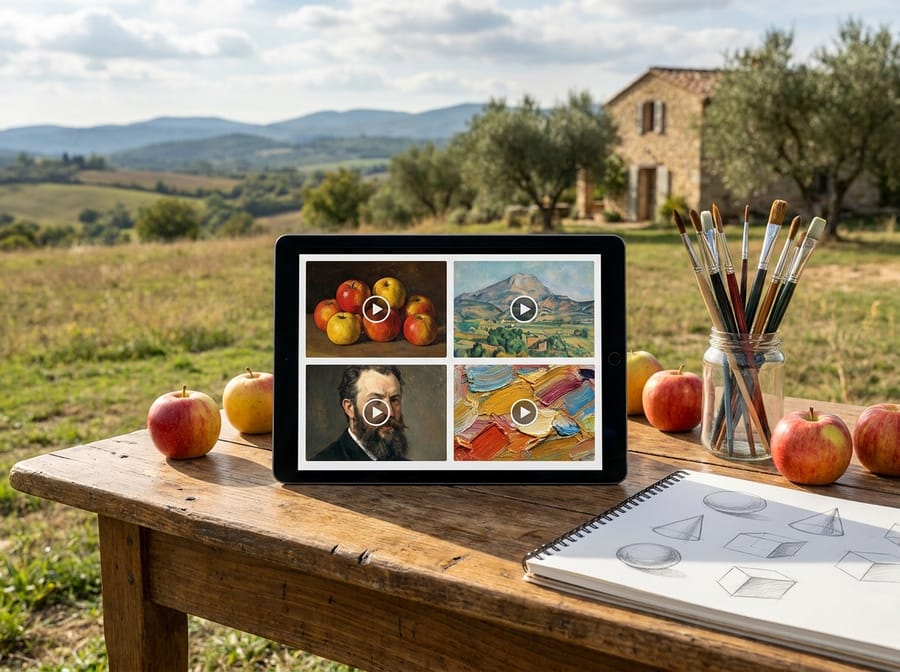
The free companion resources offer three videos about Cézanne’s art and studio, a Cézanne and the Apple Boy read-aloud and two Kahoots covering his life and the story.
Arrange a still life, draw an apple from three viewpoints and wonder whether patient looking can change how you understand an ordinary object. The deeper National Gallery video is best explored with older children or through shared viewing.
Can’t find what you’re looking for? We’re always happy to help.
There is no fixed age recommendation. Choose the looking, drawing and colour activities that suit your child, offering help with reading and writing where useful. Responses can be shared through conversation and art as well as written answers.
Two printable PDFs: a four-page Parent Guide and a four-page Wonder Companion Journal, eight pages in total. This is a digital download, not a physical book or art kit.
Printing provides the journal spaces for observations, colour studies and a still life. You can read the guide on a screen and use your own paper or sketchbook for responses if you prefer.
There is no fixed completion time. Explore one painting or activity at a time, or return over several days. Looking slowly matters more than finishing every page.
Use paper, pencils and a few ordinary objects such as fruit, a bowl or a jug. Paints and brushes let children explore tints and shades by adding white or black; use materials appropriate for your child and protect your work surface.
Yes. The videos, read-aloud, quizzes and further drawing prompts are free to access with or without purchasing the printable lesson. The Parent Guide and Wonder Companion Journal are the paid download.
No. Begin with careful looking and simple drawings, then try colour mixing if you wish. The aim is to notice shapes, light and relationships, not produce a technically perfect copy of Cézanne’s work.
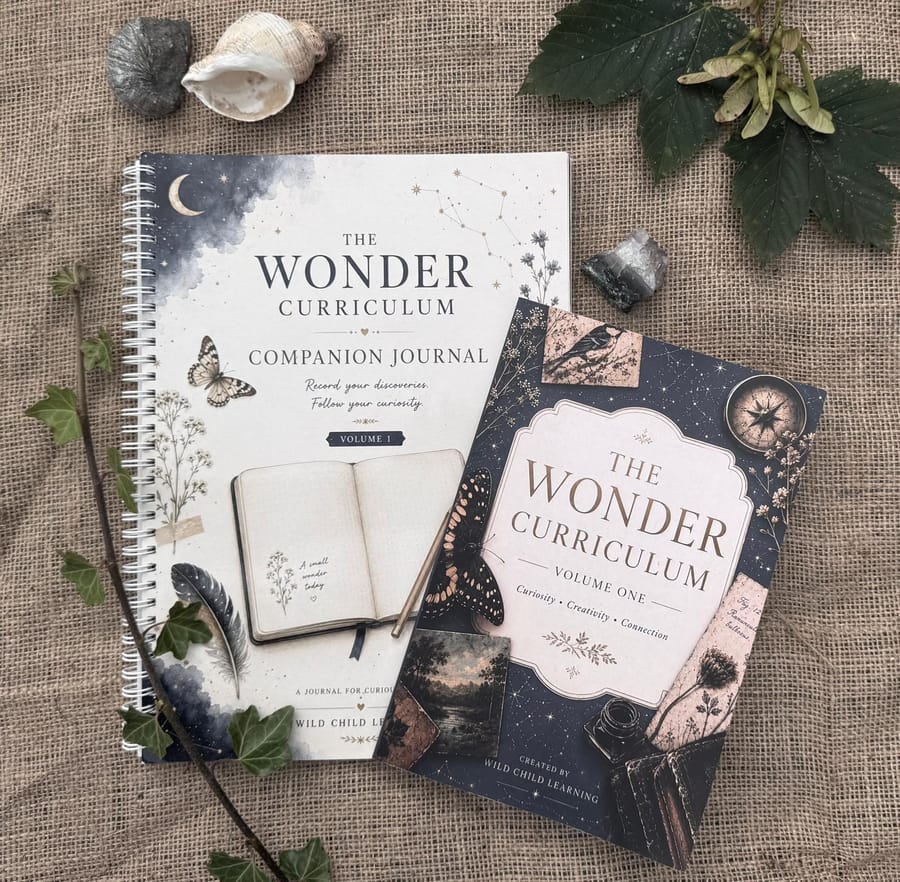
Paul Cézanne is one of the wonder-led adventures in The Wonder Curriculum Volume One. The complete family set travels through science, nature, history, art and the wider world, with every adventure designed to be used in any order.
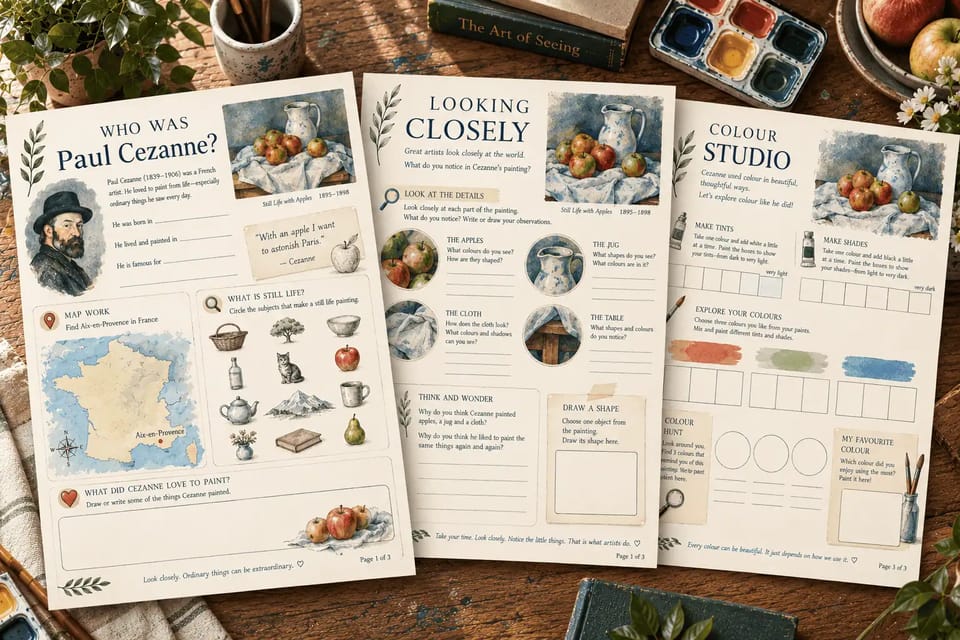
Download the Parent Guide and Wonder Companion Journal and explore Cézanne, colour and the art of looking closely together.
£6.99
Digital download · a printable Parent Guide and Wonder Companion Journal for your child