


Part of our Wonder Series, where we explore the weird, wonderful science hiding inside everyday life — even the stinky bits.
Here's a strange job to imagine: getting paid to search for poo. Not to clean it up — to study it, carefully, like a treasure. Believe it or not, that's a real job, and some of the scientists who do it use trained dogs, secret DNA tests, and even fossils that are millions of years old.
So let's wonder together: how can something an animal leaves behind by accident tell us so much about it? What can a scientist possibly learn from a pile of poo that they couldn't learn any other way?
Poo Is a Message, Even If the Animal Didn't Mean to Send It
Here's the big idea behind all of this: every dropping is made from whatever an animal has been eating, and it carries tiny clues about that animal's body along with it — what it ate, how healthy it is, sometimes even how it's feeling. The animal isn't trying to tell anyone anything. But if you know how to "read" it, poo talks.
That's exactly why scientists who study wild animals — especially ones that are shy, rare, or live somewhere humans can't easily follow — treat poo as one of their most valuable clues.
Clue #1: What an Animal Has Been Eating
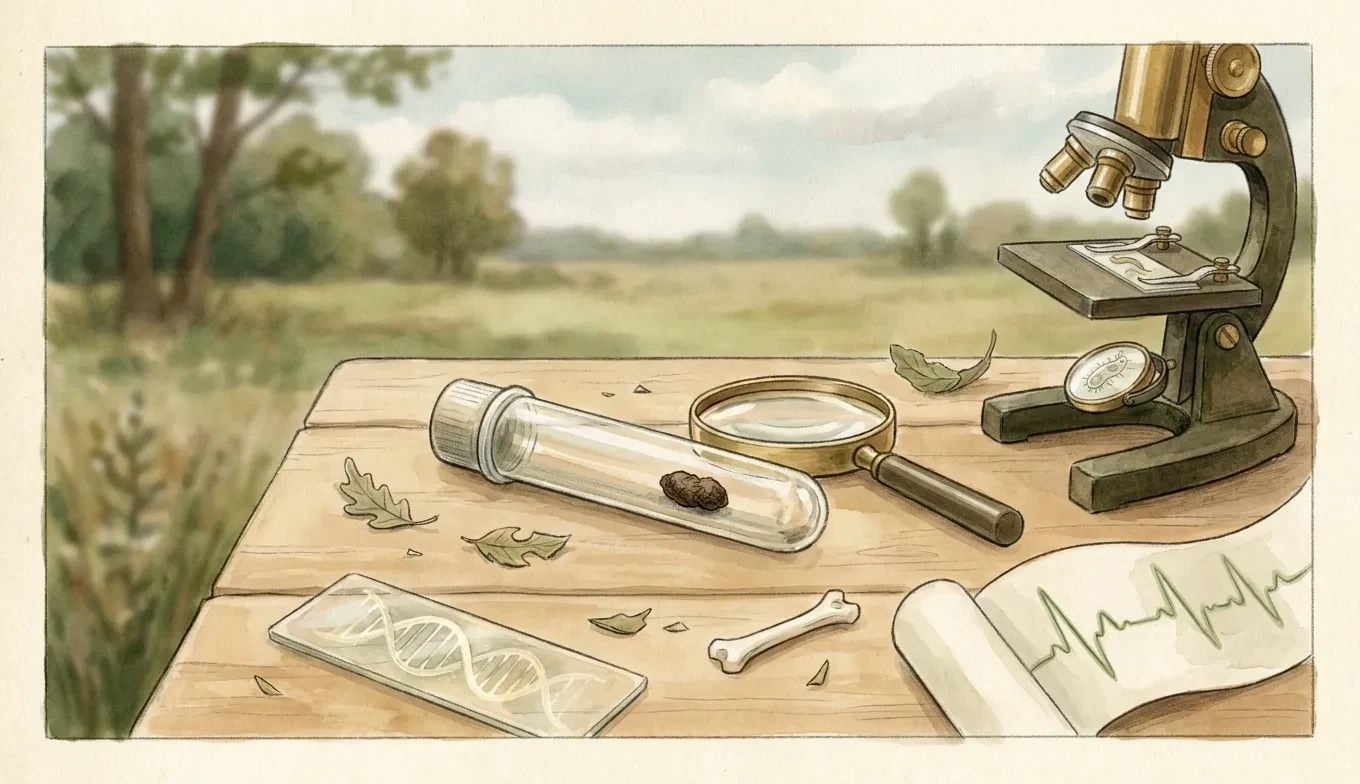
The simplest thing poo reveals is diet, and sometimes the evidence is surprisingly obvious. A fox's dropping might contain tiny bones or fur from something it's eaten. A herbivore's poo is often packed with undigested plant fibre. Scientists studying elusive animals — ones that are almost impossible to watch eating in the wild — can reconstruct an entire diet just from what turns up, undigested, in their droppings.
Clue #2: Health, Stress, and Even Feelings
This is the part that surprises most people: poo can reveal how an animal is feeling, not just what it ate.
When an animal feels stressed, its body releases a hormone called cortisol — and traces of that hormone pass out in its droppings. Scientists studying giant pandas at zoos and conservation centres regularly test faecal samples for cortisol to check whether the pandas are calm or stressed, because stressed pandas are far less likely to breed successfully, and giant pandas are endangered. Researchers at Beijing Zoo tracked cortisol levels in panda droppings for a whole year and found stress levels rose during the busiest tourist season — proof that poo can measure something as invisible as a feeling.
Poo can also reveal parasites, infections, and pregnancy hormones, all without a scientist ever needing to touch the animal itself. It's one of the gentlest ways to check on an animal's health that exists.
Clue #3: Sniffer Dogs That Hunt for Poo
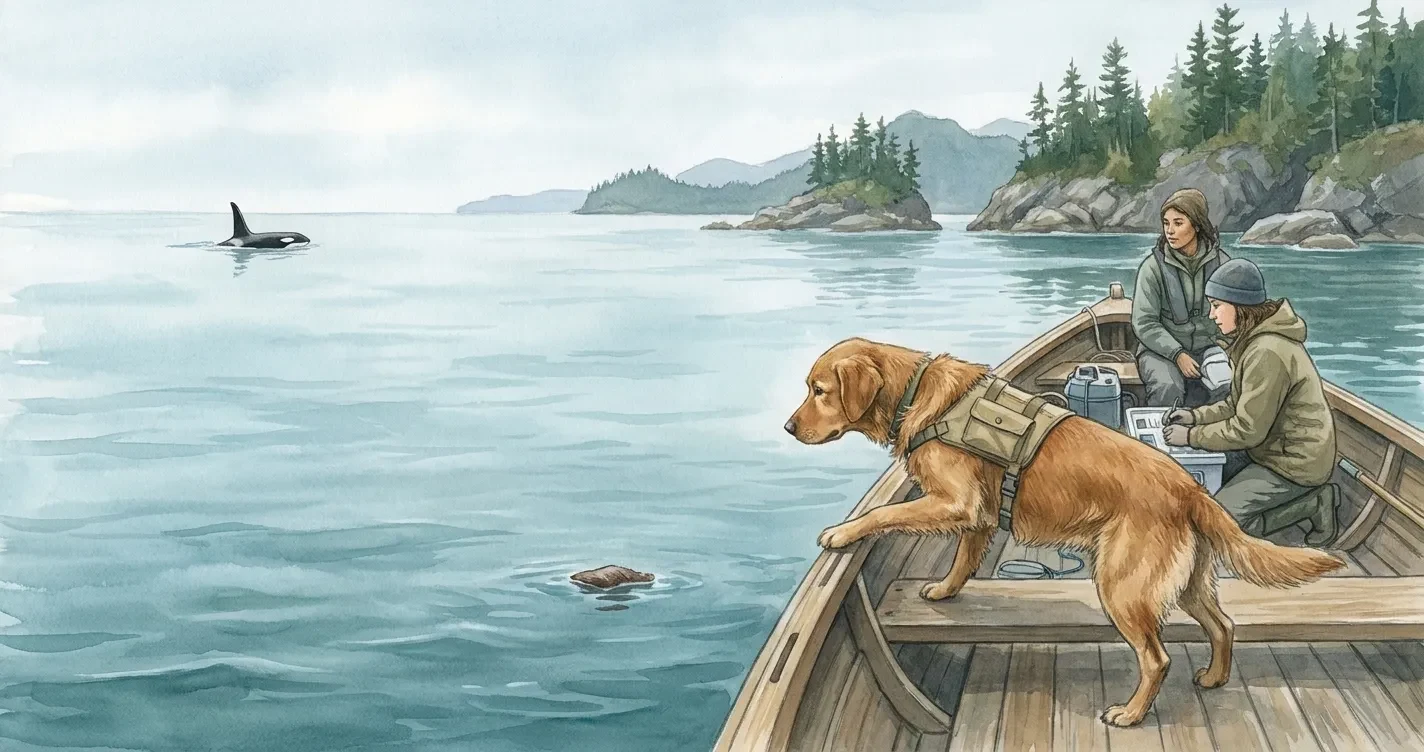
Some poo is so hard to find that scientists have trained dogs to hunt for it — and this might be the most wonderful poo-science job of all.
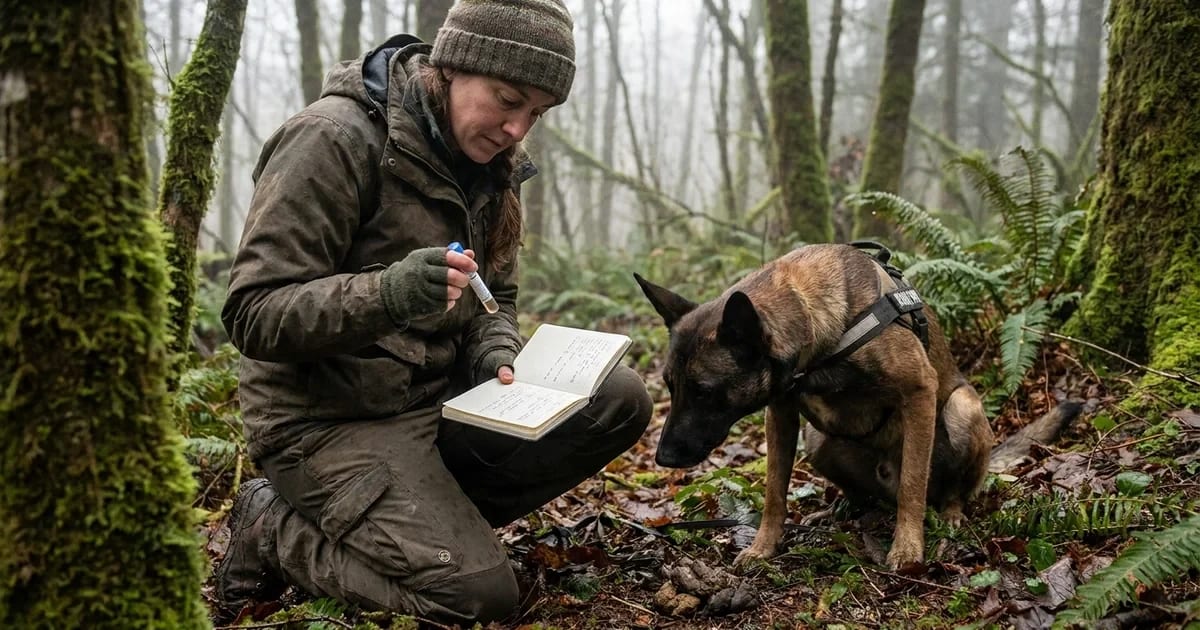
A team of specially trained rescue dogs, working with scientists at the University of Washington's Center for Conservation Biology, ride on the front of research boats sniffing the air for the scent of floating orca (killer whale) droppings — sometimes from up to a mile away. When a dog like Eba, one of the team's most experienced sniffers, catches the scent, her whole body freezes and points toward it, and the boat turns to follow her nose. The scientists then scoop up the sample and test it for diet, stress hormones, parasites, and even tiny bits of plastic pollution, building up a picture of the whale's health that would be almost impossible to get any other way — because you can hardly ask a killer whale to visit the vet.
Dogs like these have also been trained to sniff out droppings from rare, hard-to-find animals on land, including wolves, big cats, and even giant armadillos, helping scientists study animals that are otherwise nearly impossible to track.
Clue #4: What Ancient Animals Ate, Millions of Years Later
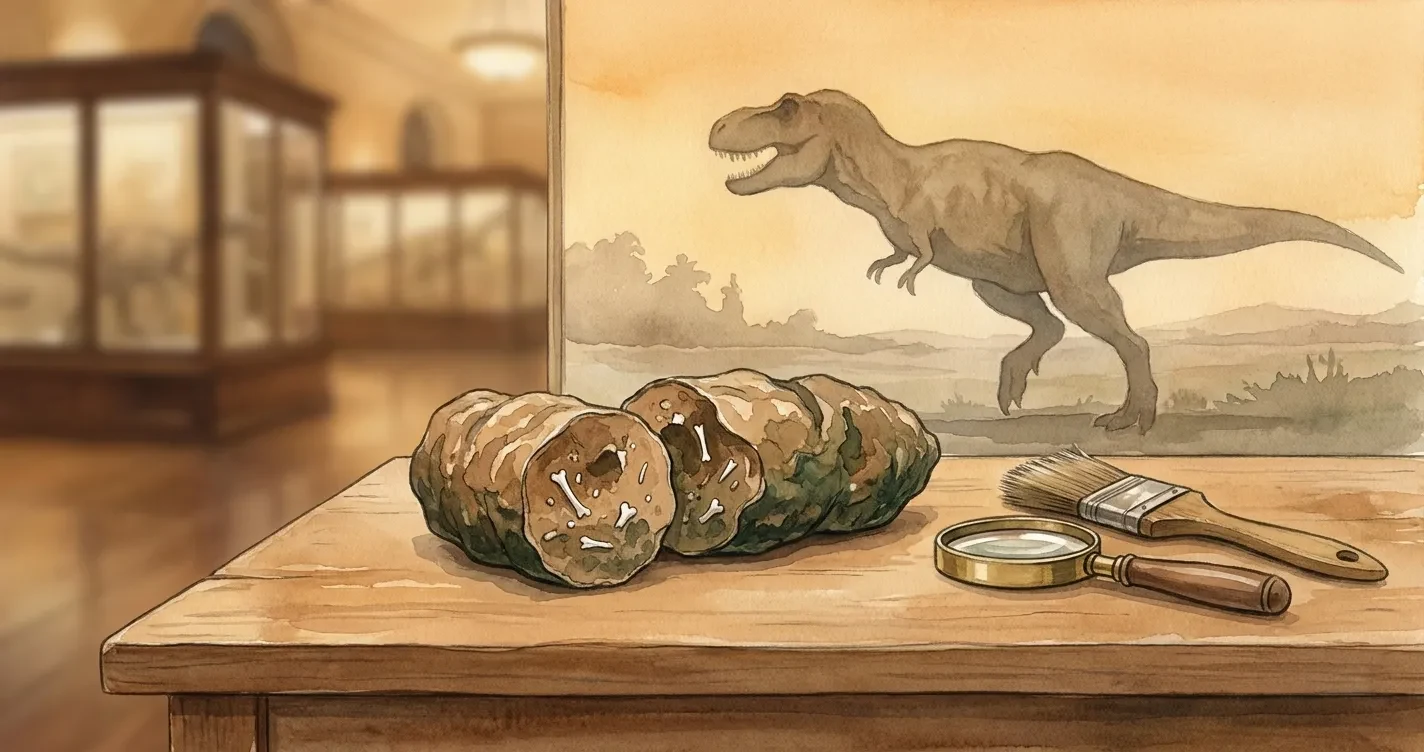
Here's the part that sounds almost unbelievable: some poo is so old, it's turned to stone.
Fossilised droppings are called coprolites, and they can survive for millions of years, long after the animal that made them has turned to fossil bone (or vanished completely). In 1998, scientists in Canada discovered a giant fossilised dropping — nearly half a metre long — packed with crunched-up bone fragments. By studying it closely, they worked out it almost certainly came from a Tyrannosaurus rex, and the smashed bone inside proved T. rex didn't just nibble delicately at its food — it crunched through bone like a dog with a chew toy. There's even a real museum in Arizona, called the Poozeum, with more than 7,000 fossilised droppings from creatures that lived millions of years ago, some the size of a dinner plate.
Without that ancient, fossilised poo, we might never have known exactly how T. rex actually ate.
Could This Be Your Real Job One Day?
If sniffing out poo for science sounds like your kind of adventure, here's proof it's a genuine, real job that real people are paid to do — not something made up for this article.
Back in 2019, the US National Park Service advertised for a real position at Yosemite National Park called a Biological Science Technician. Right there in the official list of duties, alongside surveying animals and using GPS equipment, was this exact line: "surveying and collecting scat." In plain English: part of the job, written down officially by the US government, was going out into the wilderness and gathering animal poo — to help study foxes, fishers, bighorn sheep and bats living in the mountains.
People with titles like Wildlife Technician, Conservation Detection Dog Handler, and Biological Field Technician are hired for exactly this kind of work every year, all over the world — sometimes with a trained sniffer dog, sometimes just a very sharp eye and a good pair of boots.
Try It Yourself: Think Like a Poo Scientist
You don't need a lab, a dog, or a dinosaur to practise this skill.
- Pick an animal you're curious about — a pet, a garden bird, or an animal from a book.
- Think about what it eats. What would you expect its droppings to look like, based only on its diet?
- Write down your prediction, like a real scientist testing a hypothesis, before checking any pictures.
- Check safely online or in a nature book (never touch real droppings — more on that below) to see how close your prediction was.
Congratulations — you've just used exactly the same kind of thinking real conservation scientists use every day, just without the boat, the dog, or the fossil.
An Important Grown-Up Note
Real animal droppings, fresh or old, can carry germs that make people unwell, so this stays a look-don't-touch topic. Fossilised coprolites in a museum are perfectly safe to see up close because they turned to stone millions of years ago — but anything you find outside on a walk should be admired from a distance, never picked up. Always wash your hands after being outdoors, and ask a grown-up before touching anything you find in nature.
The Big Takeaway
Poo isn't just something animals leave behind — for scientists, it's one of the richest, most honest sources of information in the whole natural world. It can reveal a hidden diet, an invisible feeling, a rare species nobody could otherwise find, or even how a dinosaur ate its dinner 75 million years ago. All of that, from something most of us walk straight past without a second glance.
So the next time you spot a dropping on a woodland walk (from a safe distance, of course), you might just be looking at a tiny, honest report — written by an animal that had absolutely no idea it was leaving one behind.
Curious about more strange science hiding in the natural world? Don't miss Animal Poo Facts for Kids for more weird and wonderful poo facts, or explore Poo in the Zoo, our full printable lesson packed with activities and rabbit holes to explore together.