

Whose Poop Is It?
Compare droppings from different animals and discover surprising clues about their diets.
Follow the clues in animal poo to explore digestion, diets, habitats and zoo science.
Poo may be funny, but it is also useful evidence. Its size, shape and contents can help wildlife experts learn what an animal ate, where it travelled and whether it is healthy.
Laugh first, then look for the science.
Discover what happens to food and what droppings reveal about animals.
Compare droppings from different animals and discover surprising clues about their diets.
Follow food through the digestive system and find out how the body turns leftovers into waste.
Enjoy funny books that introduce animal poo, zoo life and animal differences.
A silly and memorable story to introduce children to animal poo, zoo life and the animals who live there.
A funny classic that children love, with lots of opportunity to compare different animal droppings and talk about how animals are different.
Try playful investigations without touching real animal waste.
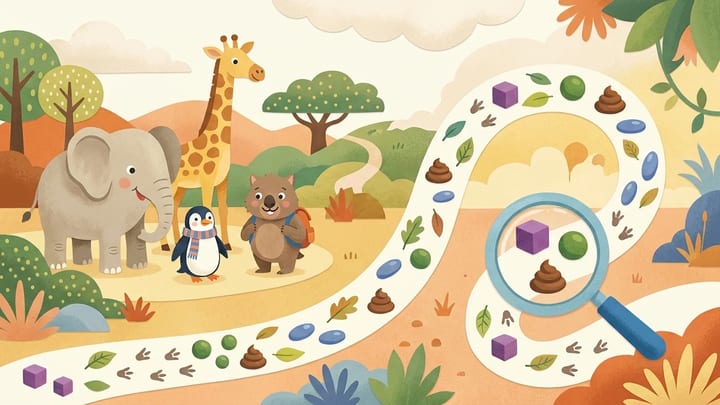
Match photographs or drawings of tracks and droppings to their animals using shape, size and diet clues. Never handle droppings; observe real examples only from a safe distance with an adult.
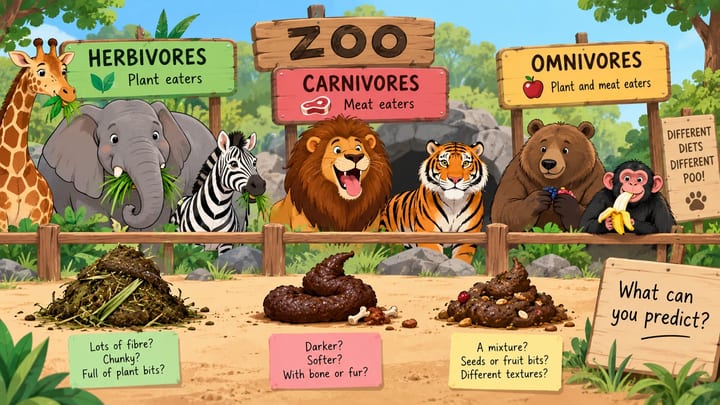
Sort animals into herbivores, carnivores and omnivores, then predict how their waste might differ.
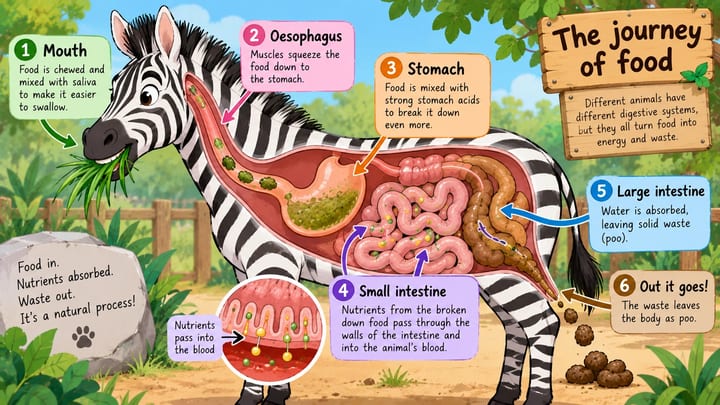
Draw food travelling through an animal’s body as nutrients are absorbed and waste is left behind.
Follow the science into ecosystems, recycling and animal communication.
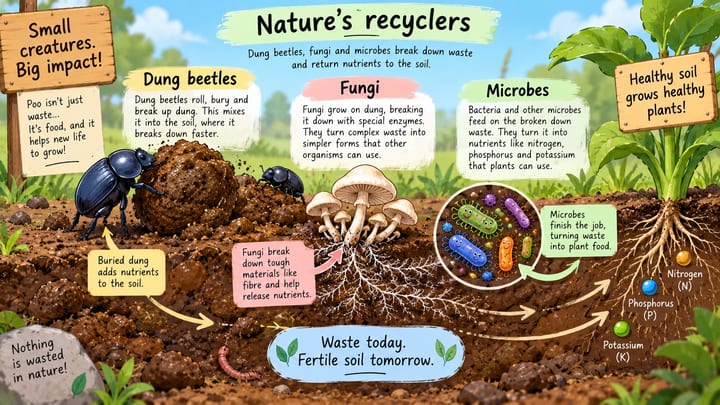
Investigate how dung beetles, fungi and microbes recycle waste and return nutrients to soil.
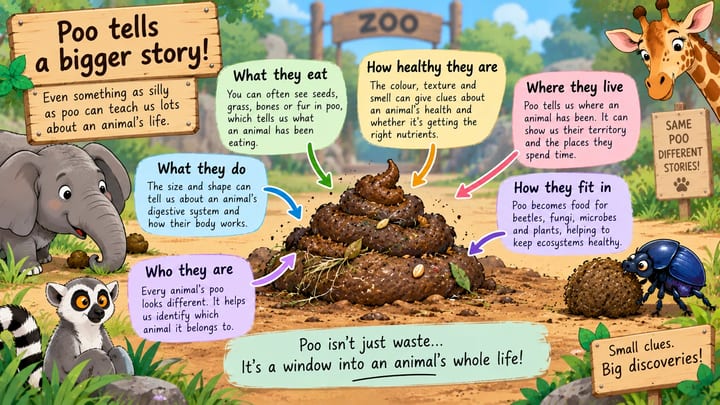
What can something as silly as poo teach us about an animal’s whole life?
Subscribe for more wonder-filled resources, lesson ideas and gentle prompts to help your family explore science, nature and the wider world together.
No spam. Unsubscribe anytime.