Follow warm air into the sky through balloon science, a remarkable first flight and one small experiment filled with wonder.
£6.99
Digital download · a printable Parent Guide and Wonder Companion Journal for your child
 Digital download
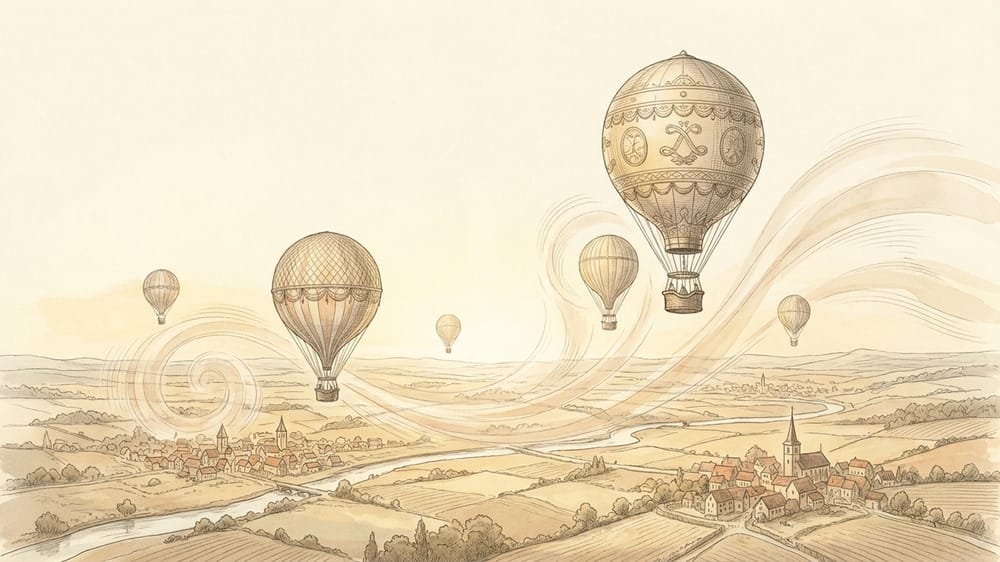
How can something as heavy as a balloon float through the sky? The answer begins with something we cannot see: air. This printable Wonder Lesson helps children explore why warm air rises, how cooler air behaves differently and how these simple ideas make hot air balloon flight possible.
Along the way, families will meet the Montgolfier brothers, discover the unusual animal passengers carried on an early flight and explore rising air through an adult-led experiment. Science and history come together as children observe, predict, record and keep asking questions.
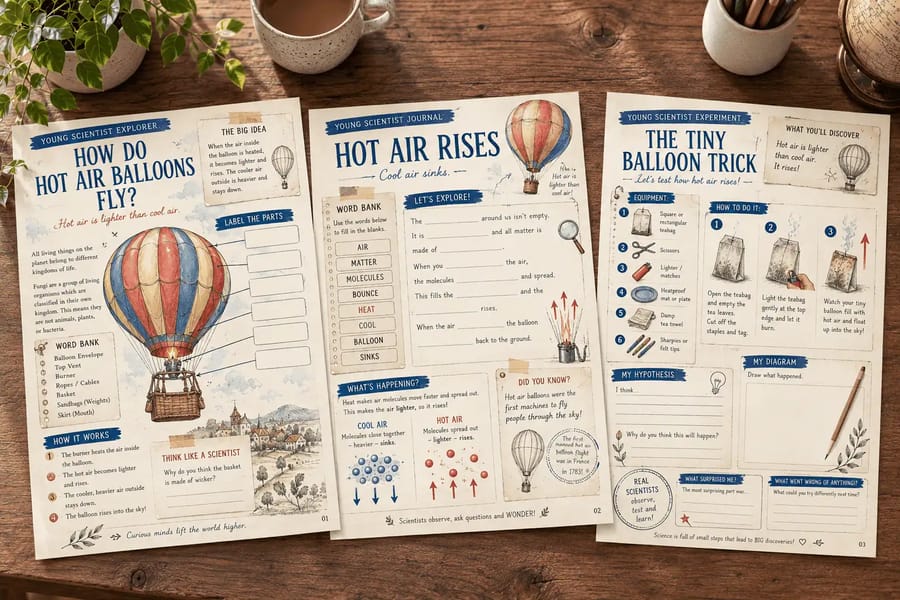

You do not need to rush through every page or turn the lesson into a test. Read the story, follow the questions that interest your child and use the journal wherever it helps them notice more deeply.
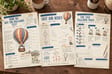
The two PDFs are designed to work together: the Parent Guide supports the conversation and adult-led experiment, while the Companion Journal gives children space to label, predict, draw and record discoveries.
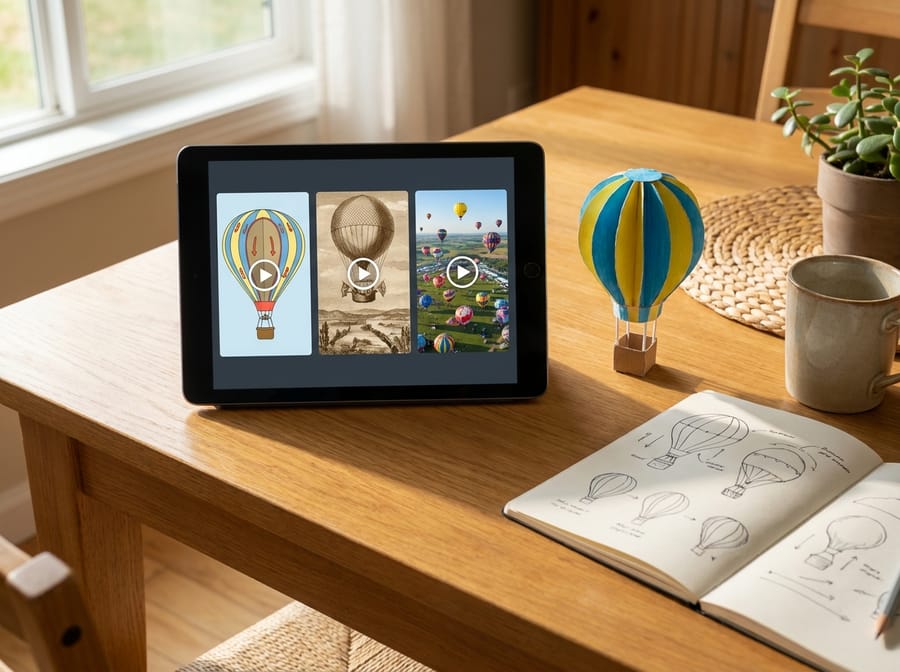
The free companion resources include three videos about how balloons work, an early flight and a colourful balloon festival, followed by an Up and Away! read-aloud about the Montgolfier brothers.
Explore the Tiny Balloon Trick with an adult, try the balloon quiz and investigate how pilots use different layers of wind. A final question invites children to imagine what they would need to understand before feeling brave enough to fly in 1783.
Can’t find what you’re looking for? We’re always happy to help.
There is no fixed age recommendation. Choose the reading, drawing and questions that suit your child and offer help where needed. The flame experiment must be prepared, carried out and supervised by an adult from beginning to end.
Two printable PDFs: a four-page Parent Guide and a four-page Wonder Companion Journal, eight pages in total. This is a digital download, not a physical book or science kit.
Printing lets children label, draw, write and use the cut-out activity in the journal. You can read the guide on a screen and use your own notebook for observations, predictions and drawings if you prefer.
There is no fixed completion time. Explore the science, history and journal activities in one sitting or return to them over several days. You do not need to complete every page or activity.
Use pencils and simple craft materials for the journal activities. The optional Tiny Balloon Trick requires a suitable paper teabag, scissors, a heatproof plate or tray, a lighter or matches and water nearby. An adult must handle the flame and follow the guide’s safety directions in a clear, well-ventilated space.
Yes. The videos, read-aloud, quiz and further exploration are free to access with or without purchasing the printable lesson. The Parent Guide and Wonder Companion Journal are the paid download.
No. It is optional, and the lesson can be explored through reading, videos, drawing and discussion instead. If you choose to try it, an adult must prepare, light and supervise it throughout on a heatproof surface, with clear space and water nearby. Children should observe safely rather than handle the flame.
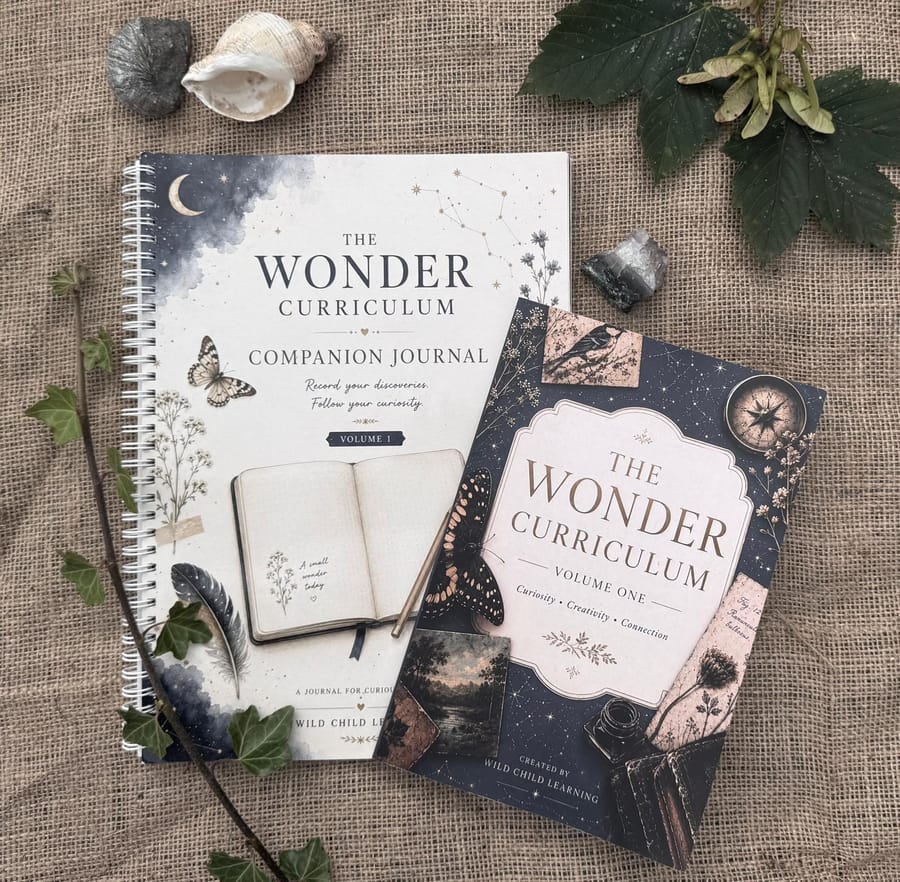
How Do Hot Air Balloons Fly? is one of the wonder-led adventures in The Wonder Curriculum Volume One. The complete family set travels through science, nature, history, art and the wider world, with every adventure designed to be used in any order.
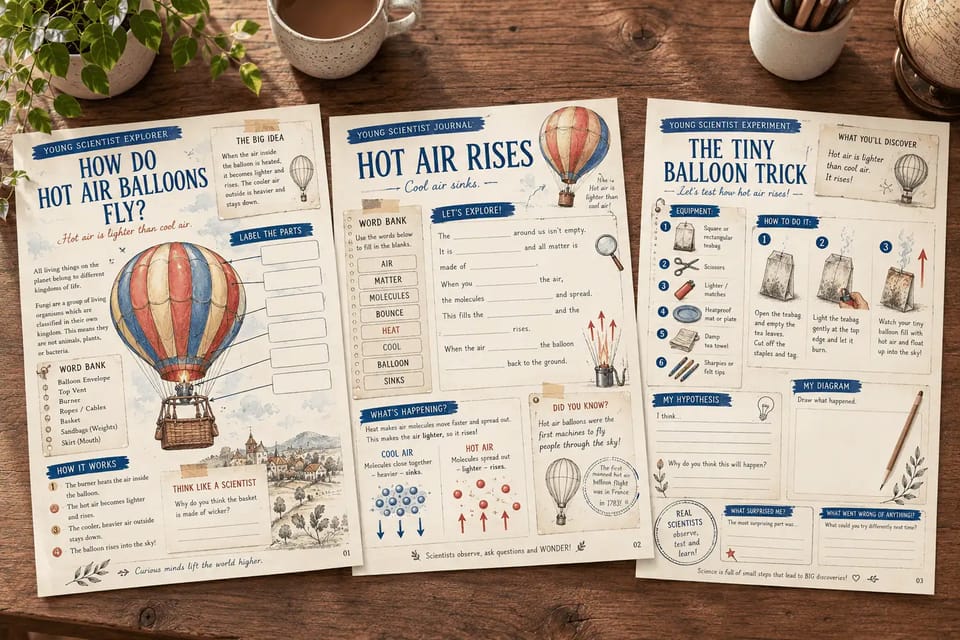
Download the Parent Guide and Wonder Companion Journal and explore how curiosity, careful observation and warm air helped humans begin to fly.
£6.99
Digital download · a printable Parent Guide and Wonder Companion Journal for your child