Teresa (00:01)
Have you ever wondered what would actually happen, practically, legally, really, if you did decide to home educate? Not the dream of it, but the Monday morning of it. The letter you might have to write, the phone call you're worried the council might make, the law you've probably never actually read. But today we're gonna walk through all of it calmly. And I promise you this it's simpler than you think. And this time, I brought a friend.
Teresa (00:37)
So welcome back to Come and Wonder, the podcast from the Wonder Curriculum for families learning at home, thinking about it, or just wondering. I'm Teresa and I have been educating my four children for a long time now. My eldest is 20, which feels slightly extraordinary when I say it out loud. I also have an 18-year-old, an almost 17-year-old, and a 13-year-old. So to say that I've been through it is an understatement.
Teresa (01:06)
But from this episode onwards you'll be hearing another voice alongside mine. This is Emily. Hello, Emily.
Emily (01:13)
Hello, thanks for having me. I'm a little bit nervous to be doing this, so hope it goes well.
Teresa (01:19)
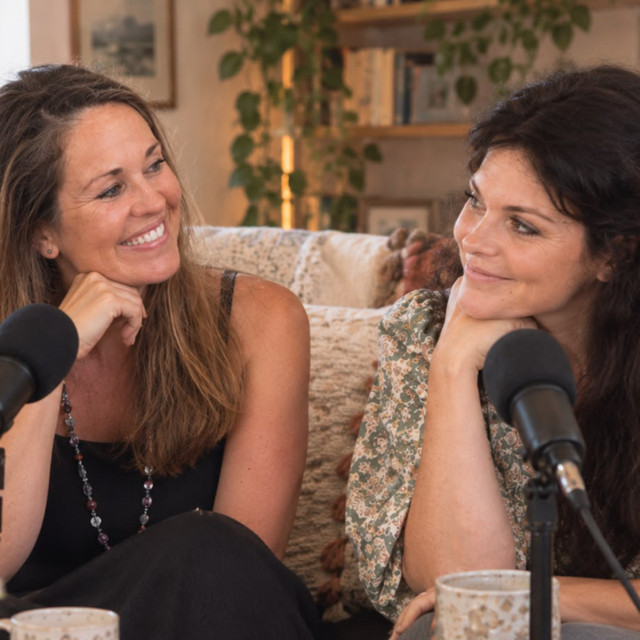
It will, it will. It's lovely. So Emily is my friend. She's also part of the Wonder team. And importantly for this conversation, she's a home educating mum herself. She has eight year old twins, which is remarkable. And they've never been to school. So can you tell us a little bit about your journey, Emily?
Emily (01:37)
Yeah, I've been home educating my twins the whole time. They've never been to school as you said, so it's been really We've loved it. We've got so many stories to tell, but certainly it's not been without its challenges.
Teresa (01:49)
Yeah, and I think that's what gonna make this conversation today really useful because you and I have actually both arrived here from quite different places. I've been doing this for a long time and I've watched the home education landscape change enormously during that time. But your children, on the other hand, have simply always been home educated and arrived at a time when home education had lot more support, would you say? Or a lot more options.
Emily (02:15)
Yeah, yeah,
Teresa (02:17)
So between us, we've got two very different starting points, but we're gonna talk today about the law, what it actually says, what happens if your child has never been to school, what happens if they're already registered at school and you want to bring them home. And that is the bit I know that frightens a lot of people, the local authority. And we're gonna talk about the new legislation that's coming to you because we promised this podcast would always be honest with you. No panic, no stress, just what's true.
Emily (02:43)
Okay, so shall we start with the actual law?
Teresa (02:46)
Yep, let's do that. So the whole foundation of home education law in England sits in section seven of the Education Act nineteen ninety-six. And I'm gonna read it because I think every parent who's wondering whether they could home educate should hear the actual words. So here it goes. The parent of every child of compulsory school age shall cause him to receive efficient full-time education suitable to his age, ability, and aptitude.
Teresa (03:14)
And to any special educational needs he may have, either by regular attendance at school or otherwise.
Emily (03:22)
otherwise, too little words.
Teresa (03:25)
Two very important little words. Education is the parent's legal duty, and school is just one way of fulfilling that duty, and home education is another.
Emily (03:35)
quite a lot that that sentence doesn't say.
Teresa (03:37)
Yeah, there really is. It doesn't say you have to be a teacher or you have to recreate a classroom in your kitchen and home education families aren't required to follow the national curriculum. The important part is this bit, suitable to their age, ability, and aptitude. And I don't know about you, Emily, but I've always thought there's something quietly liberating about that sentence. The education is to suit your child, not an average child, not a classroom of thirty, yours.
Emily (04:03)
Yeah, absolutely. And we should say here that education law is devolved across the UK.
Teresa (04:08)
Yeah, and that's important. And what we're talking about today, particularly when we get to the deregistering part, is the position in England because that's where I'm coming from. But there are slight differences in Wales, Scotland, and Northern Ireland, but we're going to put the relevant information links for each of these nations in the show notes. So shall we start with you? Because your family has actually lived this route of never going to school. Your twins are eight now.
Teresa (04:34)
And what did you actually have to do to officially start home educating them?
Emily (04:39)
Honestly, under the current law in England, we did nothing. So they'd never been registered at a school, so there wasn't anybody I needed to deregister them from. I didn't have to apply for permission to home educate them, or I didn't have to fill in a special home education form. We just simply chose not to register them at school, and we carried on educating them at home. That's how it went.
Teresa (05:04)
Wow.
Teresa (05:05)
And I think it is one of those things that almost sounds too simple when you're first considering home education. Like, is this really legal?
Emily (05:10)
Yeah, yeah,
Emily (05:13)
it really does. You expect there to be this moment when you officially announce, we are home educating now. there wasn't, that never happened. We were already raising them, reading with them, answering their questions, taking them places, helping them to discover things, and that just simply carried on.
Teresa (05:31)
And you know, that's such an important distinction for anyone listening whose child has never entered the school system. There's actually nothing to withdraw them from. We'll come to the new legislation later because the registration position is changing. But as we're recording this, that is the current position in England. But there might be a second starting route. So your route, Emily, the fact that your twins simply never went to school is a little bit different to mine.
Teresa (05:57)
Because when my older boys were younger, I actually flexi schooled them at first. So they were registered at school, but they were also learning at home for part of the week. And eventually we made the decision to r remove them completely and fully home educate.
Emily (06:11)
right, yeah. So did you actually have to deregister them?
Teresa (06:15)
Yeah, I did.
Emily (06:16)
So what did you actually have to do?
Teresa (06:18)
Well, because I think deregistering is one of those words that sounds incredibly official and probably a little bit frightening when you've never done it, the best thing for me to say is that it's actually a lot easier than you think. So I had a lovely relationship with the boys' school. My eldest son went to school for the first year and then my second joined him and did a few months of Lexi School. So they went to school three days a week.
Teresa (06:45)
And they were home with me four days a week. And I just realized I was about to have my fourth baby, and my heart was singing, I wanted to home educate for lots of reasons. But it was just fear that made me flexi school because I thought I wouldn't be good enough to do it. And I thought this would be the best of both. And it was in some ways, it was brilliant in some ways. But in other ways, it was really tough. And I just felt like
Teresa (07:13)
Before this baby four arrived, it was now or never. If I didn't do it now, I was never going
Emily (07:19)
Yeah.
Teresa (07:20)
to be in the position to feel like I could do it. So I remember the conversation was I approached the head teacher and just spoke to him. And he was amazing. He's like, Teresa, if I was you, I would be doing exactly the same thing. And I think that's a lot of feedback I got from teachers was, yes, brilliant. You're you are doing the right thing. We would do the same. And
Teresa (07:43)
I just sent an email and they sent me one back and the teacher himself, he just said, look, if you need any resources, you need any support, call me. We're here for you anytime. I've never needed to do that, but knowing that they had my back was huge. It was a really lovely thing. And I think because I didn't I didn't criticize the school, it wasn't a school thing, it was a family thing. It was a decision we made for our family.
Teresa (08:11)
They were really very positive.
Emily (08:13)
Wow, so when you finally made that decision, did you have to ask the school for permission to take them out?
Teresa (08:21)
No. And that's the important distinction. For a child who's registered at Mainstream School in England, you actually don't ask the school for permission to home educate. You basically just notify them in writing that you're withdrawing your ch child in order to educate them at home and ask for the name to be removed from the admission register. However, out of courtesy and good relations, we spoke to them and thanked them and took them chocolates and flowers. It was a lovely process. But
Teresa (08:50)
Essentially it was us.
Emily (08:52)
Yeah, so you're saying we've made this decision rather than saying may we make this decision.
Teresa (09:00)
Exactly. And I think that's really important for parents to understand because the word deregistration makes it sound as if there's an official process or you have to pass something or go to someone and they have to approve you. But for an ordinarily registered child in a mainstream school in England, there isn't.
Emily (09:18)
So what happened after you sent your letter?
Teresa (09:21)
As I told you, they were really lovely about it. It was very quick and we just literally just went straight into full time home education and I was terrified and excited all at the same time.
Emily (09:37)
So technically, what does the school then have to do once the parent sends that letter? What does the school have to do?
Teresa (09:45)
The school will remove the child's name from its register and they notify the local authority. And that's why I recommend doing everything properly in writing. Date your letter, keep a copy, and ask for confirmation that your child has actually been removed from the role. Until that happens, the normal school attendance requirements do actually still apply.
Emily (10:04)
Okay, right, so you don't need a special council form, you don't have to attend a meeting before you're allowed to leave, and you don't have to give the school a terms notice and nothing like that.
Teresa (10:14)
No. No, believe
Teresa (10:15)
it or not. I mean, they may want to talk to you, this school, and that conversation can be perfectly kind and useful. But it isn't a condition that you have to satisfy before you're allowed to home educate. But there is, I think it's very important because not everyone's listening from the same circumstances as us, Emily. One important exception that I think we need to mention though is I think we've talked about it earlier.
Emily (10:40)
special
Emily (10:41)
schools.
Teresa (10:42)
Yeah, so if your child does attend a special school under arrangements made by the local authority, you do need the local authority's consent before the name can be removed from the school role. A child with an EHCP who attends a mainstream school can generally be deregistered just in the usual way. But if your child is in that special school situation,
Teresa (11:03)
Don't simply download a standard deregistration letter and send it. You need to get proper advice about your particular circumstances first. But I think we are going to interview someone who's done this later on in a podcast. So it will explain if you're dealing with a child with special or additional needs, how home education can be a little bit different.
Emily (11:23)
Excellent. We'll look forward to Yes, I really like this. We've got both sides of the story between us. My children, never entered the school system. So there was nothing for me to deregister them from. Whereas you, you actually made that transition from school through flexi schooling and then into home education.
Teresa (11:42)
Yeah, and both routes basically eventually brought us to the same place, but that first practical
Emily (11:46)
Yeah.
Teresa (11:47)
step looked completely different.
Emily (11:50)
Can I ask you about the bit that I think that most people are the most nervous about? Because you've been home educating for more than 20 years, so you've actually had a relationship with the local authority over a long period of time. So what has that relationship really looked like for you and your family?
Teresa (12:07)
Yeah, so my elders were six when we first had a meeting with the LEA or the Local Education Authority. And they just rang us and said that they wanted to have a meeting. And we had the option of just sending a letter or having a meeting for them to meet the children and show their work. And actually I really welcomed the meeting with the local odd education authority because I think
Teresa (12:36)
Like I say, back then there wasn't a huge amount of support. There wasn't a lot known about it. And it was really nice to have the backing of the local education authority. So, in my experience, it's different for everyone, but we had the same local education officer for probably five or six years. And so he was an ex head teacher for a primary school and was.
Teresa (13:03)
Brilliant with the children. And we look forward to it. It was a really nice opportunity for the children to showcase their work, play the piano for him. We would bake. It
Emily (13:13)
you
Teresa (13:14)
was a really beautiful, just a really beautiful
Emily (13:17)
Yeah.
Teresa (13:18)
way of getting a little bit of external validation. And I know that we don't really need it, but essentially I'm coming from this school environment and needing.
Teresa (13:32)
a little bit of a boost. And I think the parents are the ones that struggle the most at first. The children love to show up their work. And to have the local education authority say, Well done, you're doing a good job, it isn't necessary. But my goodness, it was something that has been a really crucial part of our early years of home education.
Emily (13:52)
Yeah, I think because when you've never done this, those words, local authority, it sounds really a little bit frightening. And you imagine somebody is going to arrive at your door to inspect your house and test your children. So did you feel that way?
Teresa (14:08)
Yes, at first I was really nervous about it and I cleaned every cupboard just in case they were gonna take away the children and gonna be some well, you read horror stories. You know, I've read horror stories on Facebook about home education
Emily (14:22)
you
Teresa (14:23)
and the local education authorities. And I can honestly say I have never, ever had these experiences. And it's not that I didn't give them reason to, because
Teresa (14:35)
I'll tell you a story. I'm a little bit embarrassed about it, but it we can laugh now, many years later. So one year we were doing a topic on ancient China, and we did lap books. I don't know if you've ever done lap booking, but lap booking is such a fun way of putting all of your work together. So we'd made we'd made a kite, so we had all the different things that the ancient Chinese were inventors of.
Teresa (15:01)
We'd done all sorts of exciting things. We'd been to Chinatown. We had photographs. We'd been to view like an old terracotta army soldier. So the ch there were photographs full of different things. It was a beautiful book. And they each had their own and they were very proud of it. They were doing Mandarin lessons at the time. So it was all very exciting. And they were super excited to share it with Mr. Salmon. Mr. Salmon was our
Emily (15:23)
You
Teresa (15:24)
ex-primary school head teacher. He was lovely, but you know, very stiff-upper-lipped.
Emily (15:28)
you
Teresa (15:31)
And our eldest was telling him about the silk cycle of the silkworm. And he was saying, and this, this, and he was asking all questions. And then he said to him, he said, and stroke, this is real silk. Stroke it. So he stroked this real silk. And then he burst out laughing. And my son said to him, Well, we cut off a pair of my mum's old knickers. And they weren't even washed.
Emily (15:57)
No!
Teresa (16:00)
I just thought I was
Emily (16:01)
Okay.
Teresa (16:02)
going to die. I sat there thinking, my life, that's so disgusting. And they're gonna think that I'm such a terrible mother. But I got the report back and it was beautiful. And it he didn't allude to it in any way other than to say that the children were well balanced, they were good at interacting with adults. I just thought, why am I so
Emily (16:22)
Yeah, yeah.
Teresa (16:25)
worried? They know that children aren't perfect. And actually children
Teresa (16:29)
Who say things, they also know to take sometimes the things that your children say with a pinch of salt, like we do nothing. They know that's not true. Because they've rate they've been and had children in the school environment. And parents say to their children, So what have you done today? Nothing. And the teachers must feel very frustrated with that. So I just thought that's a funny little story that tells you that, look, don't worry about it, because they're not there to test you.
Emily (16:54)
It's a great story.
Teresa (16:57)
I wasn't I w it wasn't great at the time, but now it's funny.
Emily (16:59)
Yes, a kickback.
Teresa (17:02)
It's true. So I think really, if I was to summarize about the current system, local authorities do have responsibilities around children who may not be re receiving a suitable education. So once they know that you are home educating, they may make informal queries about the education you're providing. But they don't have an automatic right to come into your home simply
Teresa (17:24)
because you home educate and you are not legally obliged to accept a home visit.
Emily (17:30)
So what are they actually looking for?
Teresa (17:32)
Ultimately reassurance that your child is receiving a suitable education. And we're back to that section seven again. It's suitable to their age, ability, aptitude, and any special educational needs. And there are different ways families can demonstrate that. Some families, like mine, were perfectly happy to meet, but others provide information in writing and describe their educational approach and what their child has been learning, and that is absolutely fine too.
Emily (17:57)
And after 20 years, does contact from the local authority still make you nervous?
Teresa (18:02)
No, I think they're actually more nervous than me now, which is quite amusing. Because when I say to them how long I've been doing it and that I've it's only one child left, Seth, that they they actually rang me the other day. And when I explained to them, how long I'd been home educating and this is my fourth child and what everyone else did, they like, great. They didn't even want to see us. So I think that that's
Teresa (18:27)
We don't have you don't have anything to worry, as long as you're doing your best and your best looks different for everyone. But you don't need to be perfect. You don't need to recreate school at home. And you don't need to be frightened of them. They're actually there to help us but protect vulnerable children and that's really important.
Emily (18:43)
Yeah, I think that's so reassuring because there's such a difference between reading the words local authority inquiry online and then hearing someone who's actually lived alongside that system like you and you've for more than two decades you've been doing that and and you're talking about what it's meant to you in real life. So that's so reassuring to hear.
Teresa (19:02)
Yeah, I just think it's important not to approach it as though you're sitting in exam. You know, you know your child, you watch them learn every day. You're just simply describing their education when you speak to them and keeping simple records, responding reasonably to correspondence, and just remembering if you keep that in mind, that legal requirement, a suitable education for your child, just reassures you. I mean, there are formal powers available.
Teresa (19:30)
To local authorities where it genuinely appears that a child isn't receiving a suitable education. And ultimately, that process can lead to a school attendance order. But that's a formal process and it isn't somebody simply turning up because you've chosen to home educate. I think that's really very reassuring. And it is also quite rare. But we're we're glad of that, aren't we, Emily? Because children are precious and education is
Emily (19:54)
lately.
Teresa (19:54)
important.
Teresa (19:56)
And we want to make sure that all children get the education that they need. And as we know, and that's why there's this new law that's been introduced, sometimes children that are vulnerable are not getting what they need or the the care that they need. So it's really important that there is a legislation. And that brings us to this
Emily (20:15)
Absolutely.
Teresa (20:16)
new law. And this is where hopefully this podcast is going to earn its keep. Because you might have seen the legislation, but shall we
Teresa (20:24)
Unpack it slightly because there's a lot of fear around it, isn't there?
Emily (20:28)
Yeah, let's do that. And let's do it without panicking. So the Child's Well-being in Schools Act 2026 became law on the 29th of April, 2026. And one of the changes affecting home-educated families is the introduction of local authority registers for children not in school. And when those provisions are in force, parents who home-educate their children will have a duty to provide certain information to their local authority
Emily (20:55)
for that register.
Teresa (20:57)
And the important word there as we're recording this is when, isn't it?
Emily (21:02)
Yeah, exactly. The act is law, but the children not in school register provisions haven't yet fully come into force. There still needs to be an implementation of the relevant provisions and detailed arrangements. So the position we've described today is the current position as we record this episode.
Teresa (21:20)
Brilliant. And we're gonna keep the show notes updated because obviously this is an area where things can change. But the thing I most want a parent who's considering home education to hear is this the legislation doesn't remove the legal option of home education. That hasn't changed, has it, Emily?
Emily (21:36)
No, that's right. So home education remains a legal way for parents to provide their children's education. What is changing is the administrative framework around children who aren't registered at school.
Teresa (21:49)
Yeah, so don't allow a frightening headline to make this decision for you. Find out that the law actually says at the point you're making your decision. We'll put the official sources in the show notes and update them as things change. So some numbers. Because in episode one I said there are well over a hundred thousand home educated children in the UK, and I thought, you know, we need to really pin that down properly. Did
Emily (22:10)
Yeah.
Teresa (22:11)
you manage to do some research for us, Emily?
Emily (22:13)
Yeah, so the Department for Education's figures counted around 126,000 children in elective home education in England on the autumn 2025 census day.
Teresa (22:25)
Wow, a hundred and twenty six thousand. So that would have been last intake, not this September, so it's probably gone up even more. And that's just England alone.
Emily (22:35)
Yeah, and that matters because sometimes deciding to home educate can feel as though you're stepping completely outside of ordinary life. But you're not stepping off the map because there are home educating families all over the country.
Teresa (22:47)
Yeah, and in many places there are groups, meetups, sport sessions, forest groups, museum days, classes,
Emily (22:53)
Yep.
Teresa (22:55)
and you might actually be surprised who's already doing it.
Emily (22:58)
Yeah.
Teresa (22:58)
So the first Monday morning, the letter has been sent. Or in your case, Emily, this school application that never was. Monday morning arrives. What on earth do you actually do?
Emily (23:10)
can I say the thing that every experienced home educator seems eventually to say?
Teresa (23:16)
Mm-hmm. Please do.
Emily (23:18)
Don't immediately build a school in your kitchen.
Teresa (23:21)
yes.
Emily (23:23)
Because I think there's such a temptation to think, right, we're home educating. We need a timetable. Maths at nine, English at 10, science after break. Let's get some little wooden desks. We need workbooks. And then suddenly everybody is exhausted.
Teresa (23:41)
Yeah, and no one is coming on that Tuesday morning to see whether you've created year four. The law just says provide a suitable education. It doesn't ask you to reproduce school. So especially if your child has come out of school, that first season can be slow. Read together, walk, cook, go somewhere, follow questions, notice what they're interested in, and give yourself some time to discover what learning in at home actually looks like for your family because it's different for everyone, isn't it?
Emily (24:10)
Yeah, absolutely. And there's a word that you'll hear in the home educating community for that settling in period. It's de-schooling.
Teresa (24:20)
Hmm. And if you've not heard of that, that's so important that we're gonna do a whole episode on him. But we won't spoil yeah. Let's not spoil it now. I feel like there's so much we could talk about. Yeah.
Emily (24:25)
Yeah, so we won't spoil it. We're excited about that, But if your
Emily (24:33)
first Monday morning is pancakes, a long walk, and one really good conversation.
Teresa (24:40)
Yeah, you haven't failed at home education before lunchtime.
Emily (24:44)
Yeah, you've started.
Teresa (24:45)
It's brilliant, isn't it? So, one small thing to try this week. Never homework, just an experiment. And Emily, this one is yours.
Emily (24:54)
So this week is actually for the parent rather than for the child. It's to read section seven. We'll put the exact wording and the official link in the show notes, but read it slowly, maybe read it twice and notice what it actually asks of you and what it doesn't. No classroom, no teaching qualification, no requirement to reproduce school and then...
Emily (25:20)
If you're seriously considering withdrawing a child from who's already currently at school, you could draft that letter. You don't have to send the letter, but just write the words, I've decided to educate my child at home.
Emily (25:33)
Sometimes just seeing that decision written down makes something that felt enormous suddenly feel possible.
Teresa (25:40)
Mmm, a letter you don't have to send. I love that. I think that's really great. So, how do you actually start home educating? Well, as you've heard today.
Teresa (25:51)
Emily and I started in two completely different ways. Her children never entered school at all. Mine began flexi schooling and eventually came home completely. Different beginnings, but the same responsibility to provide an education that's suitable for the child in front of you. And perhaps that's the thing I want you to take away from today. Starting home education can feel enormous when you're standing on the other side of it. There are words like deregistration and local authority.
Teresa (26:19)
Authority and legislation, and certainly something that's really about you and your child can feel like an administrative mountain. But once you understand what you're actually required to do, it becomes much smaller. So don't try to solve the next 10 years today. Just find out what your next step is. Everything we've talked about in this episode the legislation, the official guidance, deregistration, and the changes that are coming, they're all linked in the show notes.
Teresa (26:48)
We'd also link you to our full written guide if you want to sit down with a cup of tea and work through it at your own pace. And the next time we're talking about what happens after you've made the decision. Deschooling. That strange, lovely first season after school where the temptation is to rush out, buy a timetable, recreate the classroom at the kitchen table, when actually what your family might need most is permission to slow down. We'll talk about what deschooling really is.
Teresa (27:18)
How long it might take, and what learning can look like while everyone finds their feet. If today's episode made you think of somebody who's quietly wondering whether they could home educate, please send it to them. Sometimes what we need isn't somebody telling us what decision to make. We just need someone to make the unknown feel a little less frightening. And wherever you are in this, perhaps you've been home educating for many years.
Teresa (27:44)
Or perhaps you've never told another soul that you're even considering it. I'm really glad you're here. Until next time, keep asking questions, keep noticing the ordinary, wonderful things, and come and wonder with us.