Turn a giggle-worthy body question into discoveries about digestion, microbes and invisible gas.
£6.99
Digital download · a printable Parent Guide and Wonder Companion Journal for your child
 Digital download
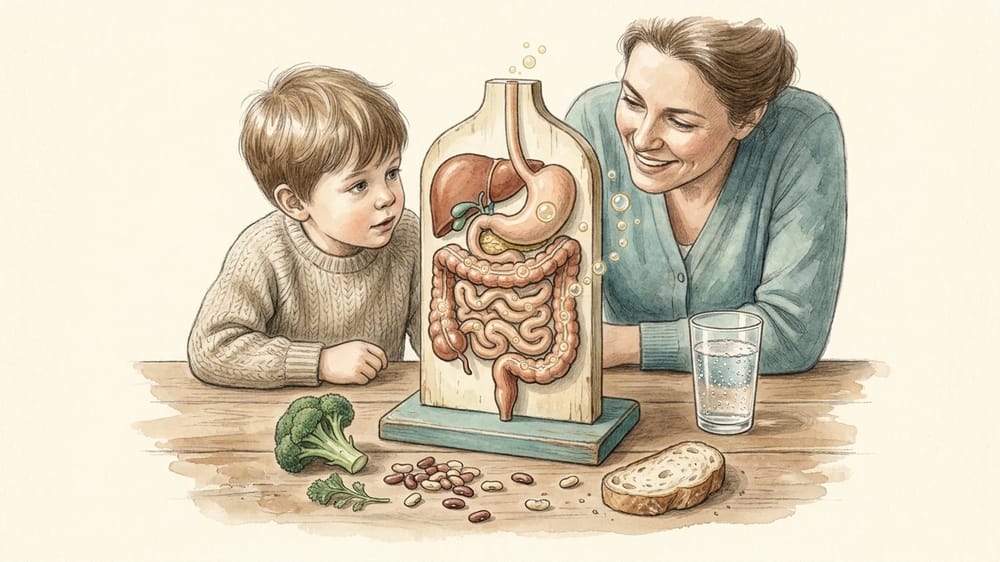
A funny body sound can open a real science question. Gas in the digestive system comes partly from swallowed air and partly from microbes breaking down food, and passing it is an ordinary part of how bodies work.
This printable Wonder Lesson pairs gentle humour with predictions, observations and a yeast-and-balloon experiment that makes gas production visible. The Parent Guide and Wonder Companion Journal help children ask questions, record changes and reflect without embarrassment or teasing.
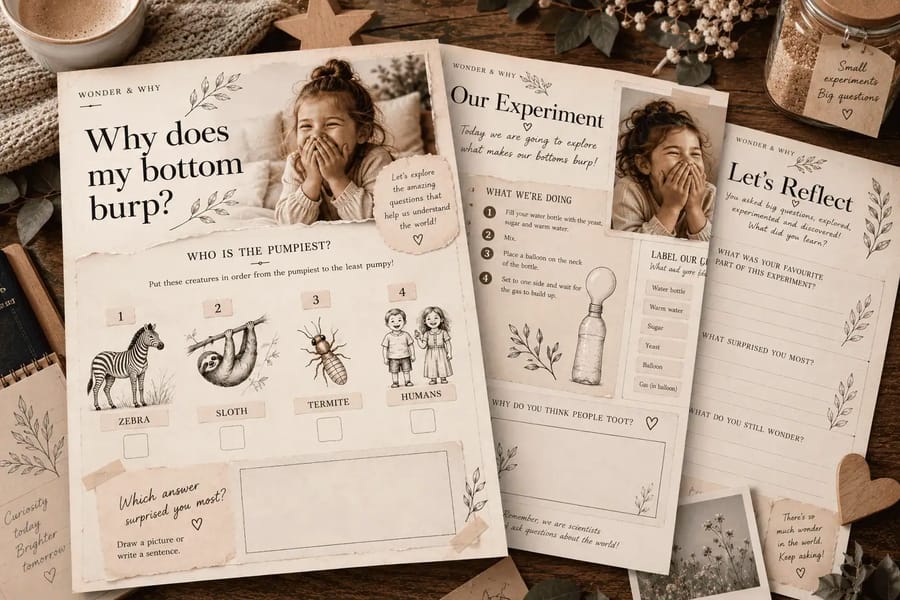

Make a prediction, observe the balloon and compare what each person notices. The Parent Guide offers the experiment while the journal gives children space to describe changes, draw and record a question they would like to investigate next.
There is no need to hush the giggles, but keep the conversation kind and avoid making anyone’s body the joke. The bottle is a simplified model of microbes producing gas, not a literal replica of a stomach or the whole digestive system.
The free companion resources explain flatulence through the Dr. Binocs and more detailed gas videos. Share My Bum Is So Noisy! and The Gas We Pass, then revisit digestion and microbes with the family Kahoot.
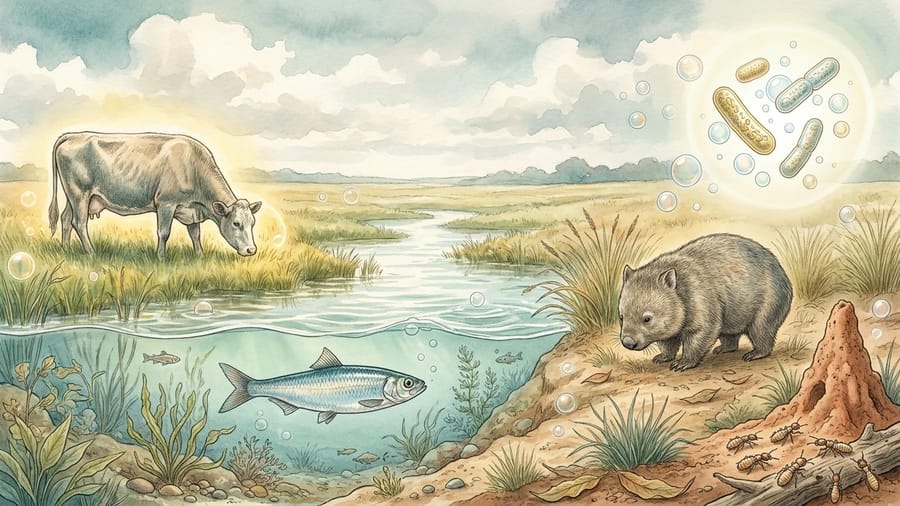
The animal-gas database story shows how a humorous question can lead researchers into anatomy, biodiversity and climate science. Follow the questions with curiosity rather than assuming that every animal claim or ranking is a settled fact.
Can’t find what you’re looking for? We’re always happy to help.
There is no fixed age recommendation. Choose the stories, vocabulary and observations that suit your child, helping with reading and writing where useful. The more detailed gas video suits older or especially curious children; an adult must supervise the experiment.
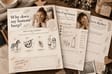
Two printable PDFs: a three-page Parent Guide and a three-page Wonder Companion Journal, six pages in total. This is a digital download, not a physical book or experiment kit.
Printing provides the journal’s observation, prediction, drawing and reflection spaces. You can read the guide on a screen and use your own paper or notebook if you prefer.
There is no fixed completion time. Begin with a story or question and return for the experiment and reflection. The guide suggests observing the balloon over approximately 30–60 minutes; the amount and speed of inflation can vary with conditions.
The experiment uses a bottle, balloon, yeast, sugar, comfortably warm water and measuring spoons, with an optional funnel. An adult should supervise, check latex and ingredient sensitivities, keep balloons and broken pieces away from babies and young children, and treat the mixture as observation-only—not for eating or drinking.
Yes. The videos, read-alouds, quiz and article are free to access with or without purchasing the printable lesson. The Parent Guide and Wonder Companion Journal are the paid download.
No. Yeast is a fungus, not gut bacteria, and the bottle demonstrates gas production rather than reproducing digestion. Much microbial fermentation happens in the large intestine, not the stomach. Passing gas is normal, but persistent pain, vomiting, blood in poo, unexplained weight loss or a major bowel change should be discussed with a trusted adult and healthcare professional.
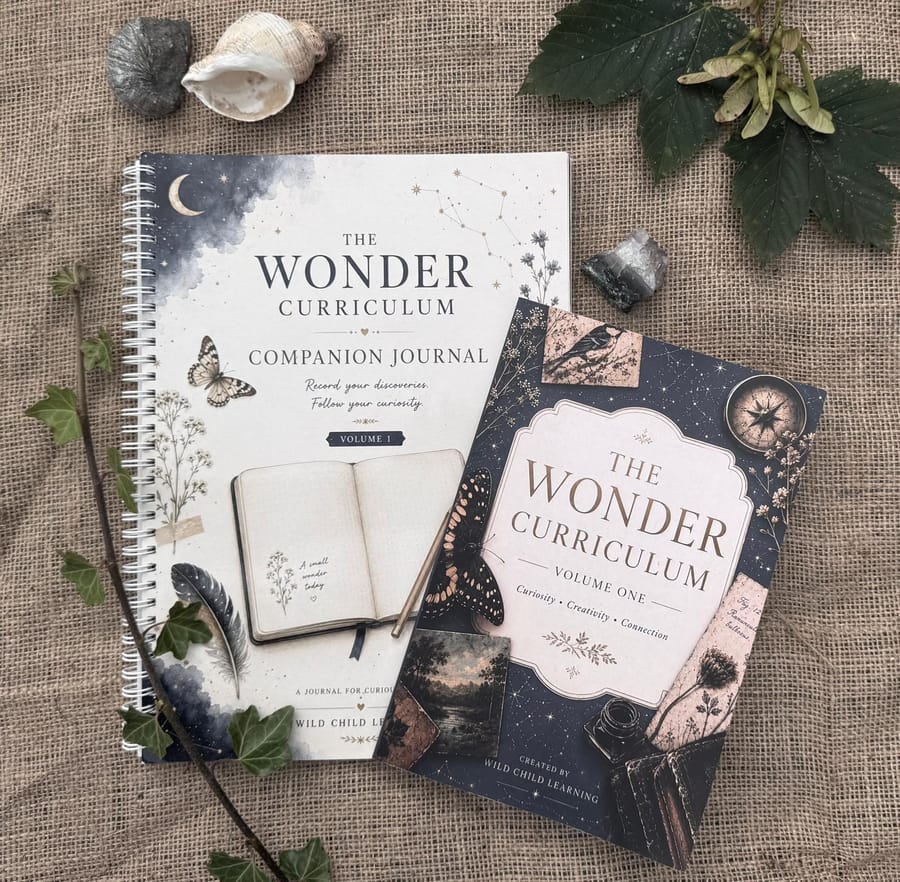
Why Does My Bottom Burp? is one of the wonder-led adventures in The Wonder Curriculum Volume One. The complete family set travels through science, nature, history, art and the wider world, with every adventure designed to be used in any order.
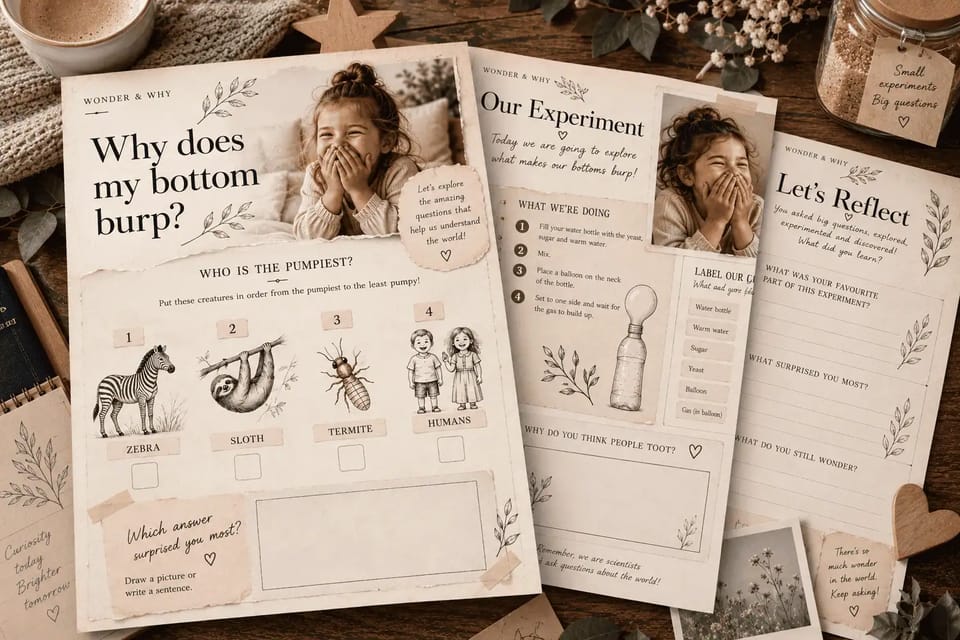
Download the Parent Guide and Wonder Companion Journal and explore digestion, microbes and a simple gas-making experiment together.
£6.99
Digital download · a printable Parent Guide and Wonder Companion Journal for your child