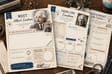
Meet Albert Einstein and explore how imagination, observation and better questions can open scientific discoveries.
£6.99
Digital download · a printable Parent Guide and Wonder Companion Journal for your child
 Digital download
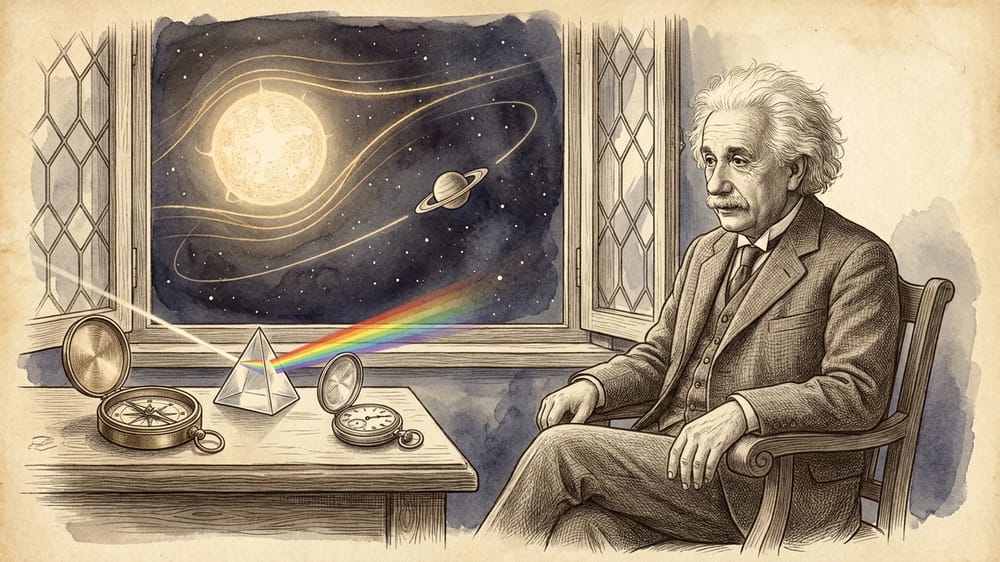
A compass needle, a shadow or a beam of light can lead to an extraordinary question. Albert Einstein used imagination and careful reasoning to explore light, motion, gravity and time, returning to ideas that did not yet have easy answers.
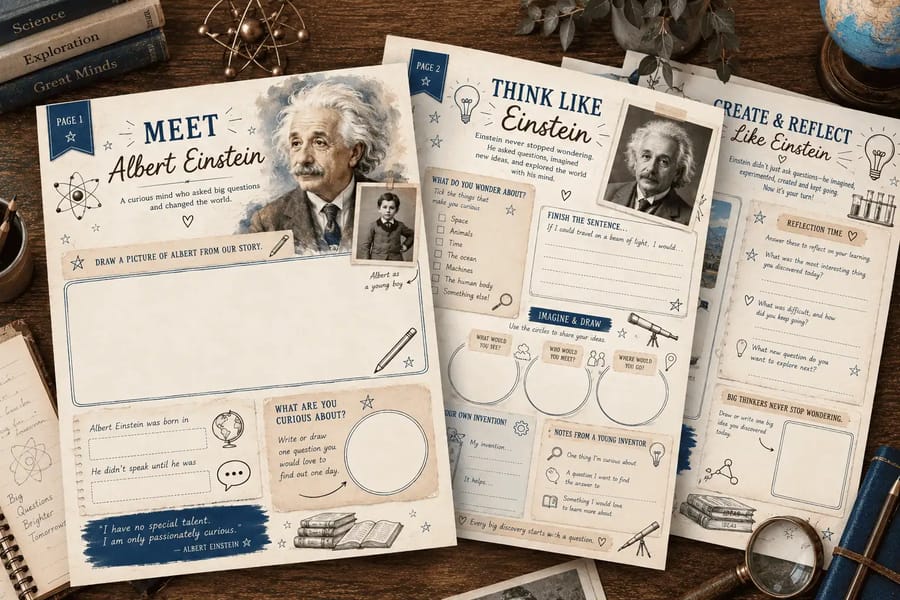
This printable Wonder Lesson introduces his life and big questions through drawing, thought experiments and everyday investigations. The Parent Guide and Wonder Companion Journal give children space to predict, observe, design and reflect without needing to master relativity before they begin.

Start with a small observation and ask what each person thinks might be happening. The Parent Guide offers activities while the journal helps children turn a question into a prediction, a drawing or a simple investigation.
There is room for not knowing and for changing an idea after looking more carefully. Keep imaginative journeys separate from what an experiment actually shows, and let an adult help choose safe materials and supervise torch, water and craft activities.
The free companion resources introduce Einstein’s biography, gravity and special relativity, alongside On a Beam of Light and I Am Albert Einstein read-alouds. Try the Race a Beam of Light thought experiment through drawing or conversation.
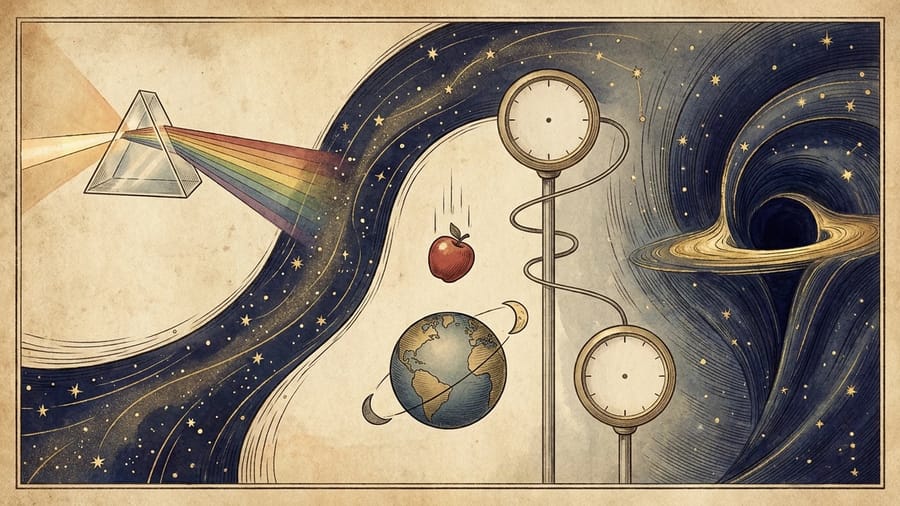
Follow questions into light’s speed, moving clocks, curved starlight, black holes and GPS. Choose an accessible starting point rather than expecting children to understand every idea or equation at once.
Can’t find what you’re looking for? We’re always happy to help.
There is no fixed age recommendation. Choose the stories, drawings and investigations that suit your child, helping with reading, writing and abstract ideas where useful. Some relativity extensions will suit older or especially curious children.
Two printable PDFs: a four-page Parent Guide and a three-page Wonder Companion Journal, seven pages in total. This is a digital download, not a physical book or science kit.
Printing provides the journal’s drawing, planning and reflection spaces. You can read the guide on a screen and use your own paper or notebook if you prefer.
There is no fixed completion time. Explore one story, shadow or question at a time and return over several days if you wish. You do not need to complete every extension.
The guide uses a cardboard tube and simple craft materials, water and suitable ingredients to try dissolving, and a torch, card and a screen for light activities. An adult should handle cutting, choose unbreakable containers, keep water away from electrical equipment and avoid shining the torch into anyone’s eyes.
Yes. The videos, read-alouds, thought experiment and further prompts are free to access with or without purchasing the printable lesson. The Parent Guide and Wonder Companion Journal are the paid download.
No. Begin with curiosity, simple observations and the distinction between imagining and testing. Dissolving materials opens questions about what remains in water; it does not let children see atoms directly or reproduce Einstein’s research. You can leave difficult questions open and return to them later.
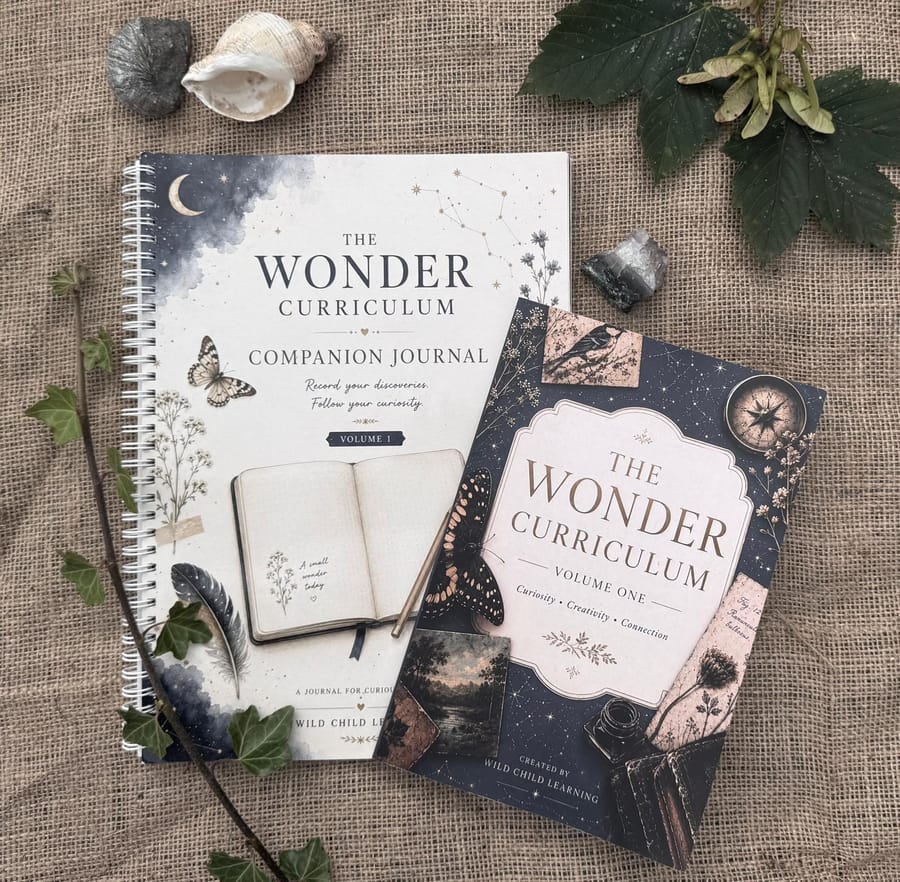
Who Was Albert Einstein? is one of the wonder-led adventures in The Wonder Curriculum Volume One. The complete family set travels through science, nature, history, art and the wider world, with every adventure designed to be used in any order.
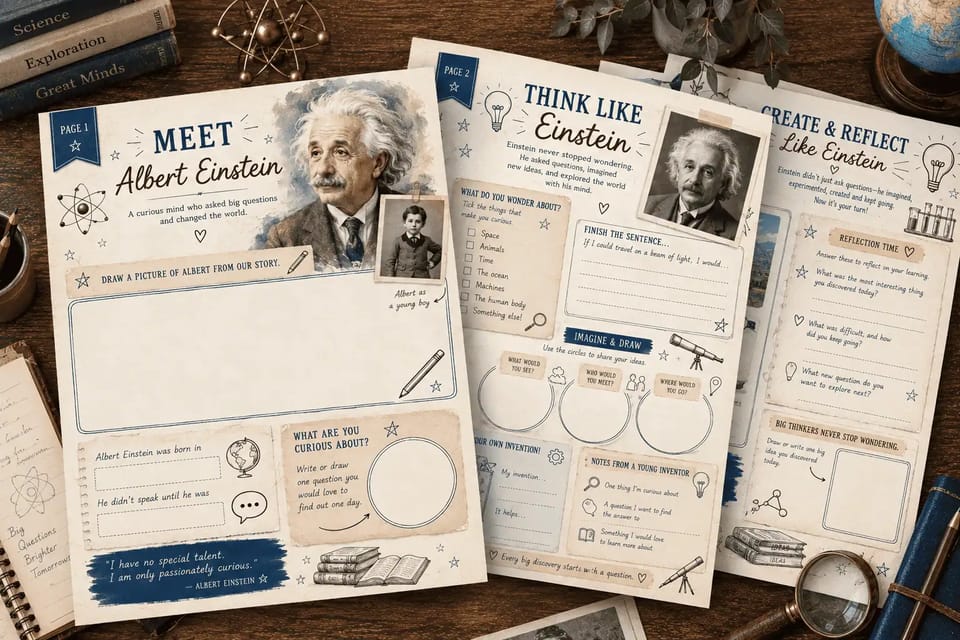
Download the Parent Guide and Wonder Companion Journal and explore Einstein’s story, imaginative thinking and everyday science together.
£6.99
Digital download · a printable Parent Guide and Wonder Companion Journal for your child