Discover the Arctic as a homeland shaped by living cultures, knowledge, resilience and deep connections to land and sea.
£6.99
Digital download · a printable Parent Guide and Wonder Companion Journal for your child
 Digital download
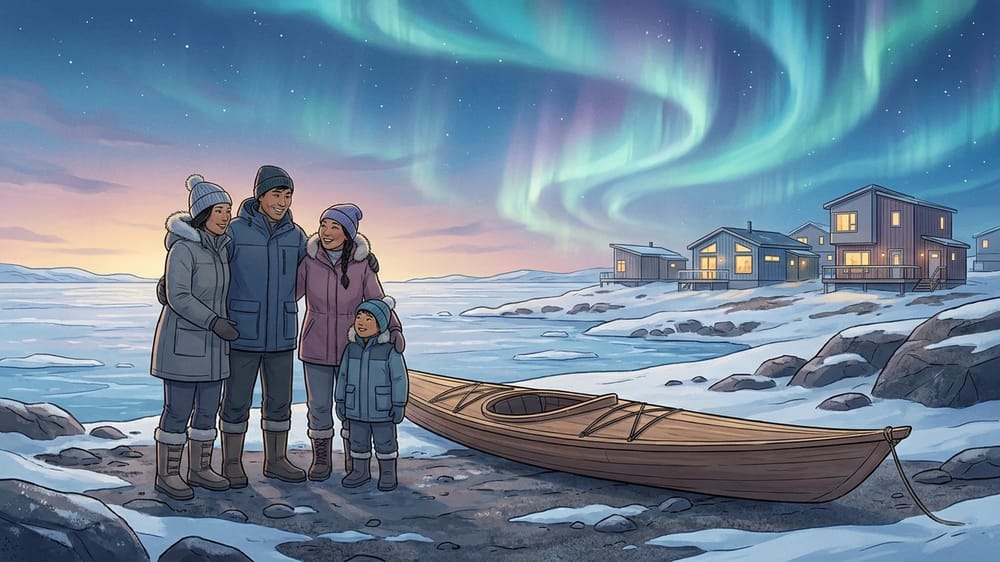
The Arctic is home to living, diverse communities with distinct histories, languages and relationships with land and sea. Inuit knowledge and creativity can be explored through clothing, transport, food, language and design, alongside contemporary homes and technologies.
This printable Wonder Lesson invites families to use maps, ask respectful questions and investigate how materials respond to Arctic conditions. The Parent Guide and Wonder Companion Journal connect cultural learning with vocabulary, reflection and snow-house science, while making room for careful discussion of history and identity.
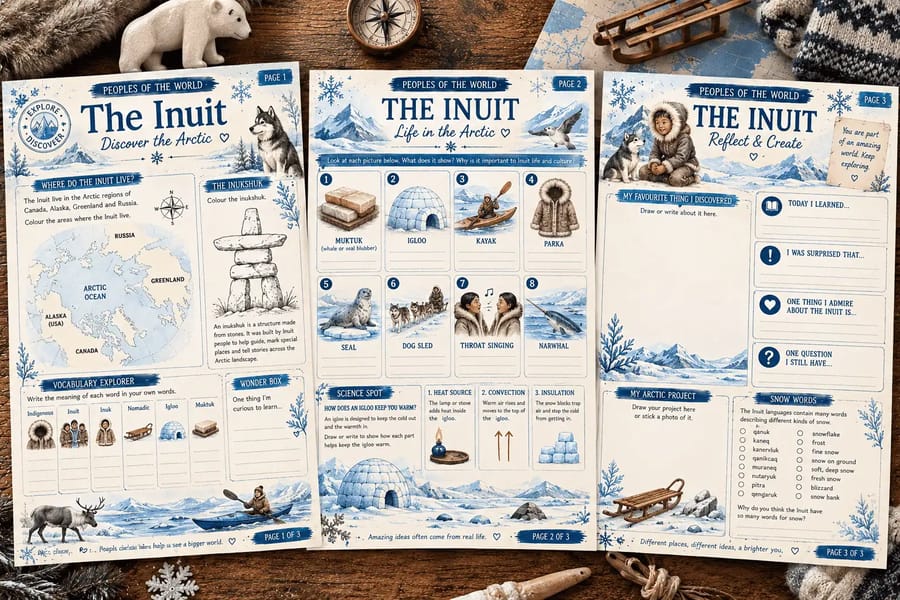
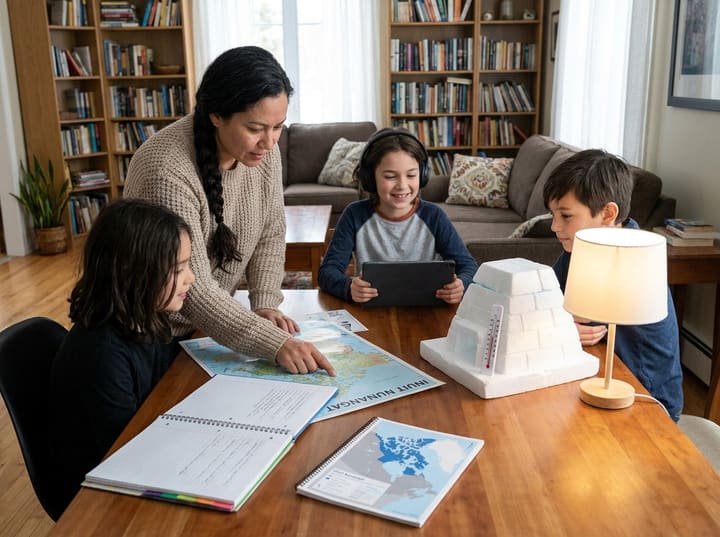
Use maps, first-person Inuit sources and current community voices to guide your questions. The Parent Guide offers discussion prompts while the journal gives children space to draw, write, explore vocabulary and reflect.
Keep regional differences and contemporary life in view rather than presenting Inuit peoples only through historic survival scenes. Choose a map, a language question or a design to investigate together, and preview sensitive stories before deciding whether they suit your child.
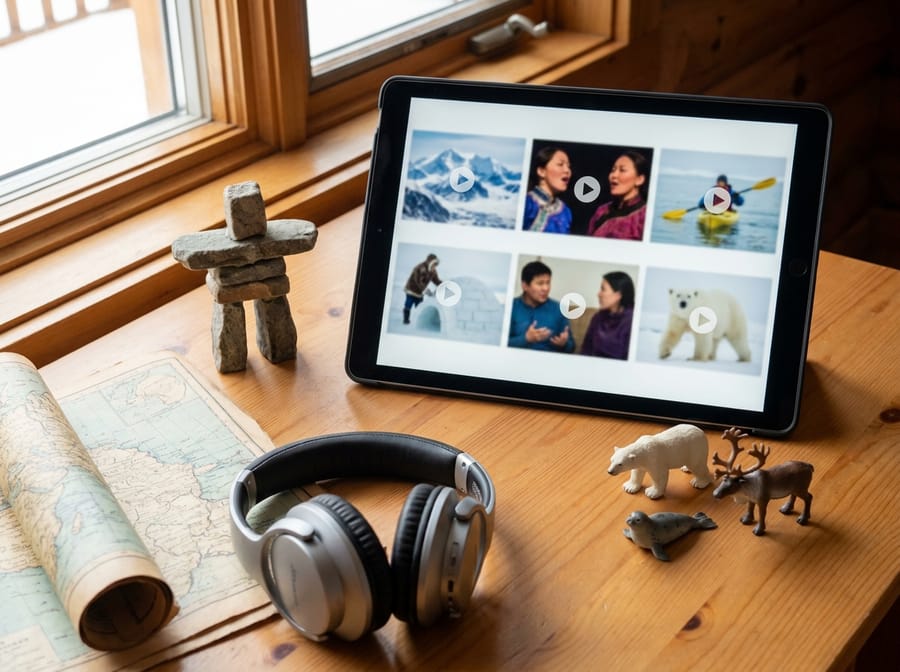
The free companion resources include throat singing, an Arctic landscape walk and snow-house science videos, alongside Big Bear Little Brother, The Rainbow Bear and When I Was Eight read-alouds. Language videos introduce Inuk, Inuit and Indigenous.
Explore how an Arctic design responds to its environment, find different homelands on a map and consider how traditional knowledge and modern technology can work together. The source also includes a family quiz. Preview When I Was Eight carefully: it addresses residential-school harm and needs age-appropriate adult discussion.
Can’t find what you’re looking for? We’re always happy to help.
There is no fixed age recommendation. Choose the maps, vocabulary and making activities that suit your child, offering help with reading and writing where useful. Preview sensitive stories and guide any discussion of residential schools at an appropriate level.
Two printable PDFs: a four-page Parent Guide and a three-page Wonder Companion Journal, seven pages in total. This is a digital download, not a physical book or craft kit.
Printing provides the journal’s map, vocabulary, drawing and reflection spaces. You can read the guide on a screen and use your own paper or notebook for responses if you prefer.
There is no fixed completion time. Explore one map, design or question at a time, or return across several days. You do not need to use every story or extension activity.
Begin with pencils, colouring materials and access to a map. Optional making activities can use simple materials you already have. A model snow house is a way to discuss design and insulation; children do not need to build or enter a real snow shelter.
Yes. The videos, read-alouds, language resources, quiz and further prompts are free to access with or without purchasing the printable lesson. The Parent Guide and Wonder Companion Journal are the paid download.
Yes. The When I Was Eight story addresses the experience of a child taken to a residential school. An adult should preview it, choose whether it suits the child and discuss it gently. Keep Inuit voices, distinct communities and contemporary life central rather than treating Arctic cultures as one historical group.
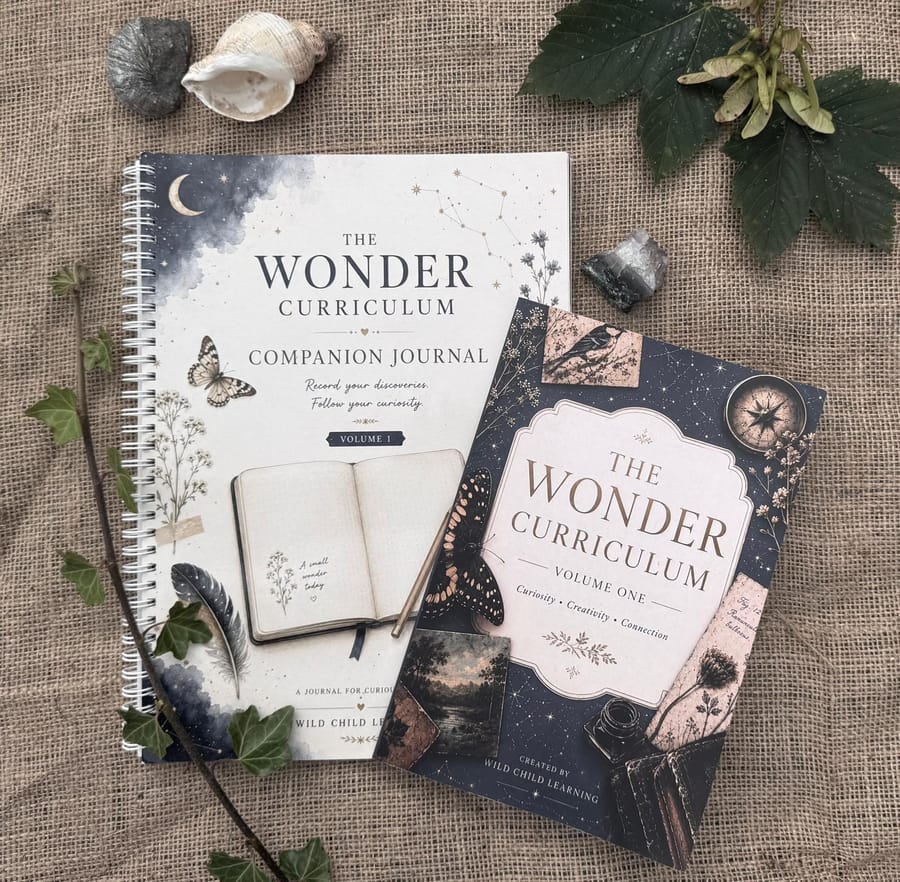
The Inuit Peoples is one of the wonder-led adventures in The Wonder Curriculum Volume One. The complete family set travels through science, nature, history, art and the wider world, with every adventure designed to be used in any order.
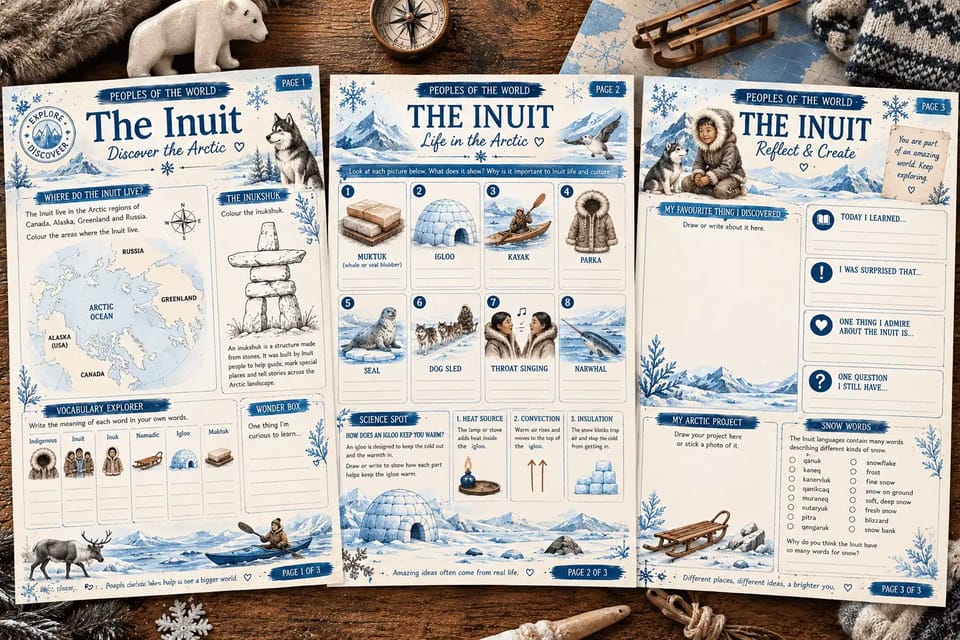
Download the Parent Guide and Wonder Companion Journal and begin exploring Arctic homelands, language, culture and ingenious design together.
£6.99
Digital download · a printable Parent Guide and Wonder Companion Journal for your child