Listen to colour, follow shapes and discover how abstract art can express music, movement and feeling.
£6.99
Digital download · a printable Parent Guide and Wonder Companion Journal for your child
 Digital download
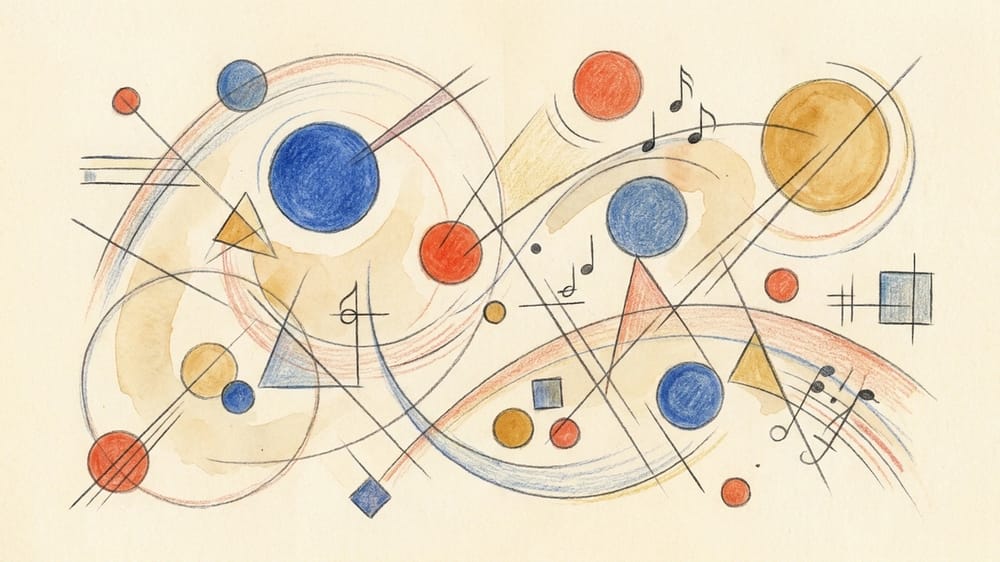
Wassily Kandinsky helped change art by moving away from realistic pictures and using colour, line and shape to express an inner experience. He was fascinated by music and may have experienced synesthesia—a blending of the senses.
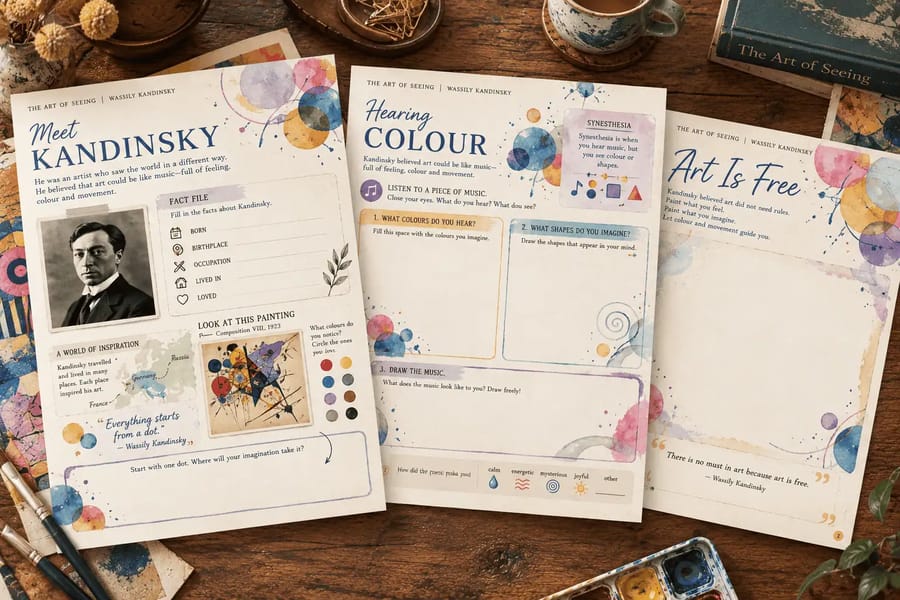
This printable Wonder Lesson invites children to look closely, listen to music, imagine colours and create an original abstract response. Through the Parent Guide and Wonder Companion Journal, families can explore how a painting might express rhythm, movement or feeling without needing one correct interpretation.
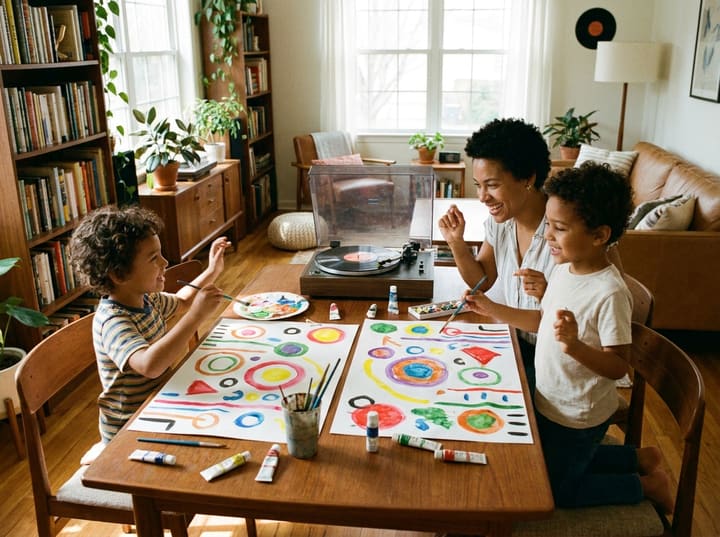
Choose a piece of music, notice how it feels and create side by side. The Parent Guide offers context and prompts while the journal gives children freedom to respond without copying or aiming for one right answer.
You do not need specialist art knowledge or a finished painting that looks like anyone else’s. A few lines, one colour choice or a conversation about what you hear can be enough to begin noticing together.
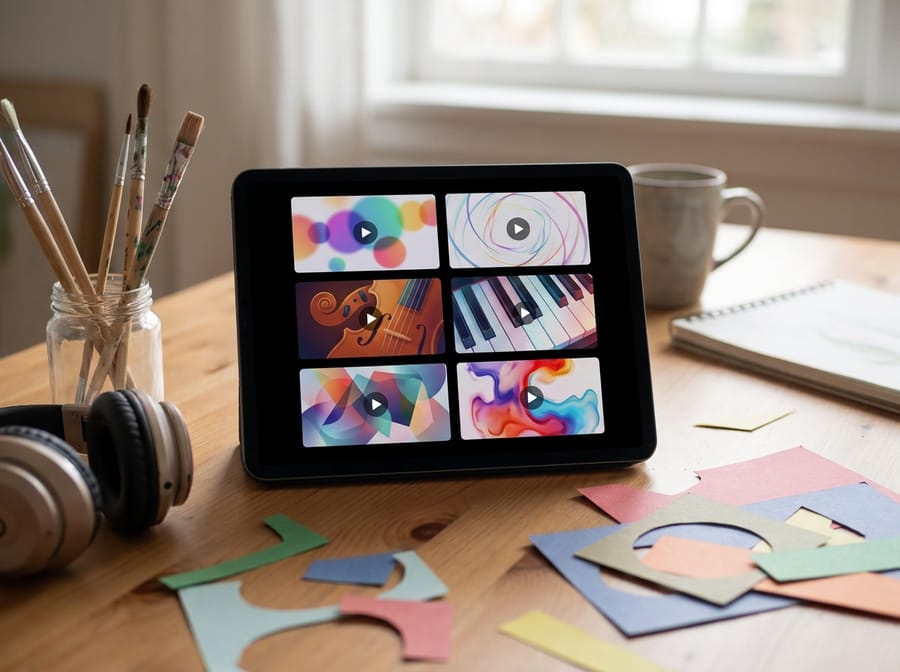
The free companion resources include three videos introducing Kandinsky, synesthesia and an abstract-art activity, plus read-alouds of The Noisy Paint Box and The Artist Who Painted a Blue Horse.
Try Listen and Paint, the Feeling Colour Challenge or a one-minute look at an artwork. Follow the rabbit holes by painting quiet and loud moments of a song, then imagining a feeling as colour, shape and sound.
Can’t find what you’re looking for? We’re always happy to help.
There is no fixed age recommendation. Choose the looking, listening and making activities that suit your child, offering help with reading and writing where useful. Children can share responses through conversation and art rather than written answers alone.
Two printable PDFs: a four-page Parent Guide and a three-page Wonder Companion Journal, seven pages in total. This is a digital download, not a physical book, music collection or art kit.
The journal is designed for printing, with spaces for facts, colours, shapes and free abstract art. You can read the guide on a screen and use your own paper or sketchbook for creative responses if you prefer.
There is no fixed completion time. Explore one painting or music response at a time, or return to the activities across several days. There is no need to complete every prompt.
No specialist art experience is needed. Use paper, pencils, crayons or paints you already have, along with a way to play music or listen to sounds. Choose materials that suit your child; the aim is an original response, not a technically perfect copy.
Yes. The videos, read-alouds and further creative activities are free to access with or without purchasing the printable lesson. The Parent Guide and Wonder Companion Journal are the paid download.
No. The lesson introduces synesthesia while inviting everyone to imagine connections between sound, colour and feeling. Making a colour response to music is a creative activity, not a test or diagnosis, and different responses are welcome.
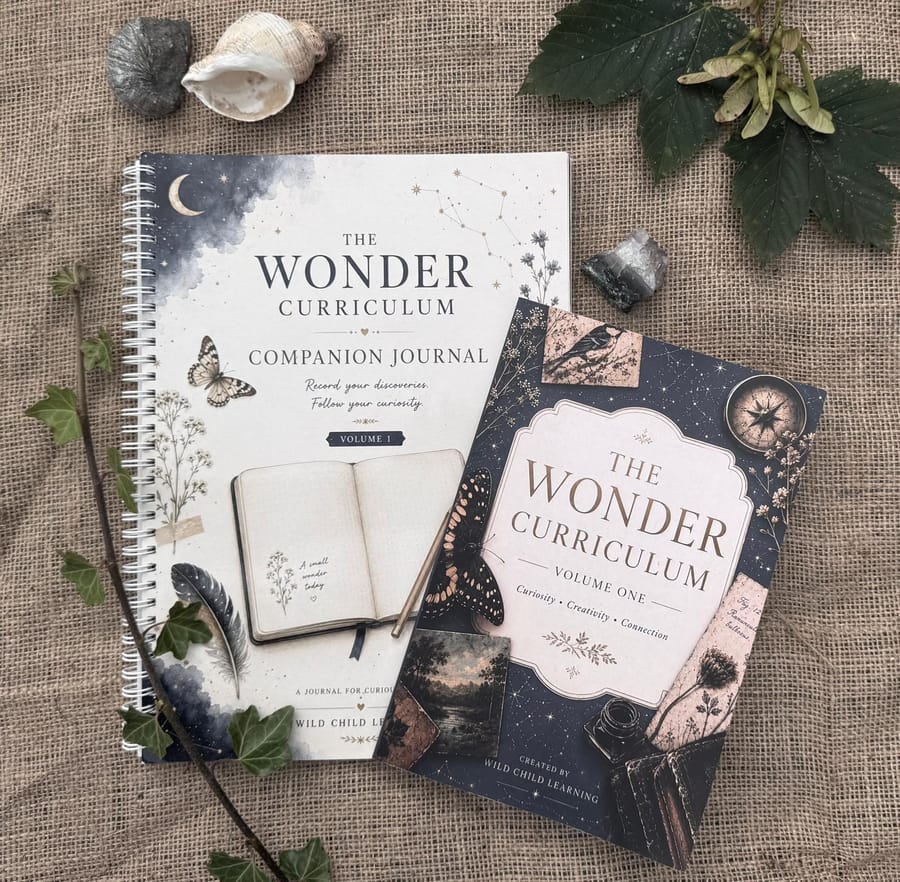
Kandinsky is one of the wonder-led adventures in The Wonder Curriculum Volume One. The complete family set travels through science, nature, history, art and the wider world, with every adventure designed to be used in any order.
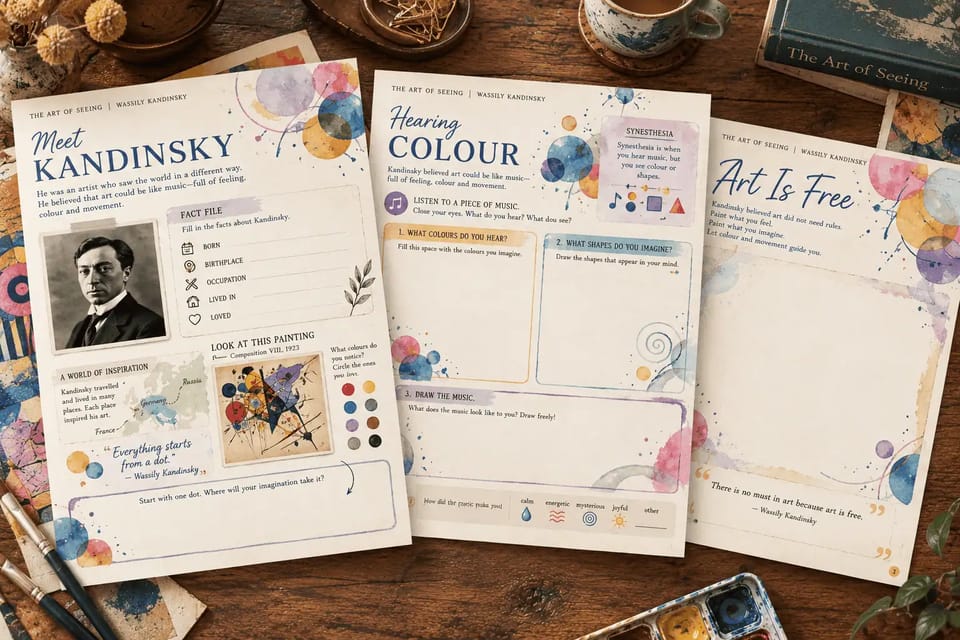
Download the Parent Guide and Wonder Companion Journal and explore Kandinsky, sound, shape and your own way of seeing together.
£6.99
Digital download · a printable Parent Guide and Wonder Companion Journal for your child