Imagine trying to count every leaf on a tree. You might begin confidently at the bottom, only to discover another branch behind the first, and another behind that.
Now imagine that the leaves are far too small to see without a microscope, and that the branches are all tangled together. How would you even begin?
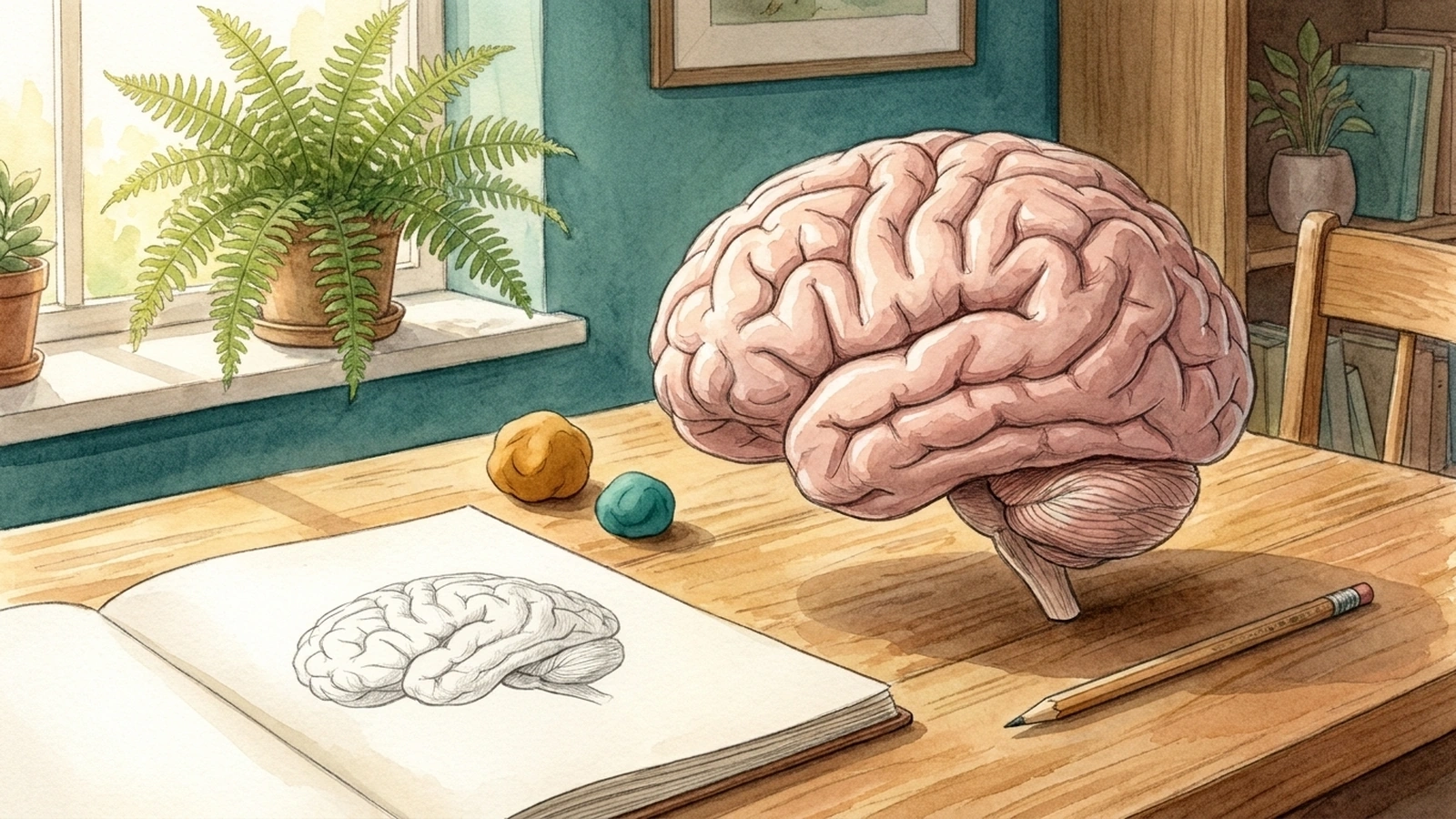
That is something like the puzzle scientists face when they ask how many nerve cells are in a brain. The answer is not printed on a label inside your head. It has to be investigated.
What is a neuron?
A neuron is a nerve cell. Neurons are found throughout the nervous system, including the brain and spinal cord. They receive and send signals that help different parts of the system communicate.
Picture yourself hearing a favourite tune. You recognise the sound and perhaps remember where you heard it before. Neurons take part in the signals involved in hearing, remembering and responding. They work with other cells and with one another; no single neuron does the whole job of enjoying a song.
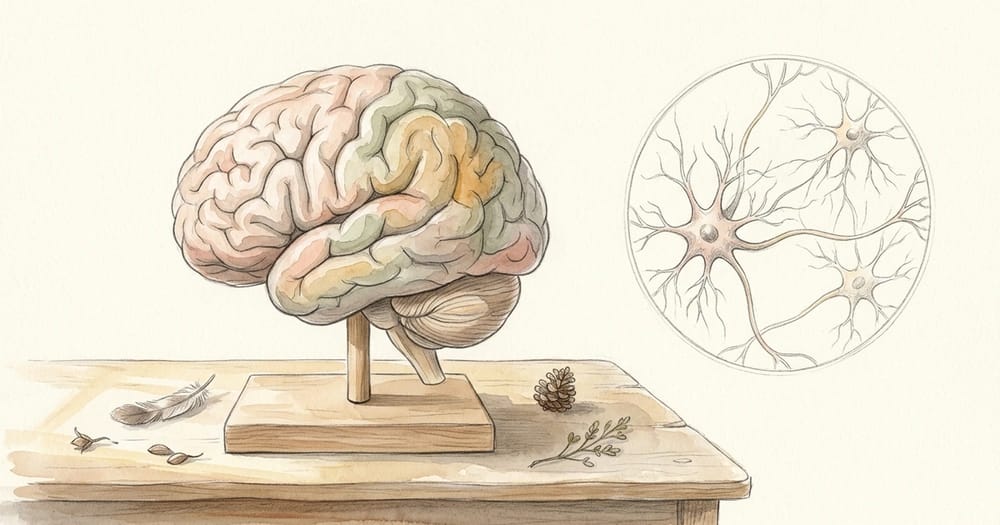
Neurons come in different shapes, but a common description has three main parts. The cell body contains a nucleus. Branch-like extensions called dendrites receive signals, while an axon carries signals away from the cell body. Some axons are short; others can be much longer.
A tree can help you imagine branching, but a neuron is not literally a tiny tree. And there are different kinds of neurons, not one identical shape repeated everywhere.
How do neurons send messages?
Neurons communicate using electrical and chemical signals. An electrical signal can travel along an axon. When it reaches the end, it can cause the release of chemical messengers called neurotransmitters.
At a chemical synapse, those messengers cross a tiny gap and attach to receptors on the next cell. A synapse is a junction where one cell can pass a signal to another. The receiving cell may respond in different ways; a signal does not always make it send an electrical impulse of its own.
You can imagine people passing messages in a busy room. But real neurons do not use words, and the brain is not a single line of people waiting for a message. Its cells participate in complicated networks, with many signals arriving and travelling at different times.
What matters is not simply having lots of cells. How they are connected, and how they communicate, matters too.
Where did the 86 billion estimate come from?
For many years, a figure of around 100 billion neurons was widely repeated. Neuroscientist Suzana Herculano-Houzel wondered how anyone knew. She and other researchers developed a way to estimate the number rather than simply passing the familiar figure along.
In a study published in 2009, a team examined donated brains from four adult men. They estimated the number of neurons in each and reported an average of about 86 billion for those four brains.
That is an astonishing number, but the small group matters. It was not a count of every person’s brain, and it cannot tell you the exact number in your own. A later researcher questioned whether such a small sample can establish a precise average for all human brains; other scientists have discussed the evidence and defended the estimate. There is still uncertainty worth acknowledging.
Different studies can produce different figures. When you see a large, confident number, a useful question is: Who or what was measured, and how?
How can scientists count cells they cannot see one by one?
The researchers used a method called the isotropic fractionator. That is a grand name for a clever approach to a difficult counting problem.
They worked with donated brain tissue after the donors had died. In the laboratory, the tissue was carefully broken apart to make a mixed suspension containing cell nuclei. A nucleus is a structure inside a cell. Scientists used stains to help distinguish neuronal nuclei from other nuclei, counted samples under a microscope and used those counts to estimate a total.
They did not look through a living person’s head and count every neuron in place. Nor did they add up whole cells one by one in an untouched brain. The technique depends on sampling, staining and calculation, and the result is an estimate.
Imagine mixing a large jar of differently coloured beads, counting a small scoop and using it to estimate the whole jar. It is only an analogy: the real laboratory method is more complicated. But it shows why careful mixing and sampling matter — and why an estimate is not the same as a complete hand count.

Is a brain made only of neurons?
No. Neurons share the brain with other kinds of cells. One group, called glia, helps support and protect neurons and contributes to their work in several ways. Blood vessels are part of the brain’s living tissue too.
Think of a performance. Musicians are essential, but so are the people who prepare the space, look after instruments and make the performance possible. The comparison is imperfect, but it helps us remember not to overlook other cells just because neurons are the ones we are counting.
A count of neurons tells us something interesting. It does not by itself tell us how a person thinks, what they can learn or how intelligent they are. People cannot be ranked by a number imagined from a study average.
Wonderfully Weird Facts
- A neuron has a cell body and branches. Dendrites receive signals; an axon carries signals away from the cell body.
- A signal can change form. At a chemical synapse, an electrical signal can lead to chemical messengers crossing a tiny gap.
- A famous number began as an estimate. The 2009 figure came from samples of donated tissue, not a count of every living person’s brain.
- Counting without a break would take a very long time. At one number per second, reaching 86 billion would take about 2,725 years, counting day and night. That is a calculation, not a task anyone needs to try.
Down the Rabbit Hole: do connections change when we learn?
If neurons communicate at synapses, what happens to those connections when you learn something new?
Connections are not all fixed forever. The effectiveness of communication at a synapse can change; scientists call this synaptic plasticity. Some connections can become more effective and others less effective, and connections can also form or be lost. These changes are one part of the story researchers study when they investigate learning and memory.
Think of finding a new way to fold a paper boat. At first you might need to look carefully at each step. Later, the folds may feel more familiar. Your experience of practising is real, but you cannot look at the finished boat and see exactly which synapses changed.
Learning is not a race, and practice does not promise that every task will become easy. People benefit from different kinds of time, explanations and support. The interesting possibility is that the brain can change as we experience and learn, not that anyone has to prove how fast they can improve.
And there is another myth to leave behind: having many neurons does not mean most of them sit permanently unused. Explore that idea in Do We Really Only Use 10% of Our Brains?.
Try It Yourself: feel the size of a big number
You will need ten counters, blocks or pieces of paper, plus a clock or timer. Ask a grown-up to join you if you like.
- Arrange your ten objects in a row. Count them slowly, moving one object each time you say a number.
- Try counting aloud from one to ten at roughly one number per second. A timer can help, but there is no need to be exact.
- Imagine continuing at that pace without sleeping, eating or stopping. Ten numbers would take about ten seconds. A thousand would take about 1,000 seconds — just under 17 minutes.
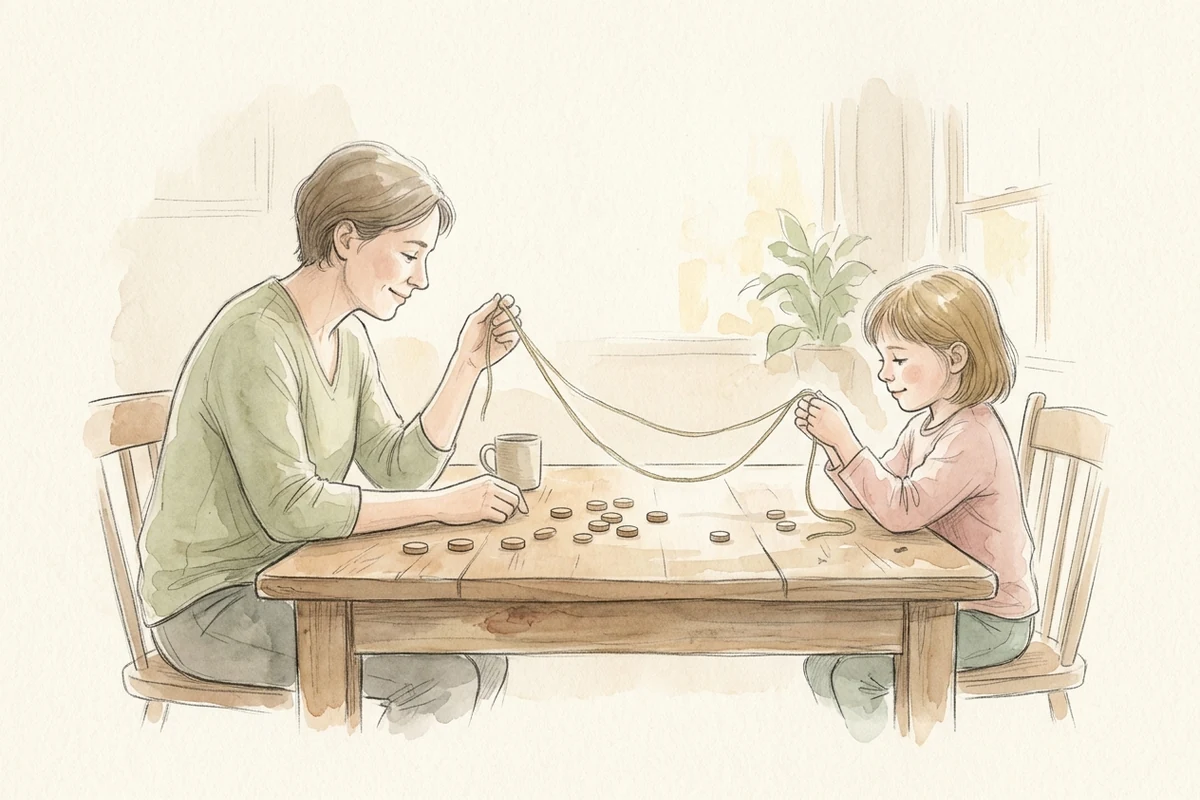
- Now use a calculator to divide 86,000,000,000 by 60, then by 60, then by 24. You have changed seconds into minutes, hours and days. Divide by 365.25 to estimate years: about 2,725.
- Discuss the difference between the two questions: “How long would it take to say 86 billion numbers?” and “How many neurons are in my brain?” Your calculation answers the first, not the second.
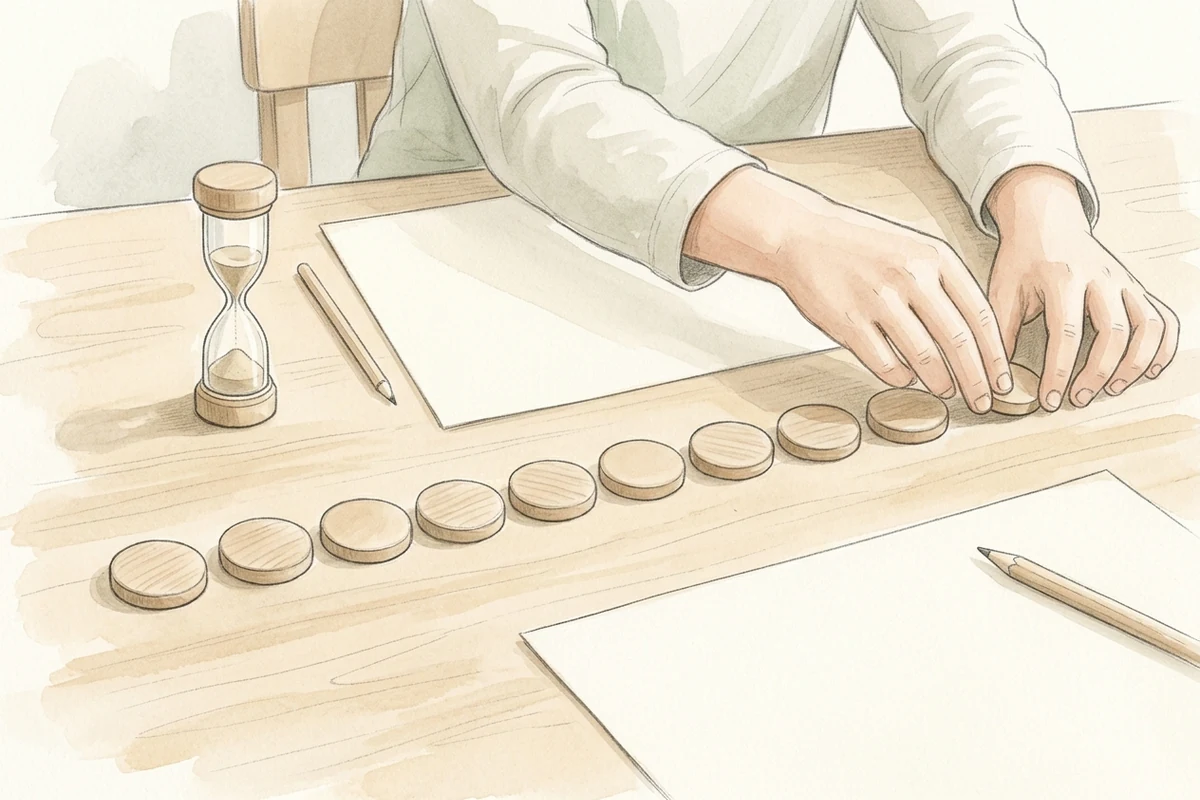
Grown-up note: Choose objects suitable for your child. Keep small counters away from babies, young children and pets; paper marks or large blocks work just as well. The challenge is a way to imagine a number, not a test of speed, memory or brain activity.
The Big Takeaway
A neuron is a cell that sends and receives signals. There are an enormous number of neurons in a human brain, and the familiar 86 billion figure comes from a small study, not an exact count of yours.
The next time a number sounds too large to imagine, you can ask more than “How big is it?” You can ask who counted, what they counted and what their answer can — and cannot — tell us.
Sources and Further Reading
- Azevedo and colleagues: Equal numbers of neuronal and nonneuronal cells — the 2009 study and its estimate.
- BrainFacts: How Many Neurons Are in the Brain? — Herculano-Houzel explains the question and counting method.
- Goriely: Eighty-six billion and counting — a later discussion of sample size and uncertainty. A grown-up may want to explore this one alongside you.
- National Institute of Neurological Disorders and Stroke: Know Your Brain — neurons, synapses and other cells.
- Queensland Brain Institute: What is synaptic plasticity? — how communication at synapses can change.
- Max Planck Society: The brain — an overview including connections and learning.
Keep exploring with our Wonder lesson, Our Amazing Brain, with a children’s Journal and an accompanying Parent Guide to help you guide the lesson. The free Our Amazing Brain companion resources offer more ways to follow your questions.