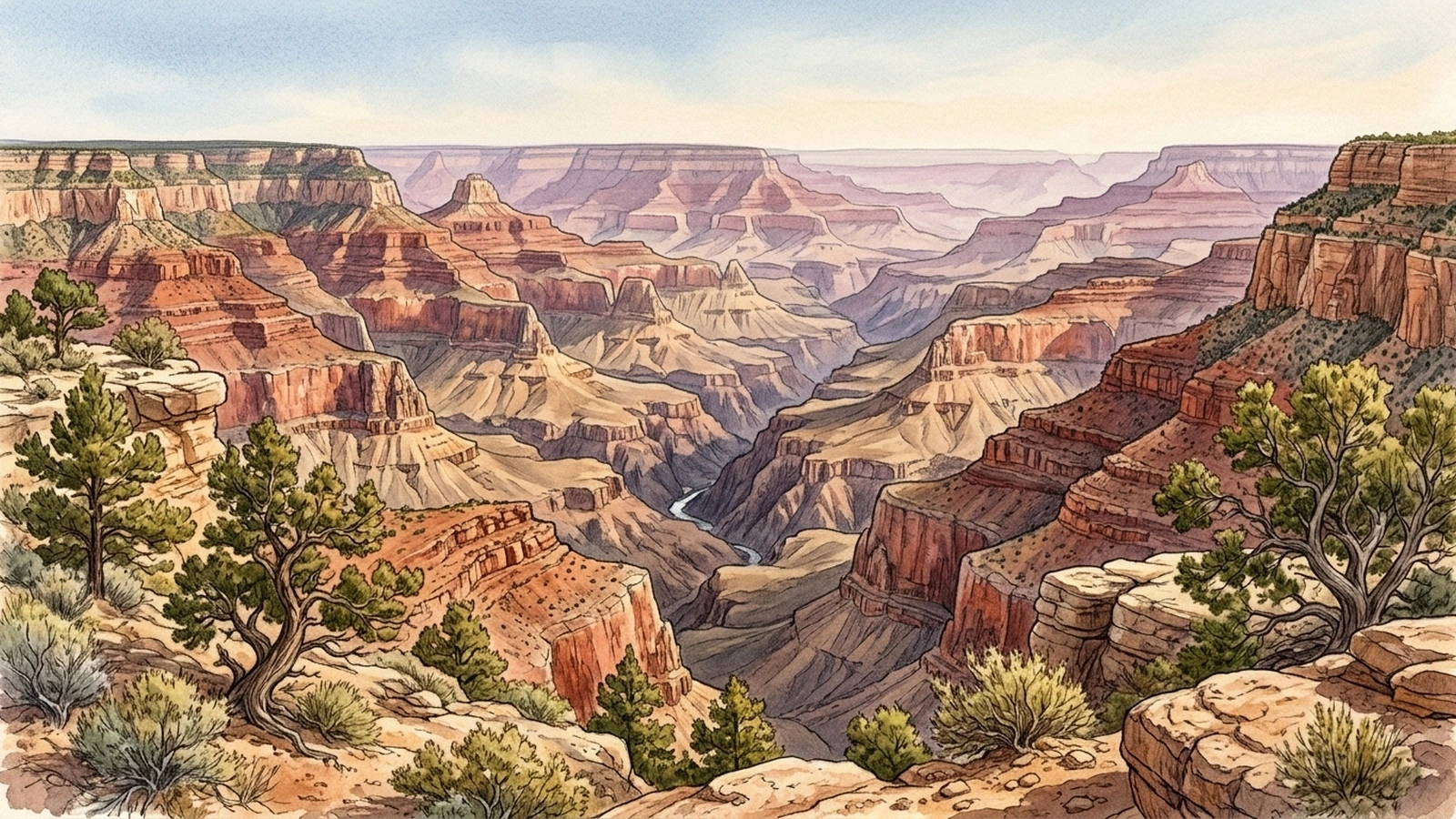
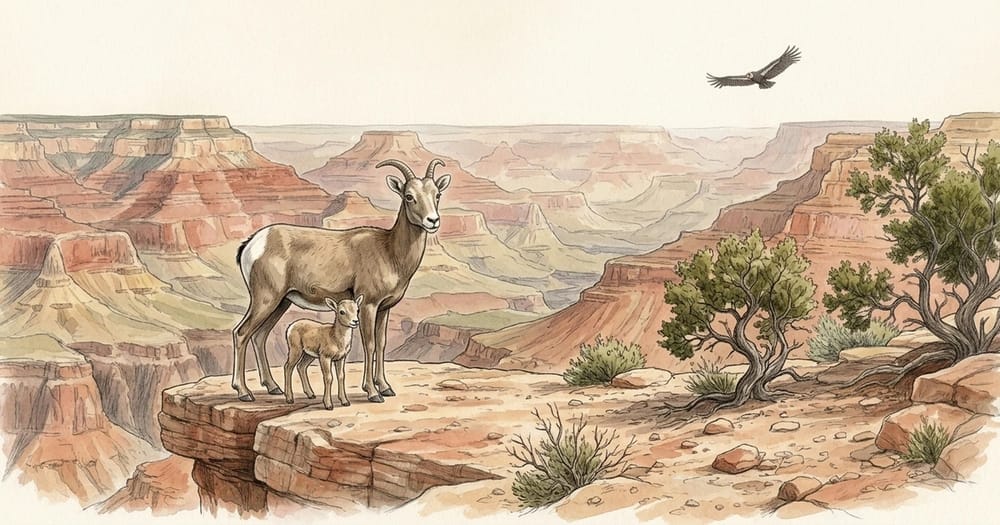
Imagine being asked to choose a home in the Grand Canyon. You could have a branch among the trees, a steep rocky ledge or a place beneath the river’s surface.
Which would you pick?
Before you answer, there is something important to settle. Are you a sheep, a bird or a fish? The most beautiful view will not help if your new home cannot provide what you need to live.
That is the secret to understanding the canyon’s animals. Instead of collecting a list of names, let’s look for the places that make their lives possible.
Why does one canyon contain so many habitats?
A habitat is a place where an organism lives, with the conditions and resources it needs. The Grand Canyon region contains more than bare cliffs and dry ground.
The US Geological Survey describes forests, pinyon-juniper woodland, desert scrub and habitats beside water. The landscape changes with elevation — height above sea level — and with the availability of water.
So a journey from a high rim towards the river can take you through very different surroundings. There is no single set of conditions that describes every ledge, side canyon and stream.
Nor is the bottom simply a continuous green ribbon. Water-side habitats occur around springs and creeks as well as along the Colorado River. A small wet place can matter within a much drier landscape.
You can start to read the canyon as a collection of possible homes. Where is there shade? Where are there plants? Where does water run? Those questions help explain why animals are not spread evenly across it.
Begin with the trees — and the animals you might overlook
Forests of ponderosa pine and mixed conifers belong in the canyon region’s ecological story. They are a useful correction to a picture made entirely of orange rocks.
But even a forest is not just a collection of trunks. When you examine a habitat, you can ask about its ground, its branches and the spaces between them. Rather than assuming every animal wants the same thing, look for different possibilities.
The National Park Service’s wildlife overview includes mammals, birds, reptiles and invertebrates. That final group contains animals without backbones, many of them easy to overlook when you are searching for something large and furry.
For this journey, keep a question beside each animal’s name: what does this place offer it? A list tells you what is present. A habitat question begins to explain why it might be there.
Our next stop looks rather less comfortable than a tree.
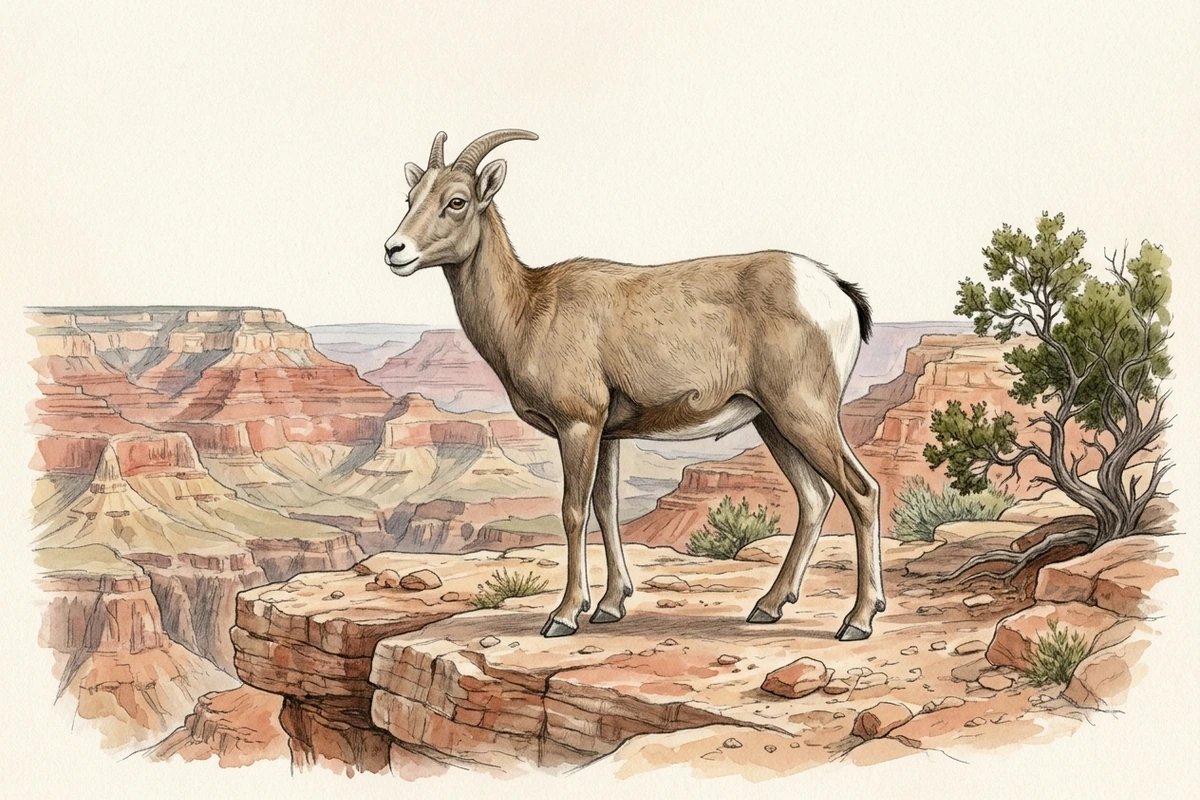
How do desert bighorn sheep use steep ground?
A narrow ledge might look like a terrible place to stand. For a desert bighorn sheep, steep terrain and cliffs are part of its habitat.
The National Park Service describes the canyon’s remote, rugged landscape as providing refuges for these animals. Bighorns are adapted to desert conditions and can go for extended periods without drinking. That does not mean they never need water.
They are social animals, living in herds. Look carefully at photographs and you may notice different horn shapes: rams have large curved horns, while ewes have shorter horns with a gentler curve.
The important point is not that a sheep can do a spectacular trick on a cliff. It is that a place which seems awkward to us can be useful habitat for another animal.
Try turning your first question around. Instead of asking, “Would I like to stand there?”, ask, “What makes that place useful to a bighorn?” That is a better beginning for a naturalist.
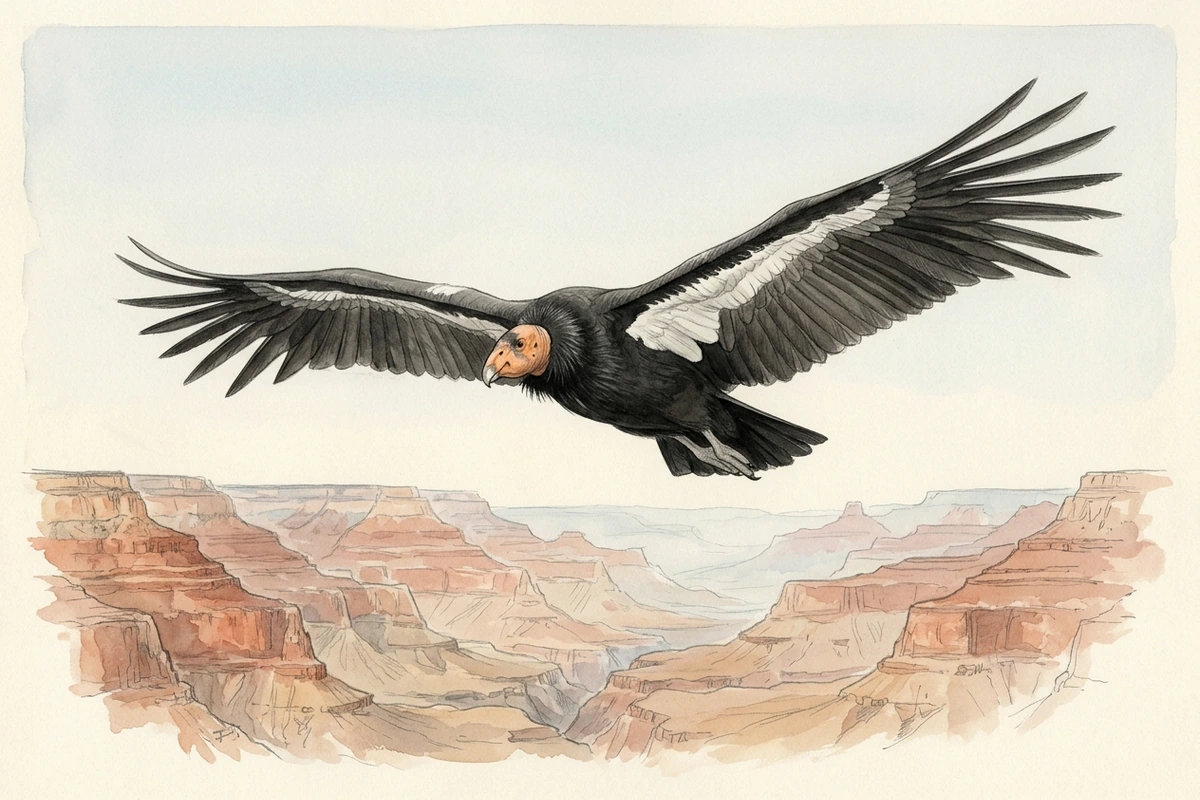
Why do California condors have such wide wings?
Now look above the cliffs. A California condor can have a wingspan of up to about 2.9 metres. Imagine stretching your arms out and still not coming close to that span.
Condors use rising warm air, called thermals, to help them soar. Rather than flapping every moment, they can travel on air that is moving upwards.
They are scavengers: they eat animals that are already dead. A condor is not a giant bird hunting bighorn sheep along the ledges. Its size does not tell you its feeding habits; you need to investigate those separately.
The contrast with the sheep is interesting. We have hardly left the same imagined view, yet the animals are using it differently. One moves over steep ground. Another travels through the air above it.
If you draw the canyon as nothing but solid rock, neither story makes much sense. Leave room in your drawing for movement, air and the places animals find food.
What lives beneath the river’s surface?
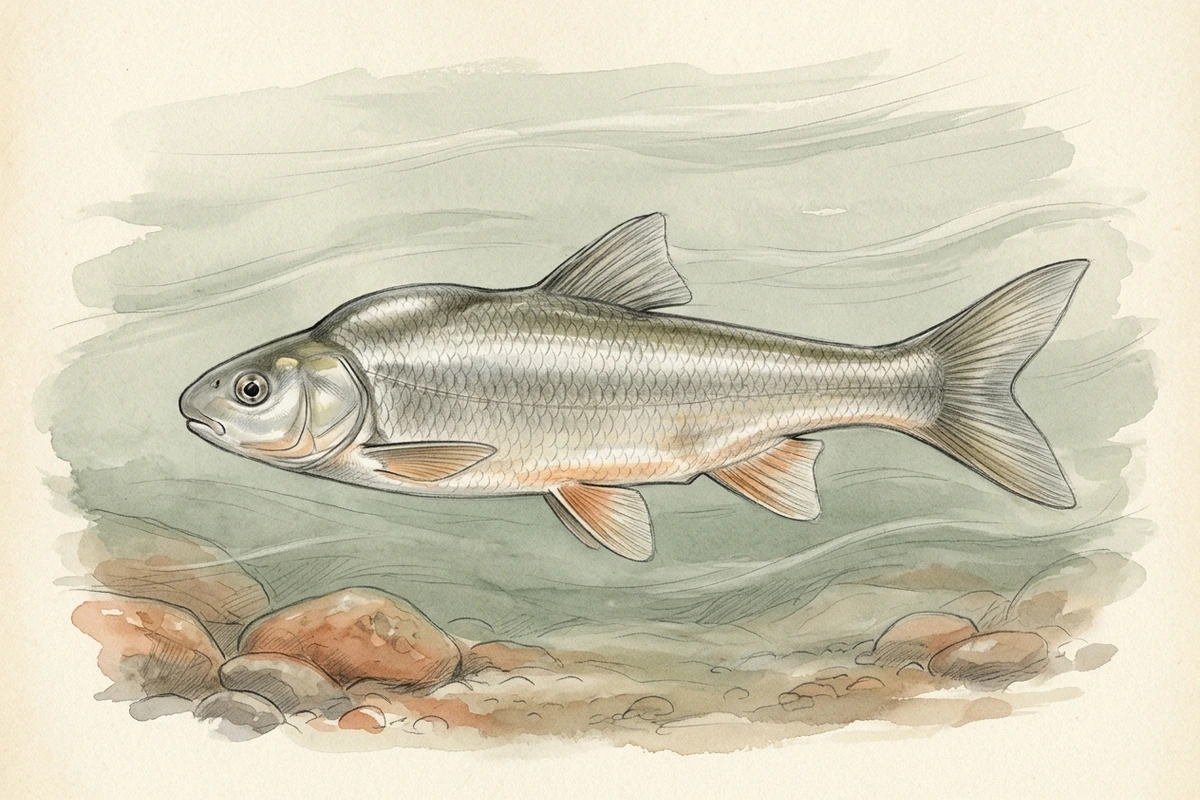
The Colorado River is easy to treat as the blue line at the bottom of a canyon picture. For a fish, it is not a line. It is a whole living space.
One of its native fish is the humpback chub, a member of the minnow family. Adults have a noticeable hump behind the head; young fish do not begin life with that same pronounced shape.
The humpback chub is native to the Colorado River basin. A basin is the area whose waters drain into a particular river system. That is different from saying the fish lives in every river, or only in one small pool inside the national park.
Native fish belong in the canyon story just as much as the animals you can spot on land. Their world includes the main river and its tributaries — smaller rivers or streams that join it — with different flows and water conditions.
We cannot understand that world simply by deciding whether the water looks pretty from above. We need to ask what its temperature, flow and other inhabitants mean for the fish living there.
Wonderfully Weird Facts
- A very large bird may eat animals that are already dead. California condors are scavengers, not enormous canyon-hunting eagles.
- A dramatic hump develops as a fish grows. Young humpback chub do not have the same pronounced hump as mature fish.
- A cliff can be habitat, not just an obstacle. Desert bighorns use the steep, rugged ground of the canyon.
- Forests belong in this landscape too. A canyon habitat drawing needs more than one colour for bare rock.
None of these animals makes sense on its own, detached from its surroundings. That leads to a question about what happens when those surroundings change.
Down the Rabbit Hole: if a river changes, what changes for its fish?
Imagine that your home stays in the same place, but the temperature and the neighbours change. Would it still suit you equally well?
A river can change without disappearing. Dams can alter its flow and the temperature of water released downstream. Glen Canyon Dam has changed conditions in the Colorado River through the Grand Canyon.
Those conditions matter to native fish. The National Park Service explains that water temperature can limit where humpback chub reproduce successfully. Tributaries and other warmer-water areas can provide important habitat.
Introduced fish add another complication. Rainbow and brown trout can prey on native fish and compete with them for resources. Caring for a river therefore involves more than keeping some water in its channel.
It also takes careful evidence. The NPS describes conservation work including monitoring fish, moving chub to suitable tributary habitats and managing invasive fish. The details can change as conditions change; there is no single simple switch labelled “river fixed”.
The river is a place to live as well as a force that shapes the land. For the other half of that story, read How Was the Grand Canyon Formed?.
Try It Yourself: draw a canyon that works as a home
You need plain paper, pencils and the source pages below. This is a thinking-and-drawing activity, not a plan for approaching wild animals.
- Draw a cross-section: imagine slicing through the landscape so you can see the high rim, slopes and river in one picture.
- Add trees near the rim, patches of dry scrub and a stream joining the main river. Your drawing is a simplified model, not a precise map.
- Choose three animals from this article: a desert bighorn sheep, a California condor and a humpback chub. Draw or write each where its habitat makes sense.
- Beside each one, write a checked detail that explains your choice. “Bighorns use steep terrain” is more useful than “sheep go here”.
- Add one question you have not answered. Where does your chosen animal find food? What might change if a stream became drier? Mark unanswered questions clearly rather than guessing.
Now compare drawings with someone else. If you placed an animal differently, can you explain why? Return to a source when you disagree. The aim is not the prettiest canyon; it is a picture whose choices you can explain.
Grown-up safety note: observe wildlife quietly from well back, following current ranger advice. Never feed, touch, chase or call animals closer. Stay on permitted routes and away from cliff edges and water hazards. A squirrel deserves space just as a much larger animal does.
The Big Takeaway
The Grand Canyon is not merely scenery with animals dotted over it. It is a collection of habitats, connected by land, air and water.
When you notice an animal, ask one more question: what does this place give it? You will begin seeing a living landscape instead of a list.
Sources and Further Reading
- US Geological Survey: Ecology of Grand Canyon National Park — the region’s different habitats.
- National Park Service: Wildlife — an introduction to the park’s animal groups.
- National Park Service: Desert Bighorn Sheep — steep-ground habitat, horns and desert adaptations.
- National Park Service: California Condors — wings, soaring and scavenging.
- National Park Service: Grand Canyon’s Native Fish — humpback chub, river change and conservation.
- National Park Service: Wildlife Viewing and Safety Tips — respectful, safe observation.
Discover the canyon’s continuing human connections in Which Native Nations Are Connected to the Grand Canyon?. Keep exploring with our Wonder lesson, Where is the Grand Canyon?, with a children’s Journal and an accompanying Parent Guide to help you guide the lesson.