Imagine discovering that a few marks on a page can hold a whole conversation. A book can tell you what someone thought long before you were born. A letter can carry a message to someone far away. For Frederick Douglass, learning to read opened doors that other people had tried to keep closed.
Where did Frederick Douglass first learn his letters?
Frederick was born into slavery in Maryland, in the United States, around 1818. Enslavement meant that other people claimed the right to control his life and work. It was deeply unjust. It did not make him any less a person with thoughts, relationships and hopes of his own. Our companion article explores why many people say “enslaved person”.
When Frederick was a child, he was sent to Baltimore. There Sophia Auld began teaching him letters. Her husband Hugh objected, and the lessons stopped. In his autobiography, Douglass remembered how closely his reading was watched after that.
That could have been the end of the story of his lessons. It was not.
How did bread help Frederick learn to read?
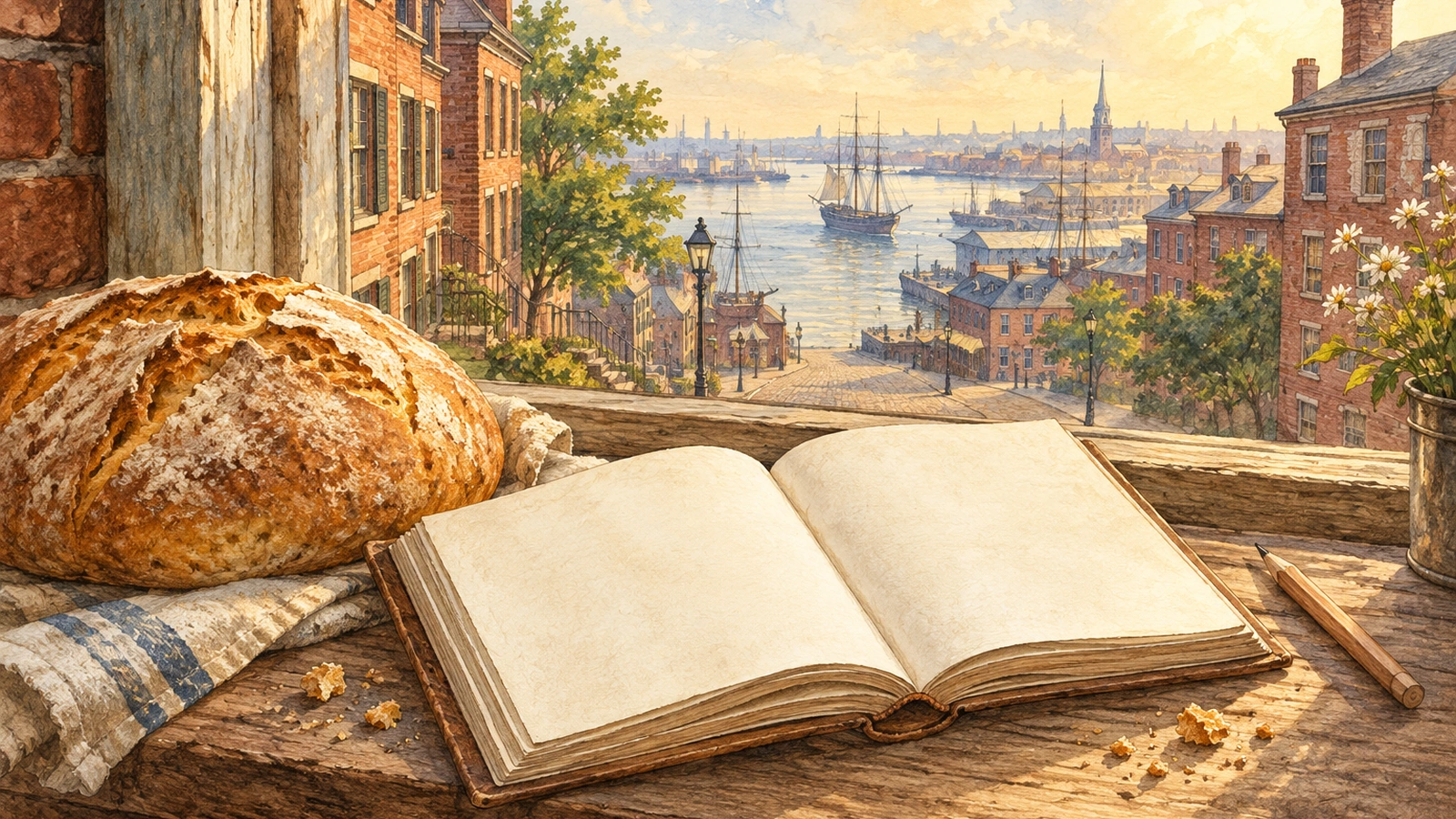
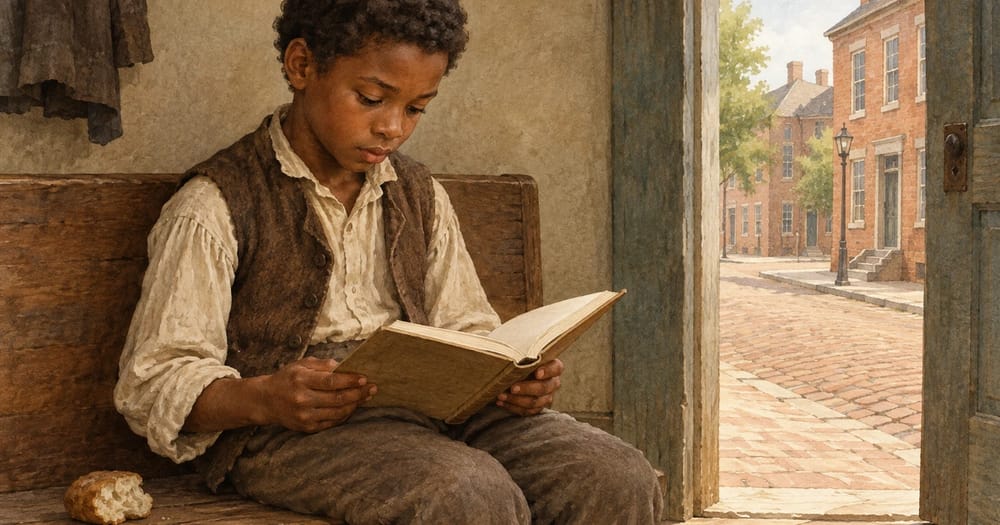
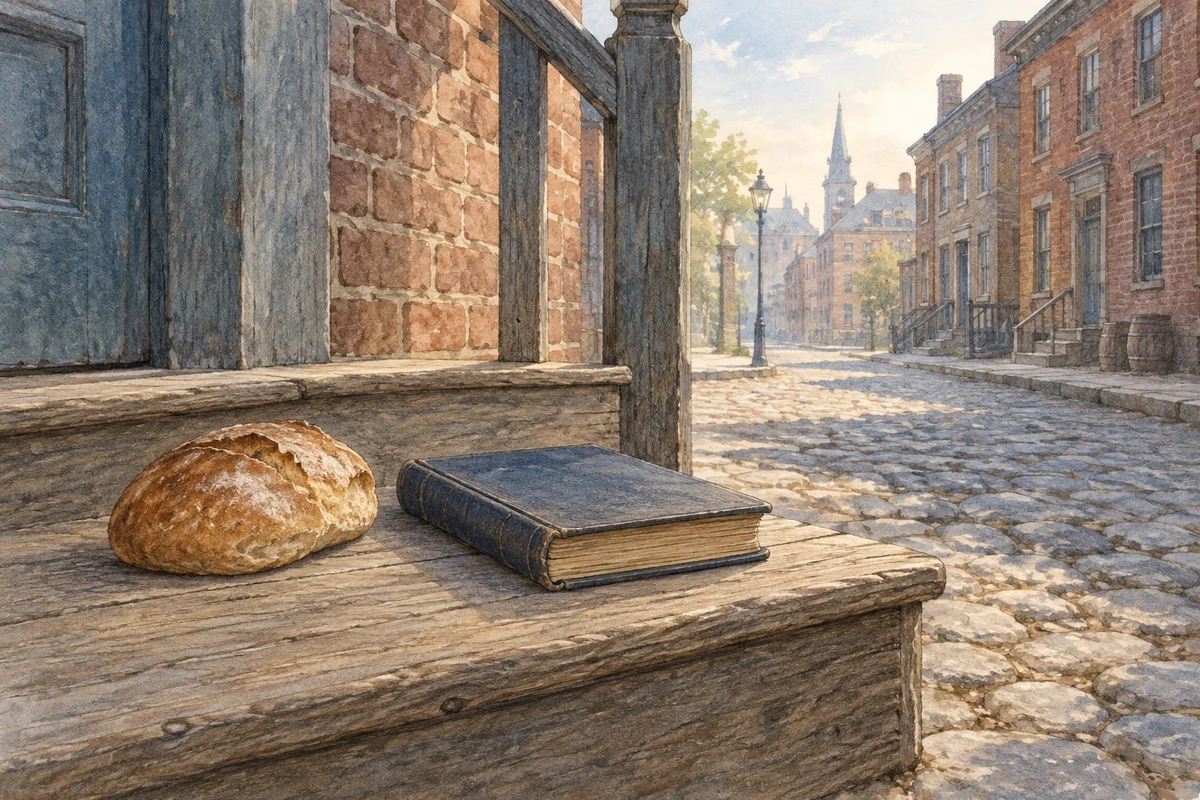
Frederick was sent on errands around Baltimore. He wrote that he took a book with him and made friends with boys he met in the street. Some were hungry, so he shared bread. In return, they helped him learn to read.
He later described their help as a different kind of bread: knowledge. It is a memorable way to picture an exchange. One kind of bread fed the body; the other gave him words and ideas to think with.
This does not mean he had an easy life or that other enslaved children had the same opportunities. It shows one way Frederick found help in the particular circumstances around him.
What did Frederick read?
As his reading grew, Frederick found a book called The Columbian Orator. It included a made-up conversation in which an enslaved person argued against slavery. Douglass later wrote that the ideas he read helped him put some of his own thoughts about freedom and rights into words.
But learning was not simply a happy ending. Reading also made him think more deeply about the injustice around him, while he was still being held in slavery. Those thoughts could be painful. His account reminds us that understanding a problem is not the same as being able to make it disappear.
How did Frederick learn to write?
Reading was only part of what Frederick wanted to learn. He also wanted to write.
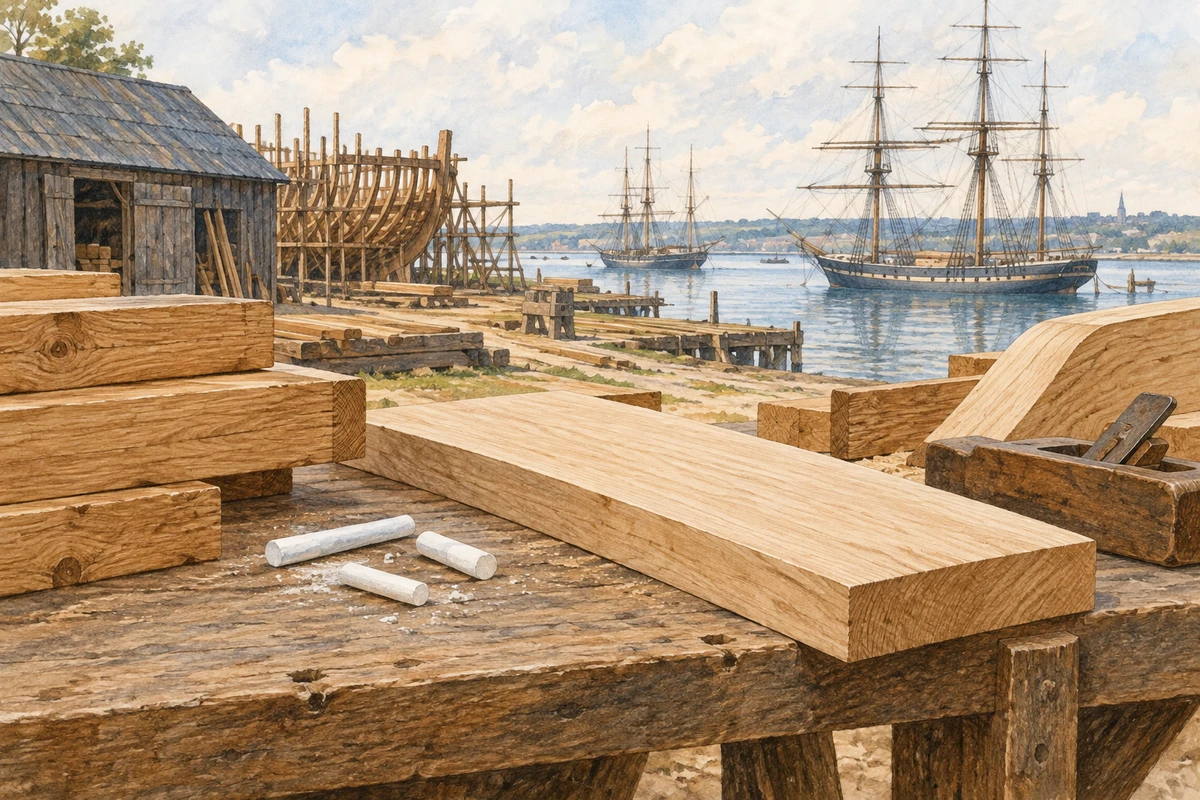
At a shipyard, he noticed letters marked on pieces of wood to show where they belonged on a ship. He learned some of these letters and practised making them. With chalk, he could write on fences, walls and pavements.
He also described inviting boys who could write to show him what they knew. Later, when he was left to look after the house, he practised in the spaces left in another child’s old copybooks. Little by little, he built on what he knew.
These details come from Douglass’s own account, written when he was an adult looking back at his childhood. He described learning to write as a long effort over several years—not something that happened in one afternoon.
Did reading make Frederick free?
Learning mattered enormously to Douglass, but reading by itself did not end his enslavement. As a young man he escaped in 1838, with important help from Anna Murray, a free Black woman he later married. You can read more about her part in his escape in Who Was Frederick Douglass? Even after reaching the North, he remained at risk of being captured and forced back into slavery.
Douglass went on to speak and write against slavery. He published books and a newspaper, The North Star, and argued for equal rights. His story is about learning, but it is also about injustice, support from others and a long struggle for change.
A few details to notice
- Douglass did not have one regular teacher throughout his learning.
- He noticed useful letters in an unexpected place: a shipyard.
- His own written account lets us hear how he remembered these experiences.
Down the rabbit hole: What happened to his words next?
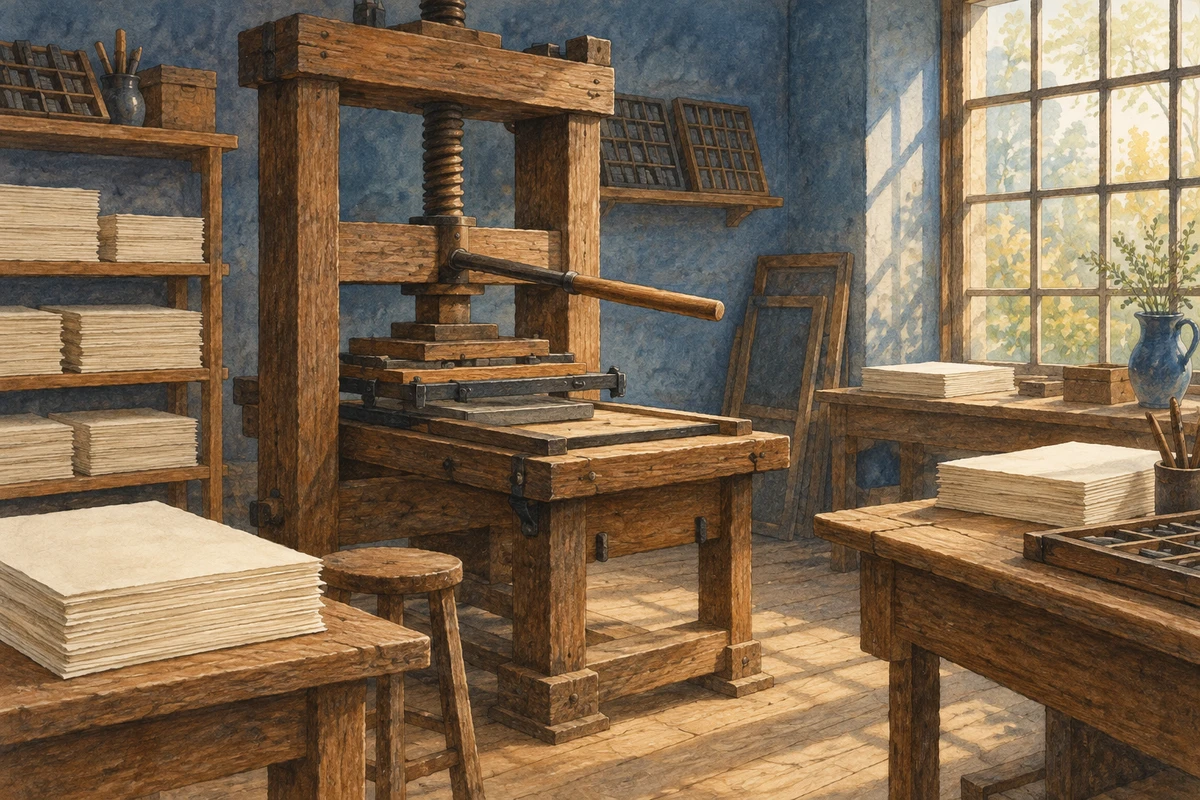
Once Douglass could read and write, his words travelled much further than the streets where he had practised. As an adult, he wrote about his life and published a newspaper called The North Star.
Imagine a conversation between two people. Now imagine words printed on a page that can be carried to many readers, who can share the ideas again. What might a newspaper make possible that one conversation could not?
Try it yourself
Frederick noticed letters in an unexpected place: on timber in a shipyard. Go on a letter hunt around your home, garden or street. Look for letters and words on packaging, signs, labels or old envelopes. Copy five that you find into a notebook and note where each one came from. Which was the most surprising place?
This is a way to notice how letters and words surround us, not a way to recreate Douglass’s experience. Nobody can understand enslavement simply by acting it out.
A note for grown-ups: this article discusses slavery and injustice. Make space for questions and pause when needed. Preview the historical account before sharing it; it contains distressing descriptions and language.
The big takeaway
A book, some bread and a piece of chalk are ordinary objects. In Frederick Douglass’s account, they become part of a much bigger story about a child who found ways to learn, the people who helped him and the ideas he later shared with the world.
Sources and further reading
- Frederick Douglass’s own account, chapter VII — for grown-ups; contains distressing historical language.
- Frederick Douglass — National Park Service
- Anna Murray Douglass — National Park Service
- Bread for Words — Shana Keller
Wondering how the words we choose shape a story? Explore our companion article, Why Do People Say ‘Enslaved Person’?